is an independent archive of civil photography created before 1980 in modern Belarus.
— an independent archive of Belarusian vernacular photography created in the 20th century
Curators : Anna Bundeleva, Lesia Pcholka
06.09 – 06.10.2017
Gallery : Gallery Canteen XYZ. Minsk, BY
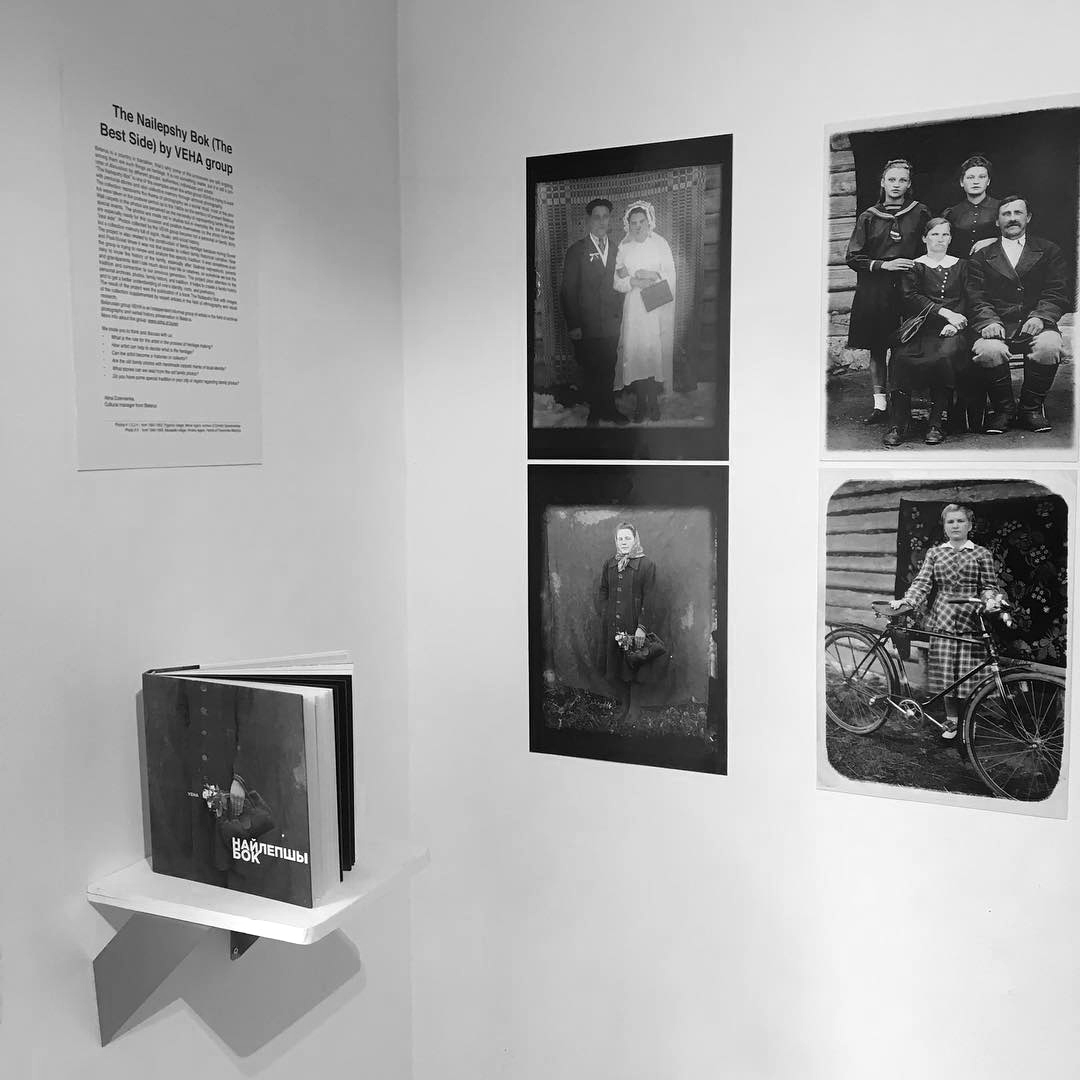
Usually we are captured by an event which turns out to be the center of attention of a person with a camera. But along with this event one more occurs that is photographing which, like the event of viewing the photo, is a social ritual, symbolic behavior, as well as a way to express beliefs within a symbolic system.
From the point of view of the significance of the existence of a family community, the ritual plays the role of an amplifier of the group life which necessarily involves taking pictures of “special moments”: everyday ones, feast and funeral rites. Any home photos which are the final part of the ritual of the presentation are something of a compliment: we do not merely believe the thing is beautiful, but we make a statement about it.
The event of taking photos and the event of studying them are as important to the ritual as what is embodied on the paper print. On photographs not only individuals are presented, but also how they are written down in numerous, broader contexts and family systems. They show who they are together in a network of family relationships, even if it seems that they are portrayed separately. In many ways, the family album is their home and the basis of their identity. Family photo collections do not appear as an individual observation: we look at these images with their community’s eyes.
Pictures of home collections collectively answer the question, “How did they look like?” The first thing that can be clear is how these people appear in front of us now and what we find as observers when we assess individuals or a group of people through the external manifestations of material culture and visible qualities. The second one is how these individuals or groups look at the world, how they see and understand life around them. The photos contain
information about life manifestations: how people are dressed, combed, where and how they live, who they have relationships with, how they change over time and what they look like in general.
But photos also integrate an alternative paradigm: How do they look at? In other words, there is information about how people give meaning to a daily life, their immediate surroundings and the world they see around them. Family pictures fall into the space of contradiction between the myth of the perfect family and a living reality of family life.
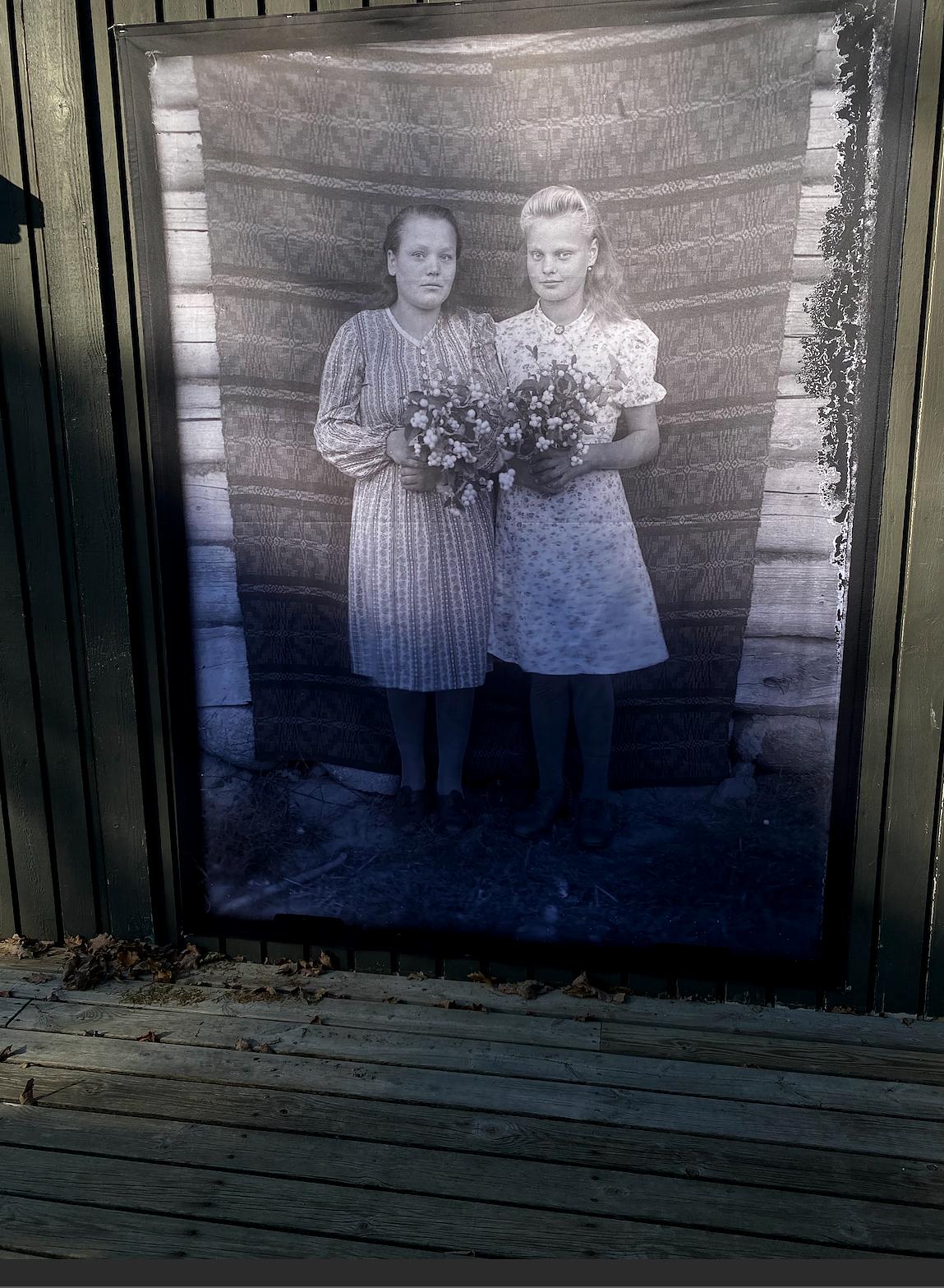
In this context, woven blankets, carpets, towels, tablecloths as a certain kind of phenomenon on family, holiday and everyday photos of the Belarusians, are a necessity of representation of their life to others with the best side, so that others can create not erroneous and holistic impressions about us and our way of life. These decorative things in addition to household use are additional manifestation of festive feelings, an amplifier of home cult, which the family group gives to itself. We do not have any other image (either real or reserve) except for that one we create in the imagination for others.
The ritual reinforces that feeling, giving the embodiment, therefore, the need for images is a need for photography and the more intense this feeling the more it unites the group. With the help of photographs people stop the time, so that later to realize the captured moments of life.
![]()
Exhibition :
Heritagization.
STATUS project
Curators: Alina Dzeravianka, Ingrid Falk, Linda Tedsdotter, Chiara Valli, Elina Vidarsson
Gallery 54. Konstepidemin. Gothenburg, SE
Heritage making – the creation and recreation of cultural and historical meaning and identity – is done by different actors and at different levels, from institutions, museums, their visitors, to common people. In the collective project Heritagization, the group focuses on different forms of heritagization that emerge parallel with – or in conflict with – official and authorized forms of heritage making. In particular, the group is interested in highlighting, enacting and performing alternative processes of heritage-making in individual and collective ways, through art practice and activism in urban public spaces.
The project is composed of different parts that communicate with each other to explore how art and activism can make heritage in Belarus and Sweden. The work of the group is based on academic research, artistic-based research and performative methodologies.
![]()
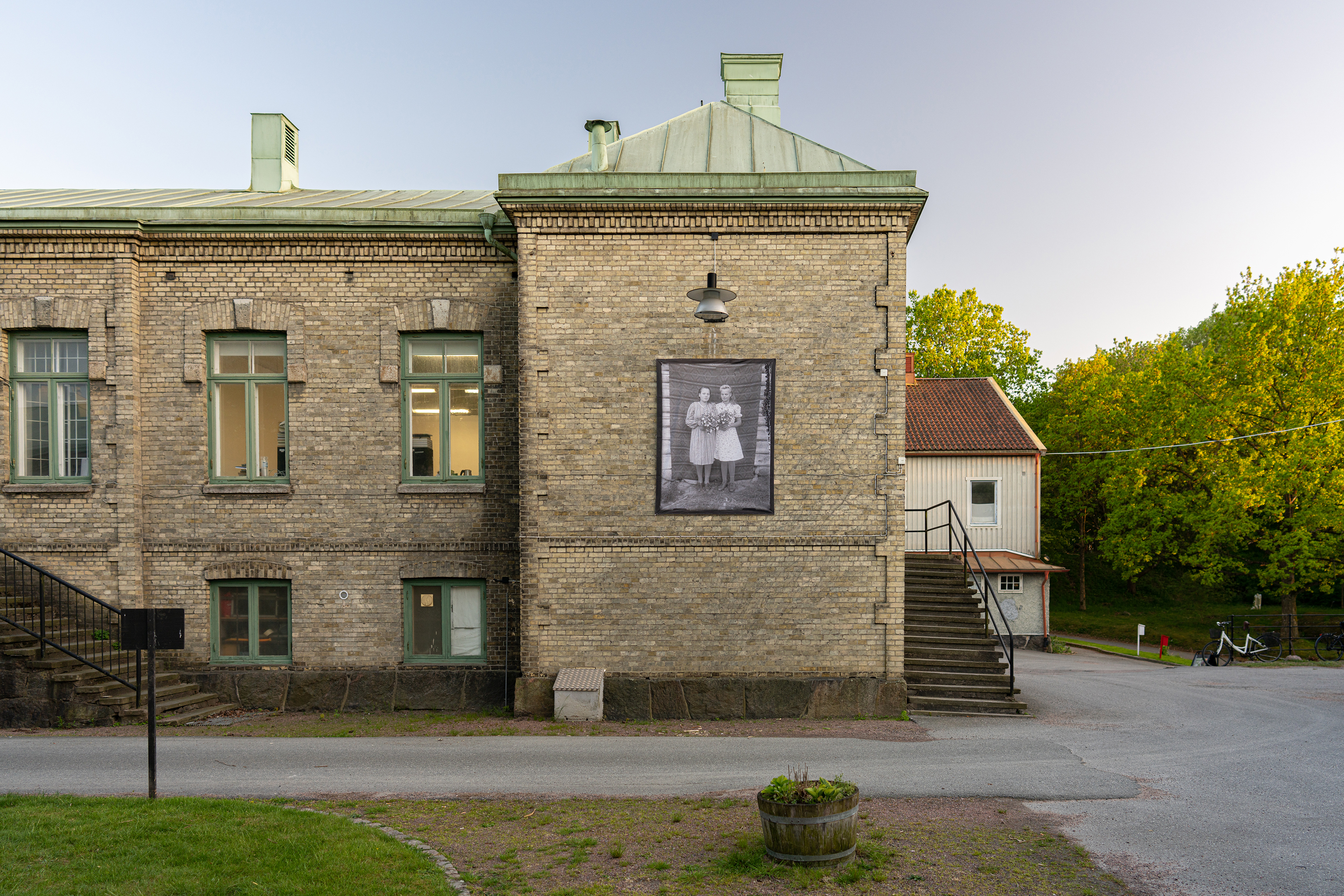
VEHA archive at Konstepidemin
Curated by Denis Romanovski and Mona Wallström
Artist : Lesia Pcholka. In collaboration with IASPIS
30.04 – 12.05.2023
Gallery : House 8, Konstepidemin. Göteborg, SE
![]()
![]()