Ruiny Bielarusi
RUINS OF BELARUS
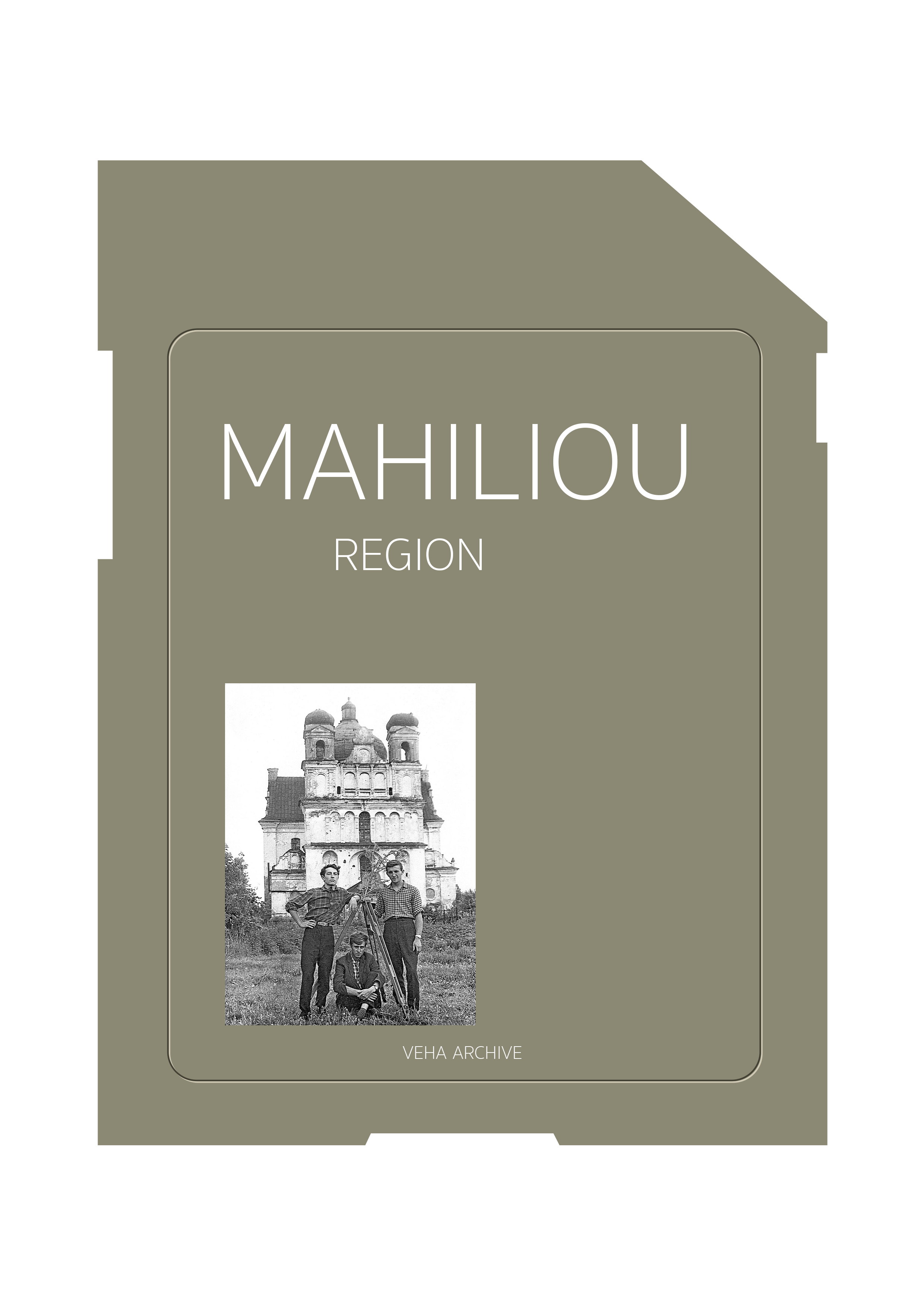
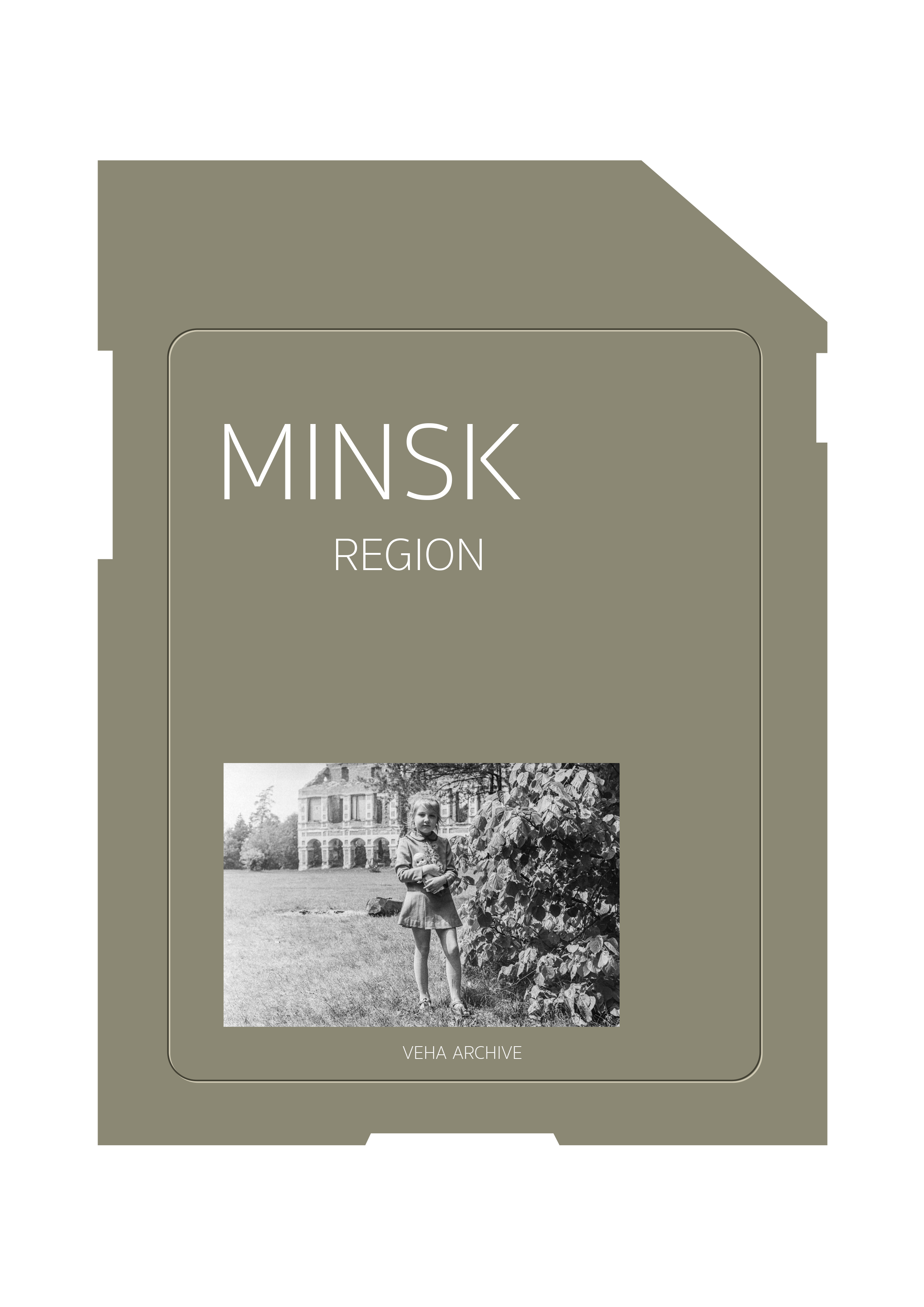
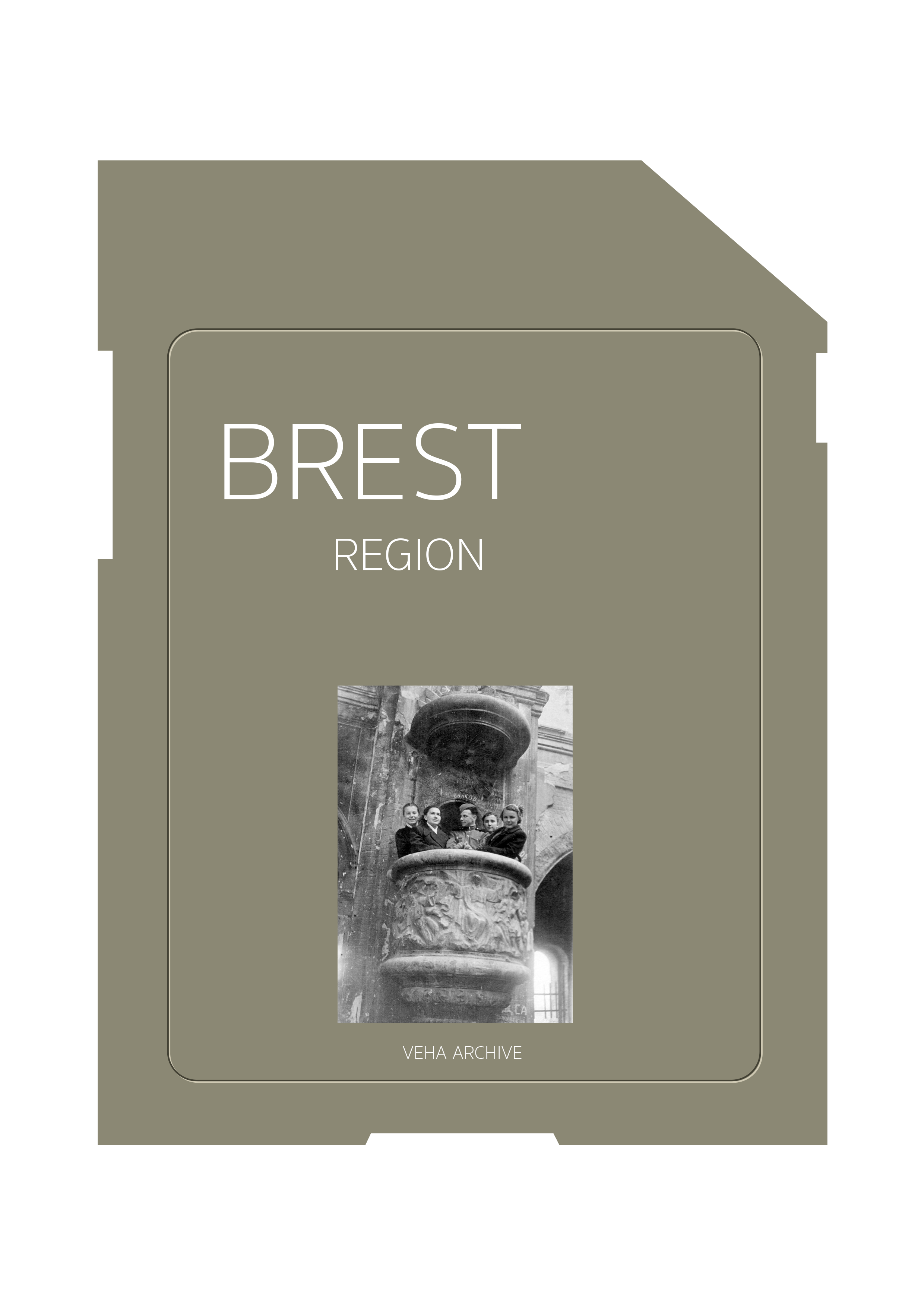
/ РУІНЫ БЕЛАРУСІRuins of Belarus is a collection that tells the story of our edifices. At one time, every building in Belarus was under threat of destruction - wars, negligence, state violence destroyed castles and churches, town halls and Cathrics, synagogues and civil houses. Many of them disappeared without a trace on earth, but remained in photographs. There are also those that were saved. They create our environment, embody the history of our past. Others continue to crumble and require our help so as not to disappear completely. In the photographs, we also see people related to these buildings. Some are photographed against the background of ruins because they want to touch the noble past or preserve the memory of places they love, while others mock the ruined cities where they came as occupiers. Thus, the photographs tell us about the fragility of the world, where yesterday's unshakable wall lies beneath our feet, but also about the strength of memory, when, through oblivion and neglect, people return to the stones of their homeland.
Руіны Беларусі - калекцыя, якая распавядае аб лёсе нашых камяніц. У свой час усе будовы Беларусі былі пад пагрозай знішчэння - войны, нядбайнасць, дзяржаўны гвалт руйнавалі замкі і касцёлы, ратушы і цэрквы, сінагогі і хаты. Мноства іх знікла без следу на зямлі, але засталося на фотаздымках. Ёсць і выратаваныя, яны ствараюць нашае асяроддзе, увасабляюць гісторыю даўніны. Іншыя працягваюць разбурацца і патрабуюць нашай дапамогі, каб не знікнуць канчаткова. На фотаздымках мы бачым і людзей, да гэтых камяніц датычных. Адны фатаграфуюцца на тле руін, бо хочуць дакрануцца да высакароднай даўніны ці захаваць памяць аб мілых мясцінах, а другія здзекуюцца са зруйнаваных гарадоў, куды прыйшлі як акупанты. Так фотаздымкі распавядаюць нам і пра крохкасць свету, дзе ўчорашні непахісны мур ляжыць пад нагамі, але і пра трываласць памяці, калі праз забыццё і занядбанне людзі вяртаюцца да камянёў сваёй Радзімы.
Started: August 2023
Updated ︎︎︎ 01.12.2025
Калі вы бачыце памылку ў подпісах, або маеце дадатковую інфармацыю, калі ласка, звяжыцеся з намі :
archive.veha@gmail.com
Provided by :
Ala Žak, Andrej Astašenia, Centrum Kultury Białoruskiej w Białymstoku, Dzijana Pinčuk, Fortepan, Hanna Čaboŭskaja, Jaŭhien Mšar, Rostislav, Uladzimir Sadoŭski, Wikimedia Commons

RB-01-001-25-00348
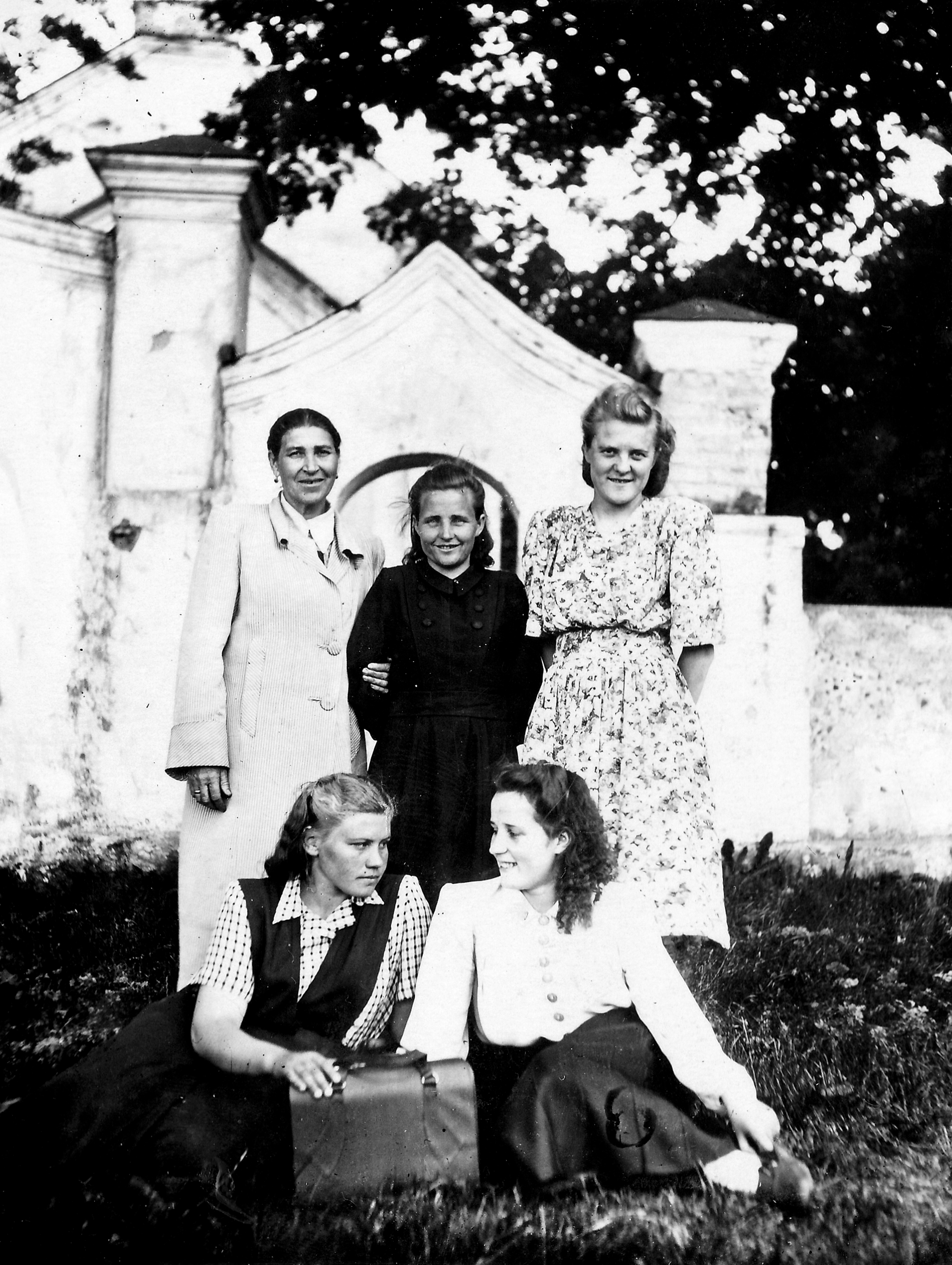
1952-1953 гг., г.п. Гарадзішча, Баранавіцкі р-н, Брэсцкая вобл. Група жанчын перад брамай Найсвяцейшай Дзевы Марыі Ружанцовай. Справа стаіць Галіна Міхайлаўна Жак (у дзявоцтве Сіманчык), злева сядзіць Ганна Герасімаўна Жак (па мужу Севертока) (касцёл захаваўся, брама чаткова зруйнаваная). Прадаставіла Ала Жак. Архіў VEHA, калекцыя 'Руіны Беларусі'.
1952-1953, Haradzišča, Baranavičy District, Brest Region. A group of women in front of the gate of the Catholic Church of the Blessed Virgin Mary of the Rosary. On the right stands Halina Michajlaŭna Žak (née Simančyk), and on the left sits Hanna Hierasimaŭna Žak (the church is preserved, the gates have been parly destroyed). Provided by Ala Žak. From the VEHA archive, ״Ruins of Belarus״ collection.
RB-01-001-25-00882
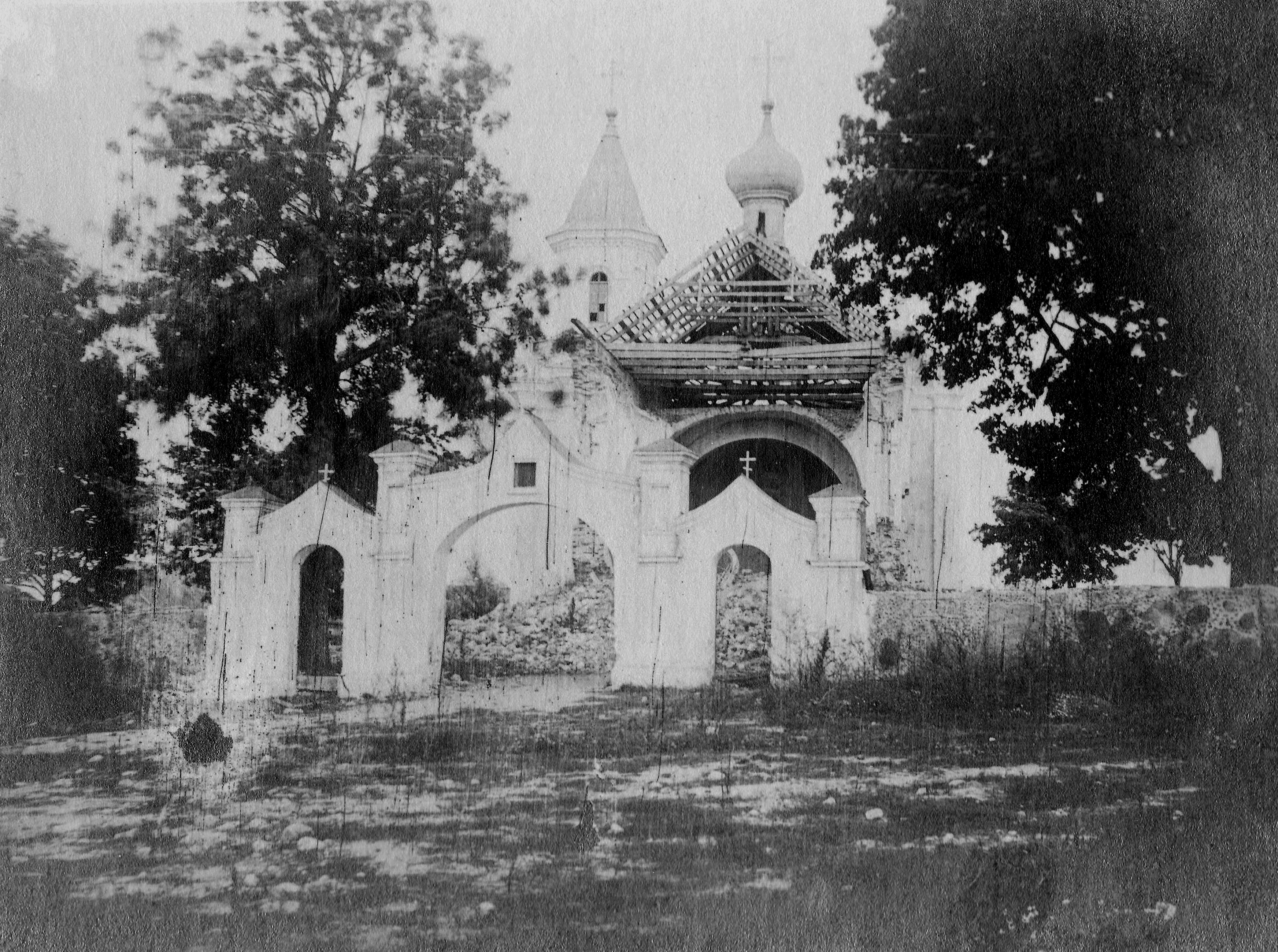
1915-1918 гг., Гарадзішча, Баранавіцкі р-н, Брэсцкая вобл. Брама і Троіцкая царква, пацярпелая падчас Першай сусветнай вайны (царква пабудаваная як касцёл Найсвяцейшай Дзевы Марыі Ружанцовай, у 1863 г. перададзены праваслаўнай царкве, у польскі час вернуты каталікам, у савецкі час быў складам, захаваўся і дзейнічае як касцёл). Прадаставіў Яўген Мшар. Архіў VEHA, калекцыя 'Руіны Беларусі'.
1915-1918, Haradzišča, Baranavičy District, Brest Region. The gate and the Orthodox Trinity Church, damaged during the First World War (the church was built as the Catholic Church of the Blessed Virgin Mary of the Rosary, in 1863 transferred to the Orthodox Church, in Polish times returned to the Catholics, in Soviet times it was a warehouse, preserved and operates as a Catholic church). Provided by Jaŭhien Mšar. From the VEHA archive, ״Ruins of Belarus״ collection.
RB-01-001-25-00883
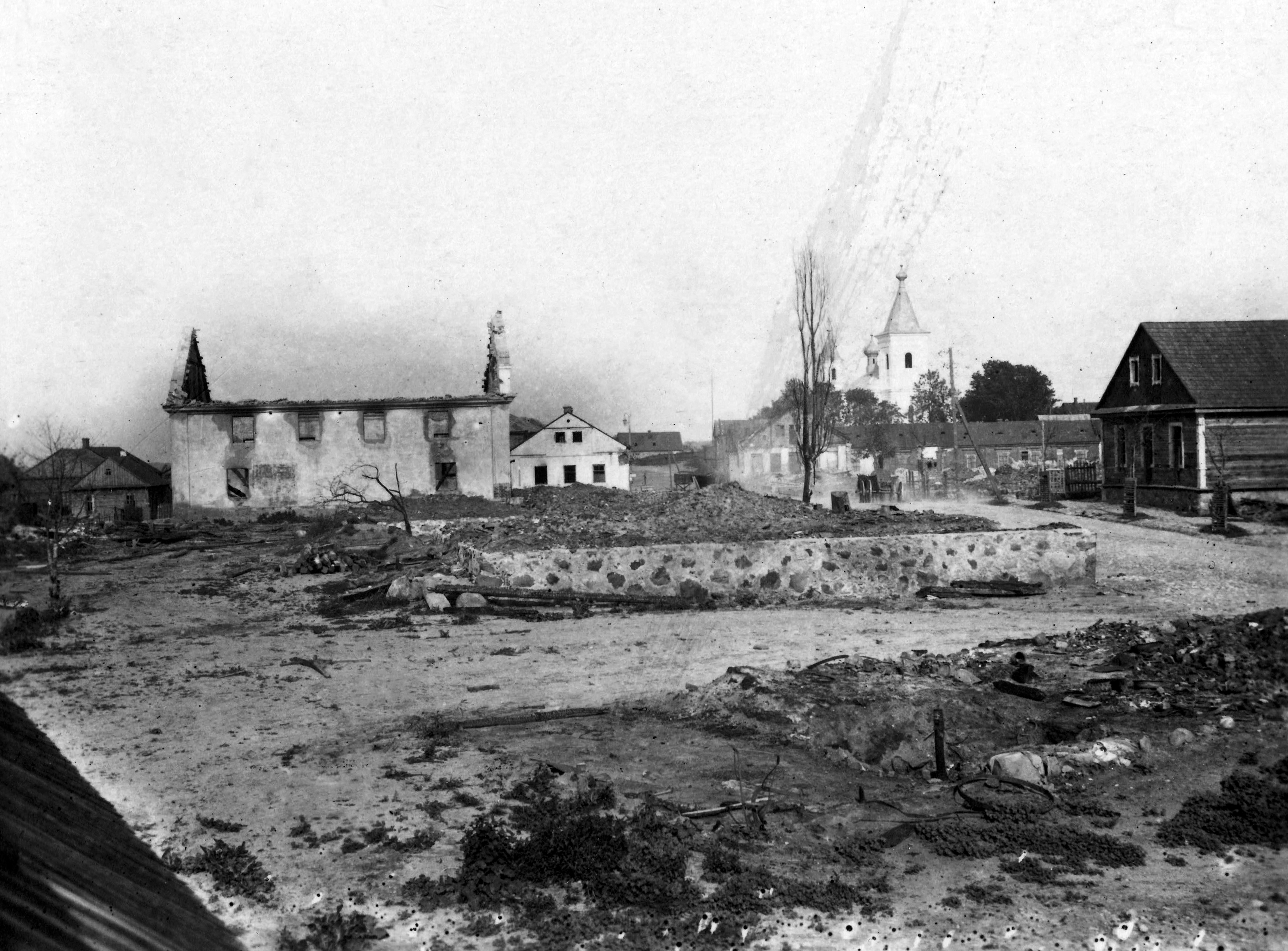
1916 г., Гарадзішча, Баранавіцкі р-н, Брэсцкая вобл. Руіны горада, далей бачная Троіцкая царква (пабудаваная як касцёл Найсвяцейшай Дзевы Марыі Ружанцовай, у 1863 г. перададзены праваслаўнай царкве, пацярпеў падчас Першай сусветнай вайны, у польскі час вернуты каталікам, у савецкі час быў складам, захаваўся і дзейнічае як касцёл). Прадаставіў Яўген Мшар. Архіў VEHA, калекцыя 'Руіны Беларусі'.
1916, Haradzišča, Baranavičy District, Brest Region. The ruins of the city, further visible Orthodox Trinity Church (built as the Catholic Church of the Blessed Virgin Mary of the Rosary, in 1863 transferred to the Orthodox Church, damaged during the First World War, in Polish times returned to the Catholics, in Soviet times it was a warehouse, preserved and operates as a Catholic church). Provided by Jaŭhien Mšar. From the VEHA archive, ״Ruins of Belarus״ collection.

RB-01-001-25-00386
1951-1953 гг., г.п. Гарадзішча, Баранавіцкі р-н, Брэсцкая вобл. Марыя Герасімаўна Жак стаіць на агароджы касцёла Найсвяцейшай Дзевы Марыі Ружанцовай (касцёл захаваўся, брама зруйнаваная). Прадаставіла Ала Жак. Архіў VEHA, калекцыя 'Руіны Беларусі'.
1951-1953, Haradzišča, Baranavičy District, Brest Region. Maryja Hierasimaŭna Žak standing on the wall surrounding the Church of the Blessed Virgin Mary of the Rosary (the church has survived, the gate has been destroyed). Provided by Ala Žak. From the VEHA archive, ״Ruins of Belarus״ collection.
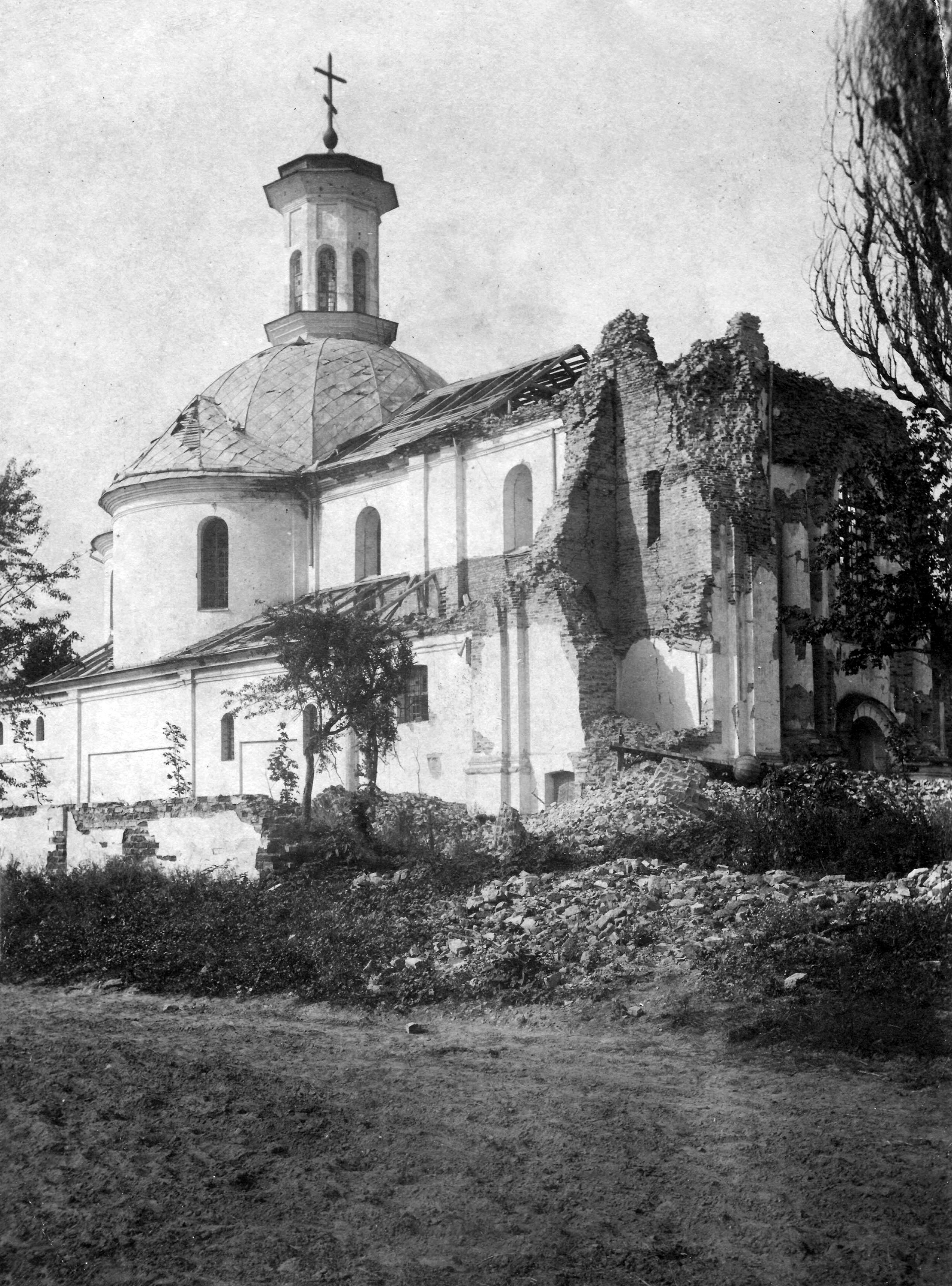
RB-01-008-24-00213
1916 г., Быцень, Івацэвіцкі р-н, Брэсцкая вобл. Праваслаўная царква св. Пятра і Паўла, раней уніяцкая царква св.Іасафата (узарваная адыходзячымі рускімі вайскамі ў Першую сусветную вайну, канчаткова зруйнаваная пасля Другой сусветнай вайны). Прадаставіў Яўген Мшар. Архіў VEHA, калекцыя 'Руіны Беларусі'.
1916, Bycień, Ivacevičy District, Brest Region. The Orthodox Church of Saints Peter and Paul, formerly the Uniate Church of St Josaphat (blown up by retreating Russian troops during the First World War, finally destroyed after the Second World War). Provided by Jaŭhien Mšar. From the VEHA archive, ״Ruins of Belarus״ collection.
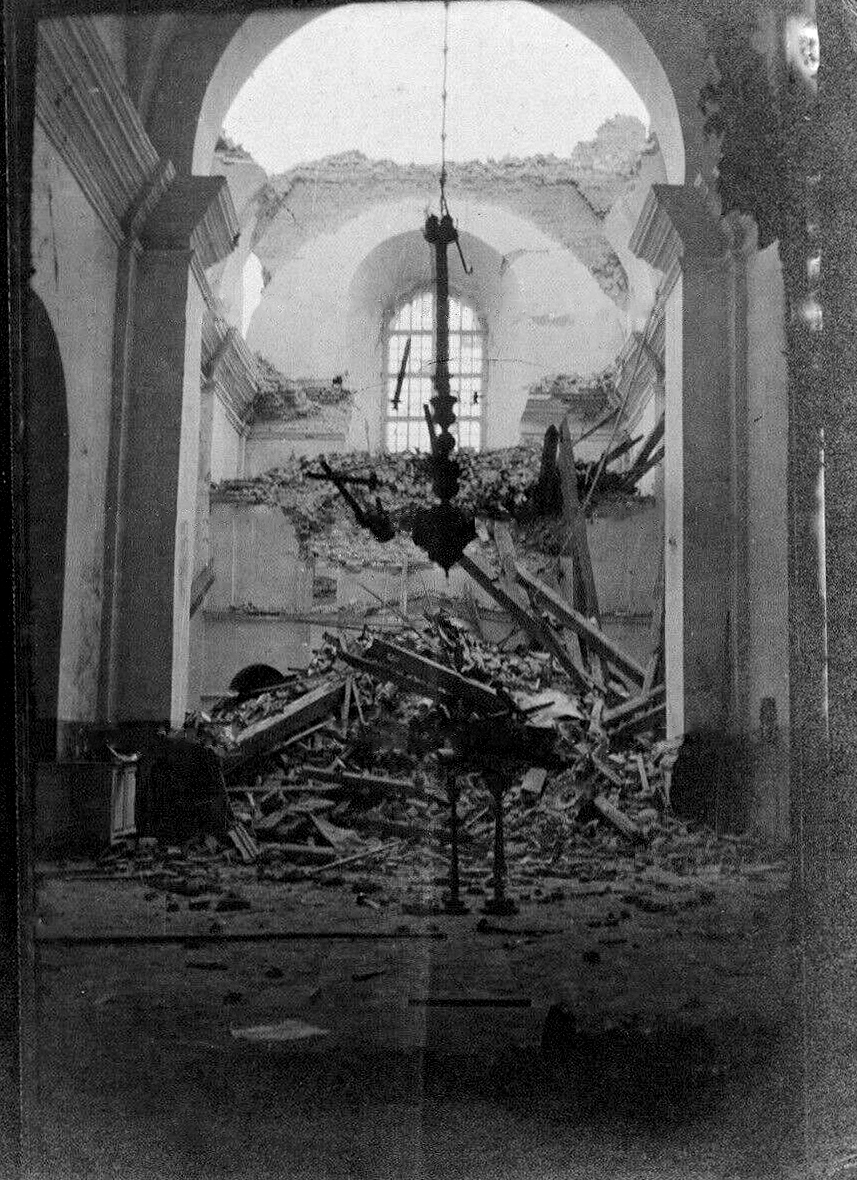
RB-01-008-24-00212
1915 г., Быцень, Івацэвіцкі р-н, Брэсцкая вобл. Інтэрьер царквы св.Іасафата (узарваная адыходзячымі рускімі вайскамі ў Першую сусветную вайну, канчаткова зруйнаваная пасля Другой сусветнай вайны). Прадаставіў Яўген Мшар. Архіў VEHA, калекцыя 'Руіны Беларусі'.
1915, Bycień, Ivacevičy District, Brest Region. Interior of the Church of St. Josaphat (blown up by retreating Russian troops during the First World War, finally demolished after the Second World War). Provided by Jaŭhien Mšar. From the VEHA archive, ״Ruins of Belarus״ collection.
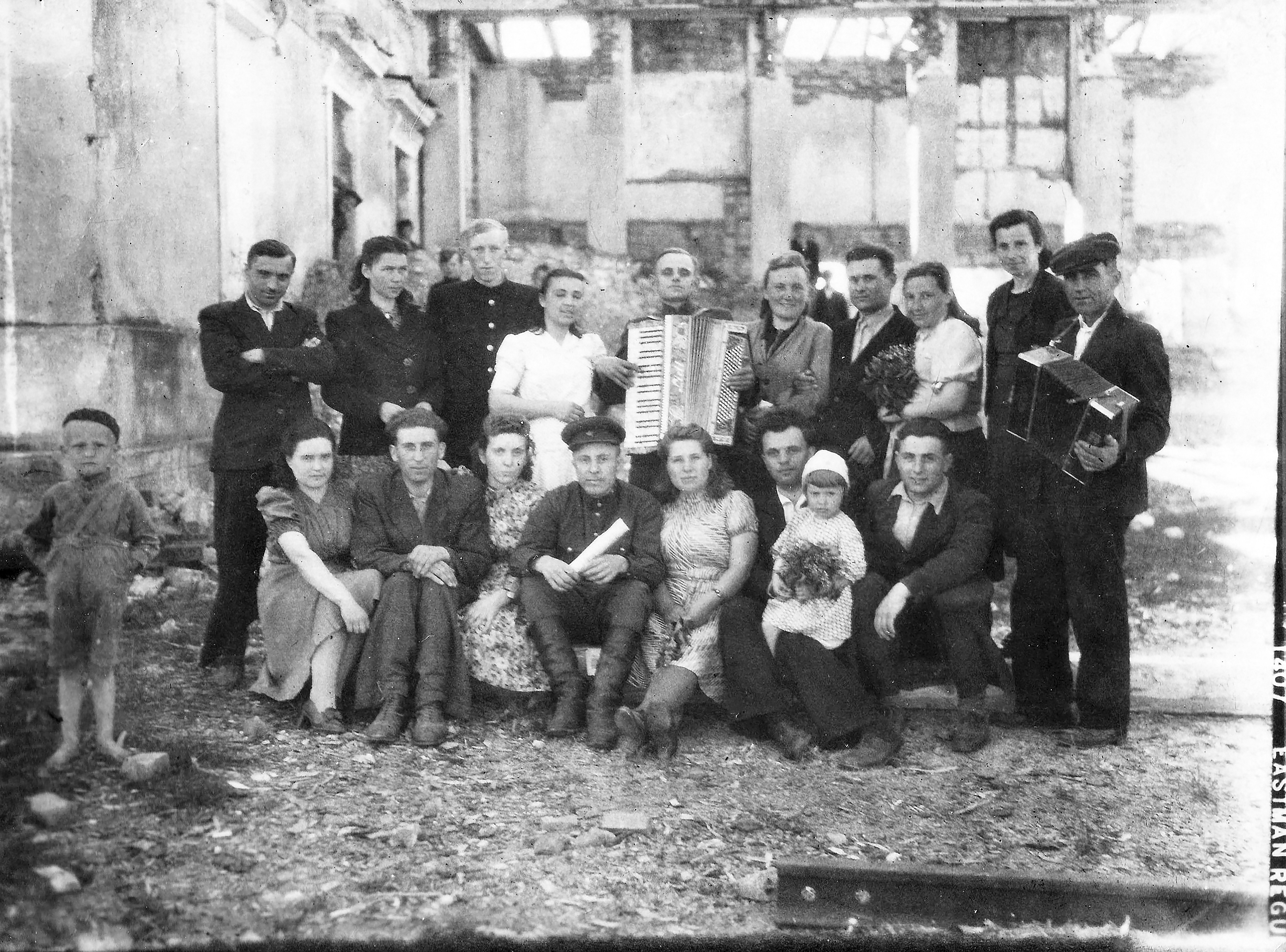
RB-01-001-23-00052
1946 г., в. Паланечка, Баранавіцкі р-н, Брэсцкая вобл. Моладзь каля былога палацу Радзівілаў (знаходзіцца ў закансэрваваным стане). Прадаставіла Ала Жак. Архіў VEHA, калекцыя 'Руіны Беларусі'.
1946, Palaniečka, Baranavičy District, Brest region. A group of young people in front of the former Radzivil Palace (conserved). Provided by Ala Žak. From the VEHA archive, ״Ruins of Belarus״ collection.
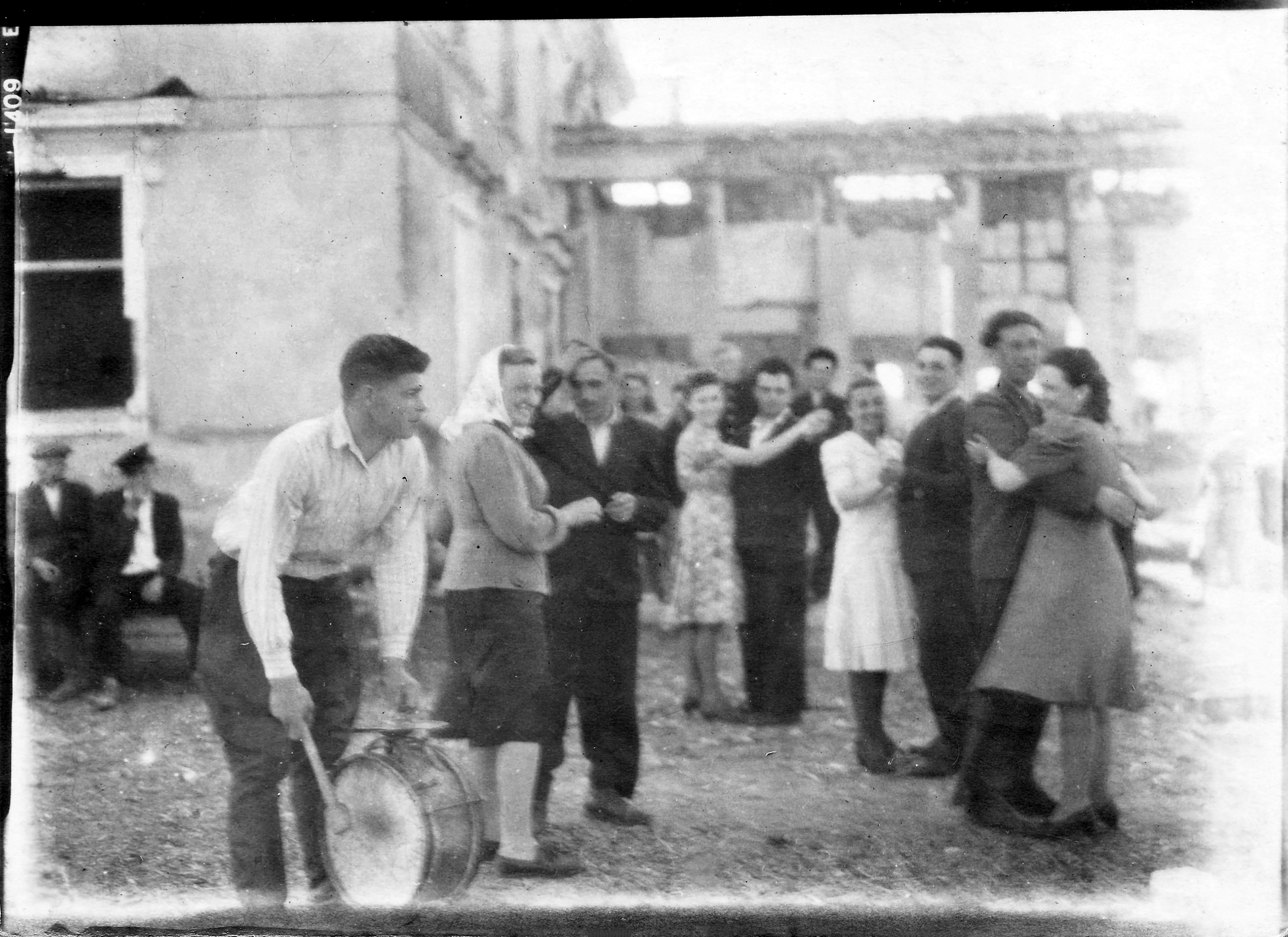
RB-01-001-23-00053
1946 г., в. Паланечка, Баранавіцкі р-н, Брэсцкая вобл. Танцы каля палацу Радзівілаў (знаходзіцца ў закансэрваваным стане); у цэнтры Зінаіда Сіманчык, у белай сукенцы Надзея Сіманчык. Прадаставіла Ала Жак. Архіў VEHA, калекцыя 'Руіны Беларусі'.
1946, Palaniečka, Baranavičy District, Brest region. Dancing near the Radzivil Palace (conserved); Zinaida Simančyk in the center, Nadzieja Simančyk in a white dress. Provided by Ala Žak.From the VEHA archive, ״Ruins of Belarus״ collection.

RB-01-002-25-00962
Брэст. Руіны горада. Прадаставіў Цэнтр беларускай культуры, Беласток. Архіў VEHA, калекцыя 'Руіны Беларусі'.
Brest. Ruins of the city. Provided by Centrum Kultury Białoruskiej w Białymstoku. From the VEHA archive, ״Ruins of Belarus״ collection.
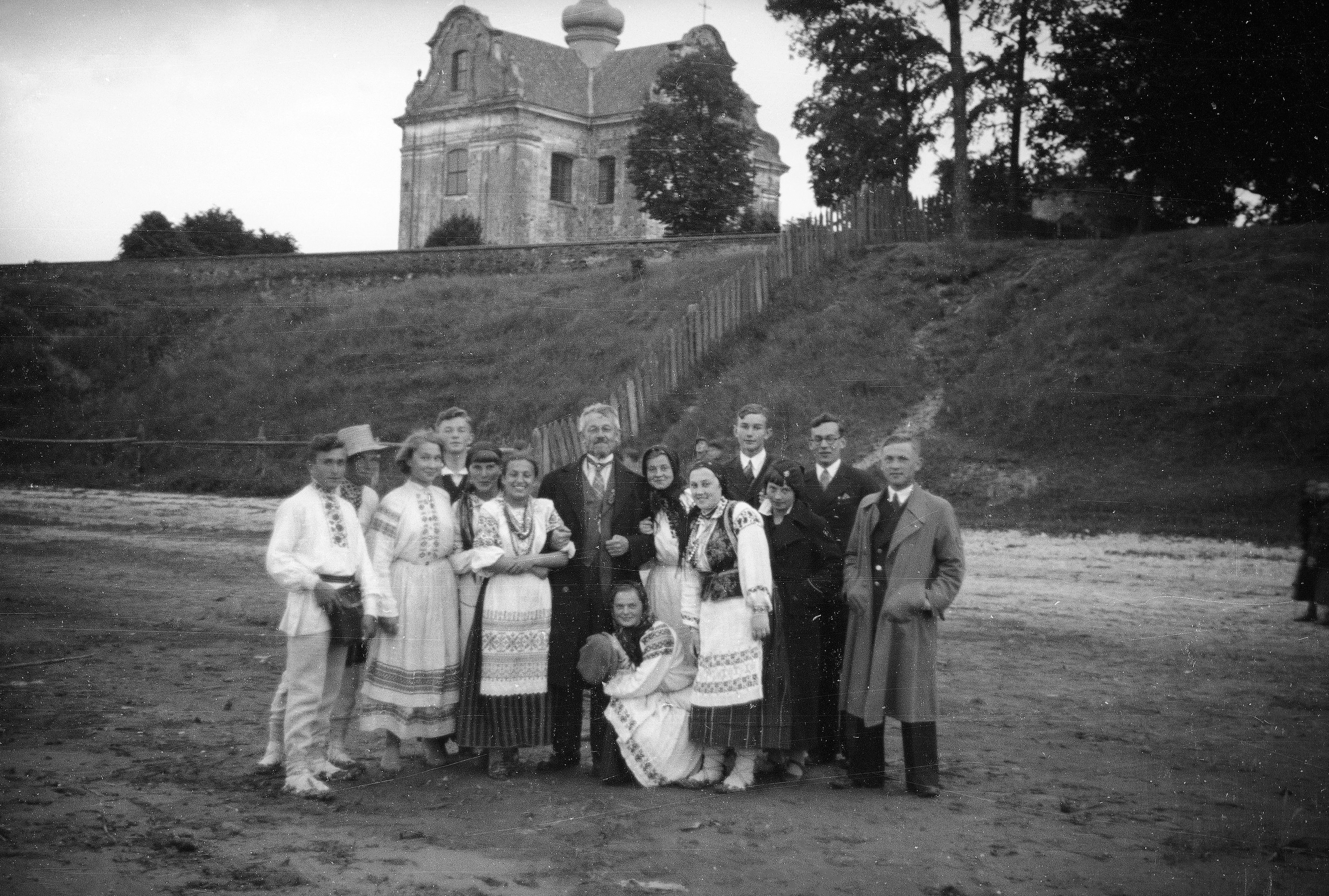
RB-01-014-24-00255
Каля 1936-га г., в. Гарадзішча, Пінскі р-н, Брэсцкая вобл. Група моладзі на тле касцёла св. Ганны (узарваны нямецкімі вайскамі пры адступленні ў 1944 г.). Фатограф Генрык Паддэмбскі. Крыніца: Wikimedia Commons 935252890. Архіў VEHA, калекцыя 'Руіны Беларусі'.
About 1936, Haradzišča, Pinsk district, Brest Region. A group of young people against the background of the Church of St. Hanna (blow up by German troops during the retreat in 1944). Photographer Henryk Poddębski. Source: Wikimedia Commons 935252890. From the VEHA archive, ״Ruins of Belarus״ collection.
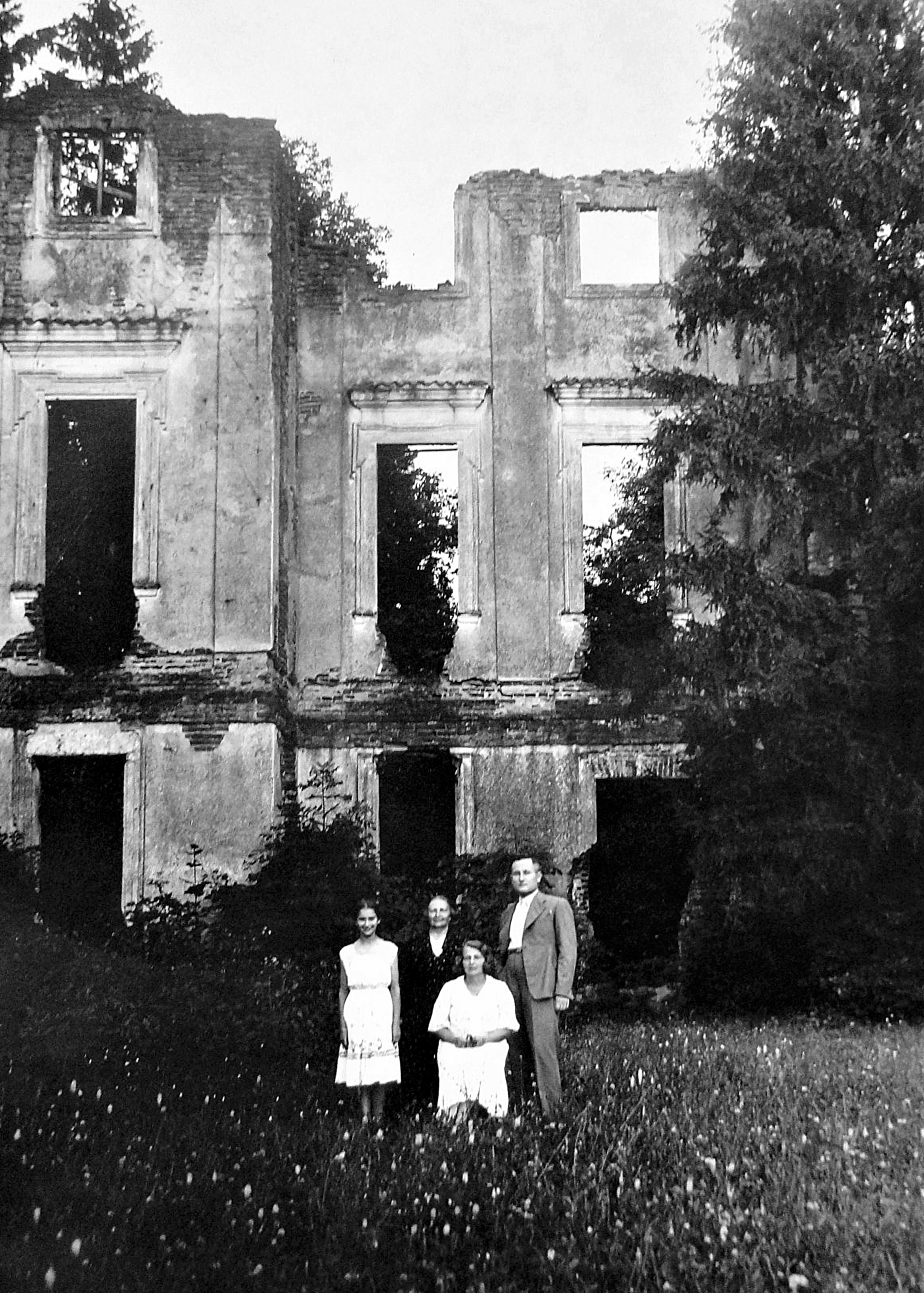
RB-01-009-24-00233
1939 г., г. Высокае, Камянецкі р-н, Брэсцкая вобл. Группа людзей перад руінамі замка Сапегаў (прыйшоў у заняпад у XIX ст., захаваліся руіны ўезднай брамы). Крыніца: Wikimedia Commons 621735676. Архіў VEHA, калекцыя 'Руіны Беларусі'.
1939, Vysokaje, Kamieniec District, Brest Region. A group of people in front of the ruins of the Sapieha Castle (fell into decline in the 19th century, the ruins of the entrance gate have been preserved). Source: Wikimedia Commons 621735676. From the VEHA archive, ״Ruins of Belarus״ collection.
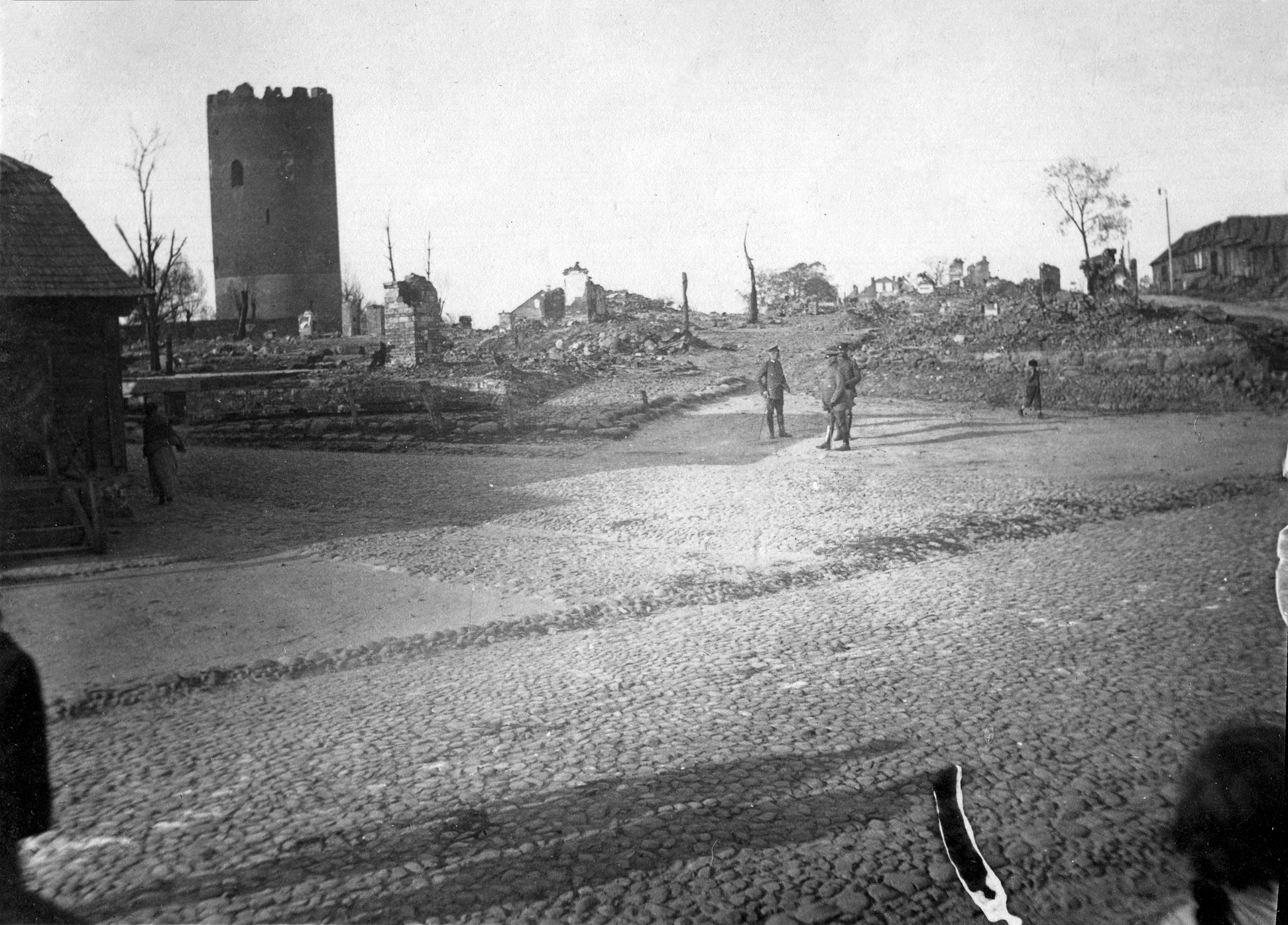
RB-01-009-25-00346
1915-1918 гг., г. Камянец, Брэсцкая вобл. Руіны горада і пашкоджаная Камянецкая вежа (вежа захавалася). Прадаставіў Андрэй Асташэня. Архіў VEHA, калекцыя 'Руіны Беларусі'.
1915-1918, Kamianiec, Brest Region. Ruins of the city and the damaged Kamieniec Tower (the tower is preserved). Provided by Andrej Astašenia. From the VEHA archive, ״Ruins of Belarus״ collection.
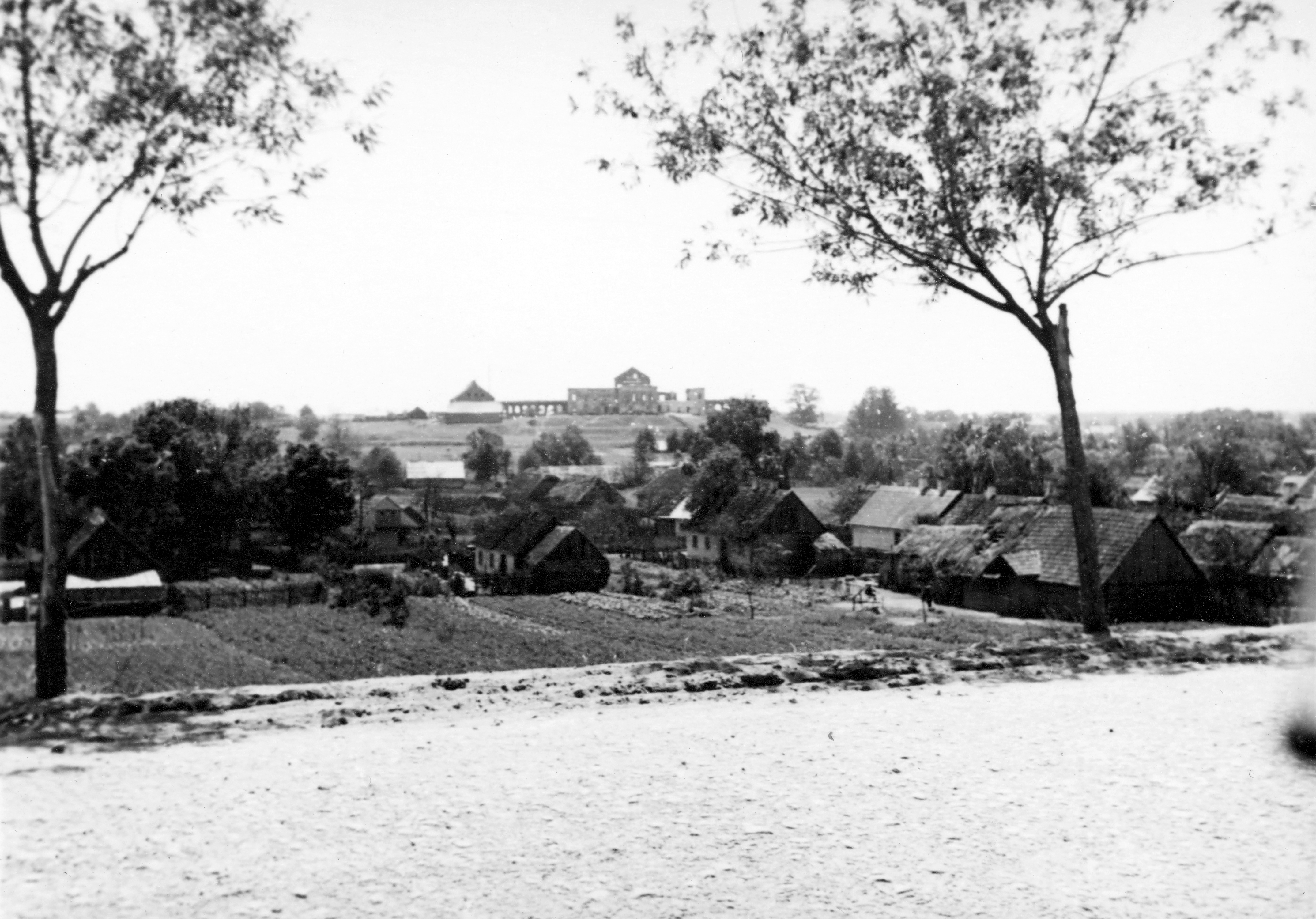
RB-01-015-25-00963
Ружаны, Пружанскі р-н, Брэсцкая вобл. Від горада, у далечыні бачныя руіны палаца Сапегаў. Прадаставіў Цэнтр беларускай культуры, Беласток. Архіў VEHA, калекцыя 'Руіны Беларусі'.
Ružany, Pružany district, Brest Region. Town view with the ruins of the Sapieha Palace in the distance. Provided by Centrum Kultury Białoruskiej w Białymstoku. From the VEHA archive, ״Ruins of Belarus״ collection.
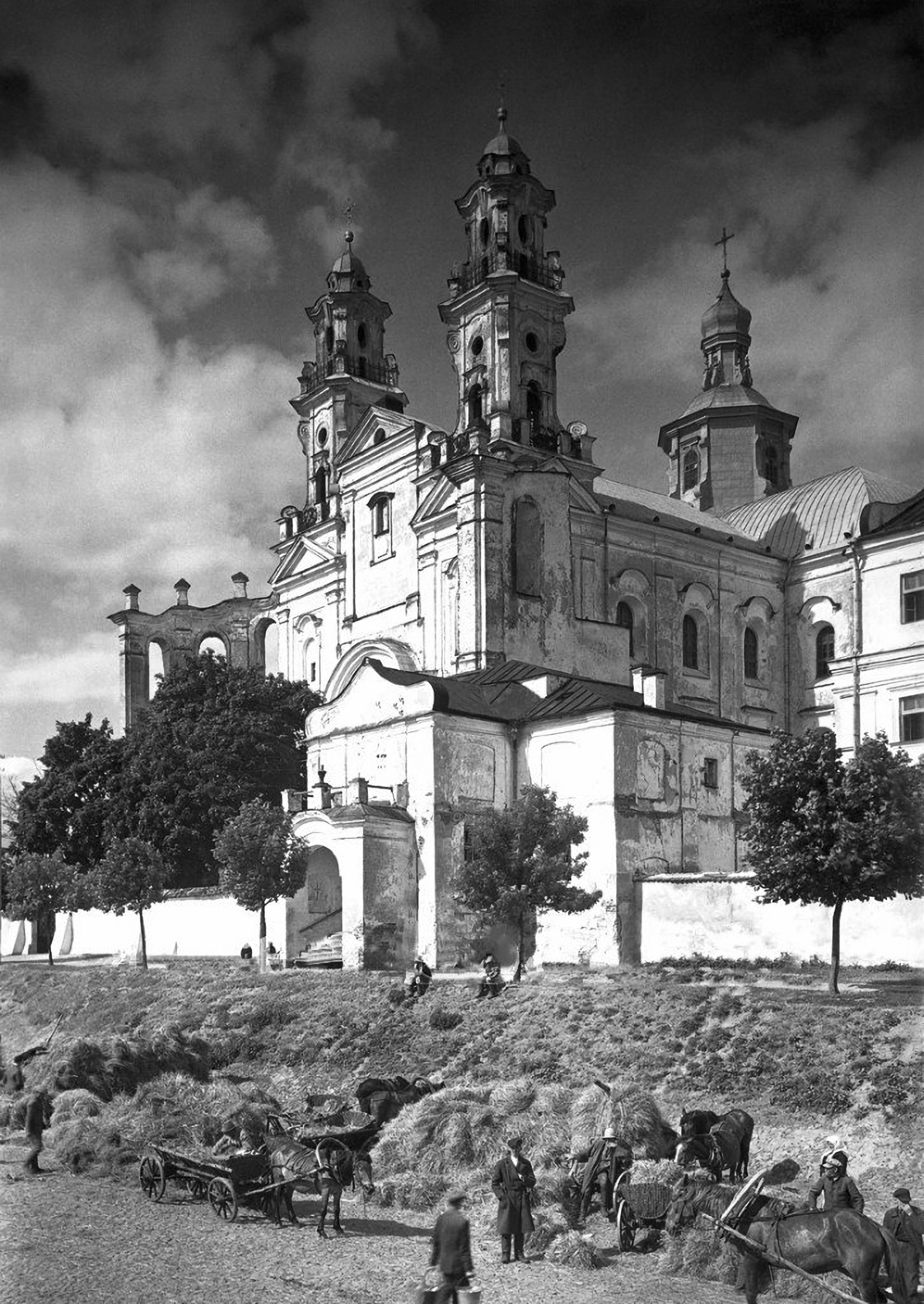
RB-01-014-25-00400
1930-1939 гг., г. Пінск, Брэсцкая вобл. Касцёл св. Станіслава (знесены савецкімі ўладамі ў 1953 г.). Крыніца: Wikimedia Commons; Аляксей Пігелеўскі, эл. архіў. Архіў VEHA, калекцыя 'Руіны Беларусі'.
1930-1939, Pinsk, Brest Region. St. Stanislaus Catholic Church (demolished by the Soviet authorities in 1953). Source: Wikimedia Commons; Аляксей Пігелеўскі, эл. архіў. From the VEHA archive, ״Ruins of Belarus״ collection.
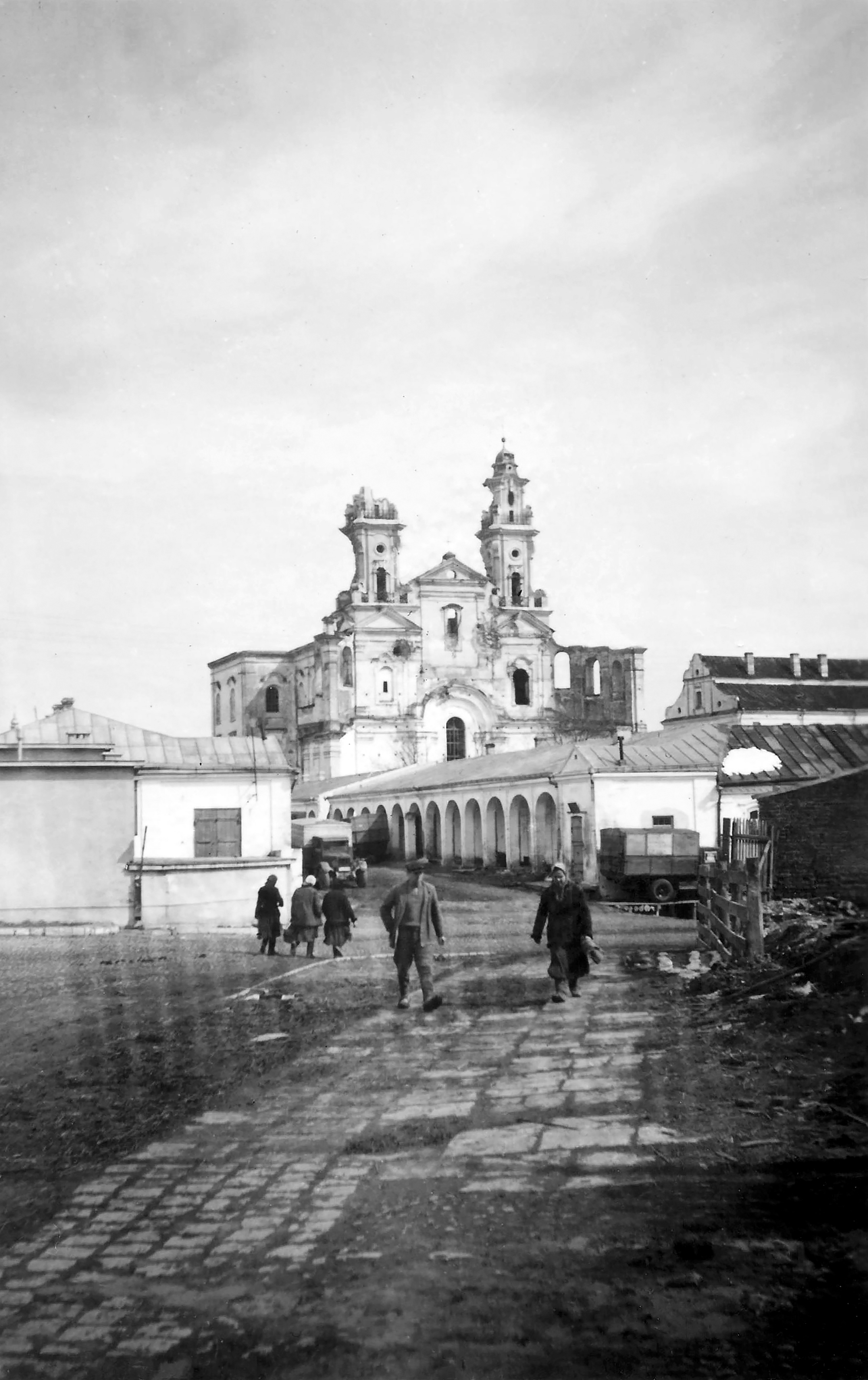
RB-01-014-25-00885
1944 г., Пінск, Брэсцкая вобл. Гандлёвыя рады і касцёл св. Станіслава (гандлёвыя рады разбураныя ў 1950-я гг., касцёл знесены савецкімі ўладамі ў 1953 г.). Прадаставіў Яўген Мшар. Архіў VEHA, калекцыя 'Руіны Беларусі'.
1944, Pinsk, Brest Region. Cloth hall and St. Stanislaus Church (the сloth hall was destroyed in the 1950s, the church was demolished by the Soviet authorities in 1953). Provided by Jaŭhien Mšar. From the VEHA archive, ״Ruins of Belarus״ collection.
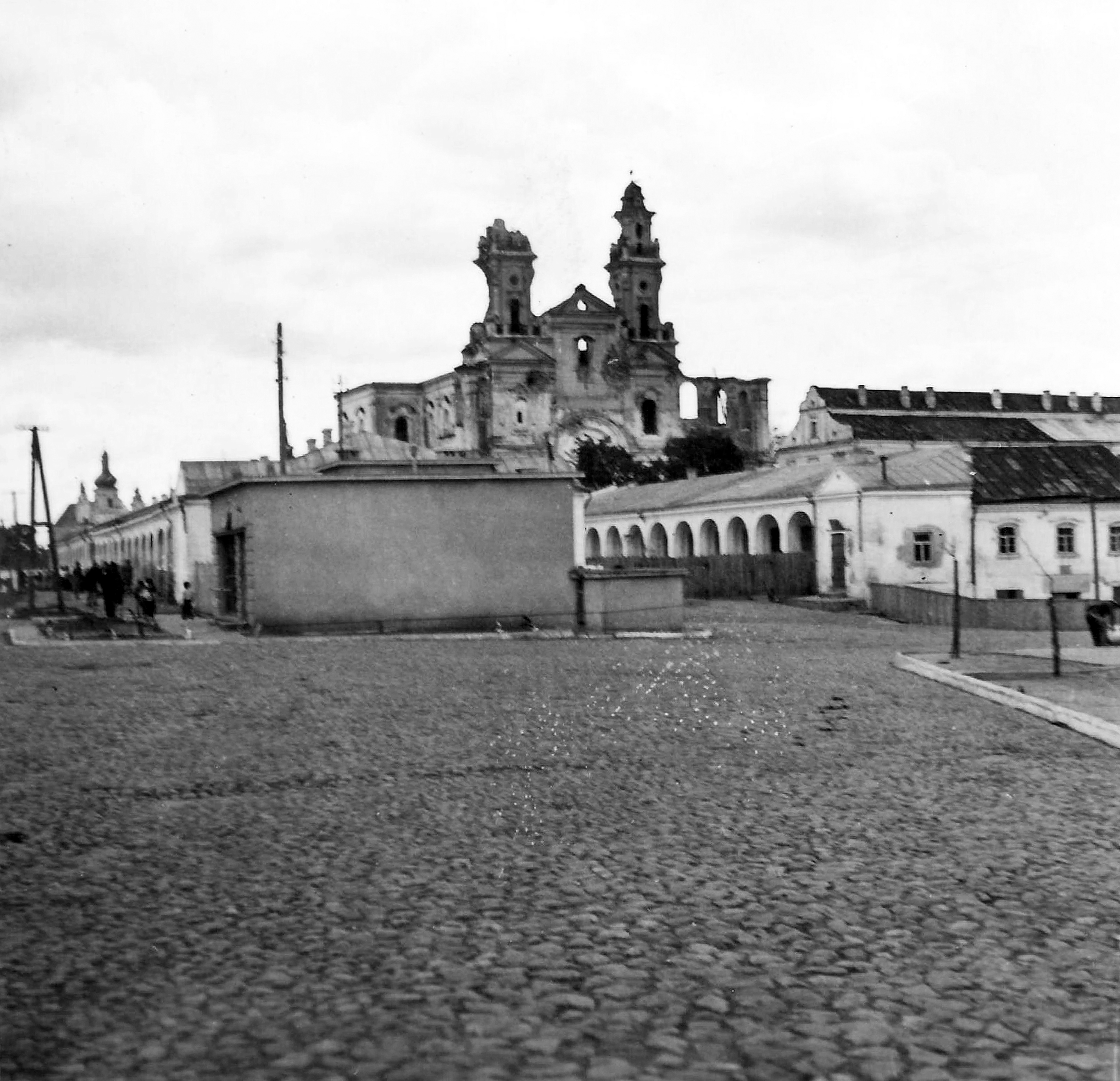
RB-01-014-25-00887
1941-1944 гг., Пінск, Брэсцкая вобл. Гандлёвыя рады і касцёл св. Станіслава (гандлёвыя рады разбураныя ў 1950-я гг., касцёл знесены савецкімі ўладамі ў 1953 г.). Прадаставіў Яўген Мшар. Архіў VEHA, калекцыя 'Руіны Беларусі'.
1941-1944, Pinsk, Brest Region. Cloth hall and St. Stanislaus Church (the сloth hall was destroyed in the 1950s, the church was demolished by the Soviet authorities in 1953). Provided by Jaŭhien Mšar. From the VEHA archive, ״Ruins of Belarus״ collection.

RB-01-014-25-00884
1944 г., Пінск, Брэсцкая вобл. Вуліца горада, далей касцёл св. Станіслава (касцёл знесены савецкімі ўладамі ў 1953 г.). Прадаставіў Яўген Мшар. Архіў VEHA, калекцыя 'Руіны Беларусі'.
1944, Pinsk, Brest Region. City street, then St. Stanislaus Church (the church was demolished by the Soviet authorities in 1953). Provided by Jaŭhien Mšar. From the VEHA archive, ״Ruins of Belarus״ collection.

RB-01-014-25-00886
1915-1918 гг., Пінск, Брэсцкая вобл. Прынц Леапольд Баварскі і строй нямецкіх жаўнёраў перад касцёлам св. Станіслава (знесены савецкімі ўладамі ў 1953 г.). Прадаставіў Яўген Мшар. Архіў VEHA, калекцыя 'Руіны Беларусі'.
1915-1918, Pinsk, Brest Region. Prince Leopold of Bavaria and a formation of German soldiers in front of St. Stanislaus Church (demolished by the Soviet authorities in 1953). Provided by Jaŭhien Mšar. From the VEHA archive, ״Ruins of Belarus״ collection.

RB-01-014-23-00001
1934 г., г. Пінск, Брэсцкая вобл. Штомесячны кірмаш перад касцёлам св. Станіслава (касцёл быў канчаткова зруйнаваны ў 1953 г.). Крыніца: Fortepan UWM Libraries. Архіў VEHA, калекцыя 'Руіны Беларусі'.
1934, Pinsk, Brest Region. Monthly fair in front of the church of St. Stanislaŭ (the church was finally demolished in 1953). Source: Fortepan UWM Libraries. From the VEHA archive, ״Ruins of Belarus״ collection.
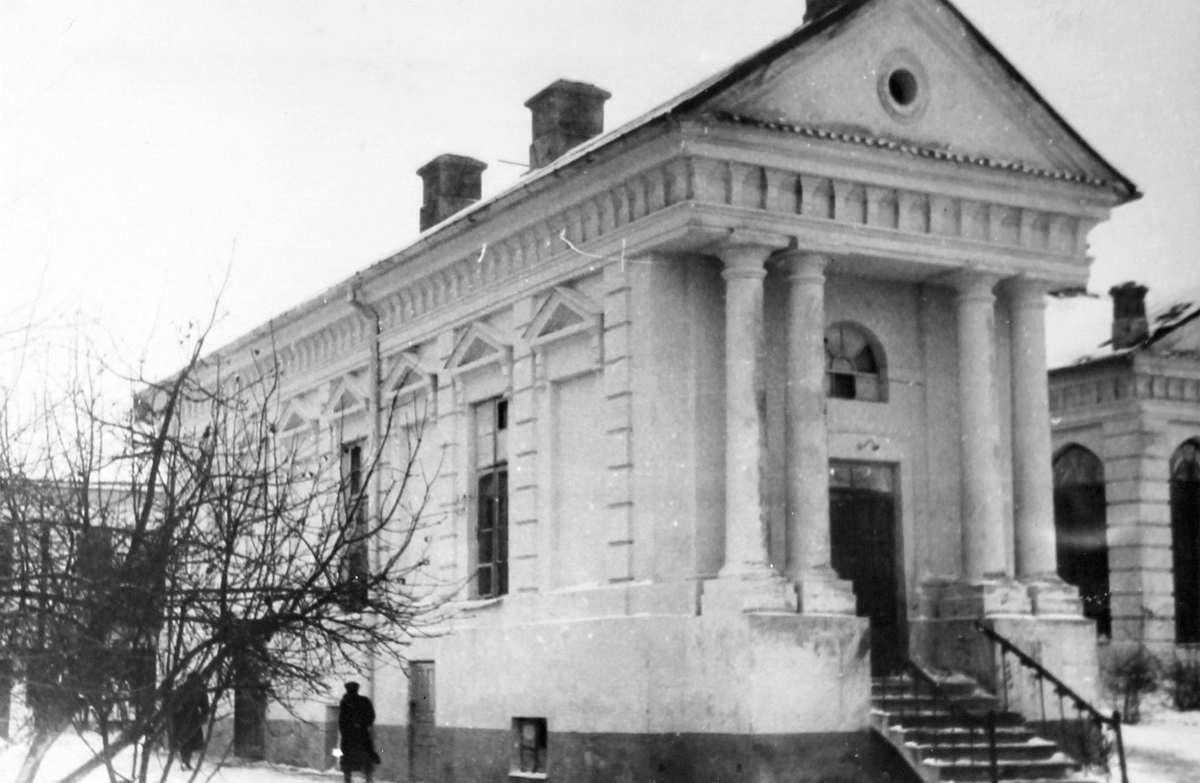
RB-01-014-25-00776
Пінск, Брэсцкая вобл. Палац Бутрымовічаў (захаваўся, месціць Палац шлюбаў). Прадаставіў Уладзімір Садоўскі; з архіва Міхаіла Кацара, Інстутут гісторыі Нацыянальнай акадэміі навук Беларусі. Архіў VEHA, калекцыя 'Руіны Беларусі'.
Pinsk, Brest Region. Butrymovich Palace (preserved, houses the Wedding Palace). Provided by Uladzimir Sadoŭski; from the archive of Mikhail Katsar, Institute of History of the National Academy of Sciences of Belarus. From the VEHA archive, ״Ruins of Belarus״ collection.
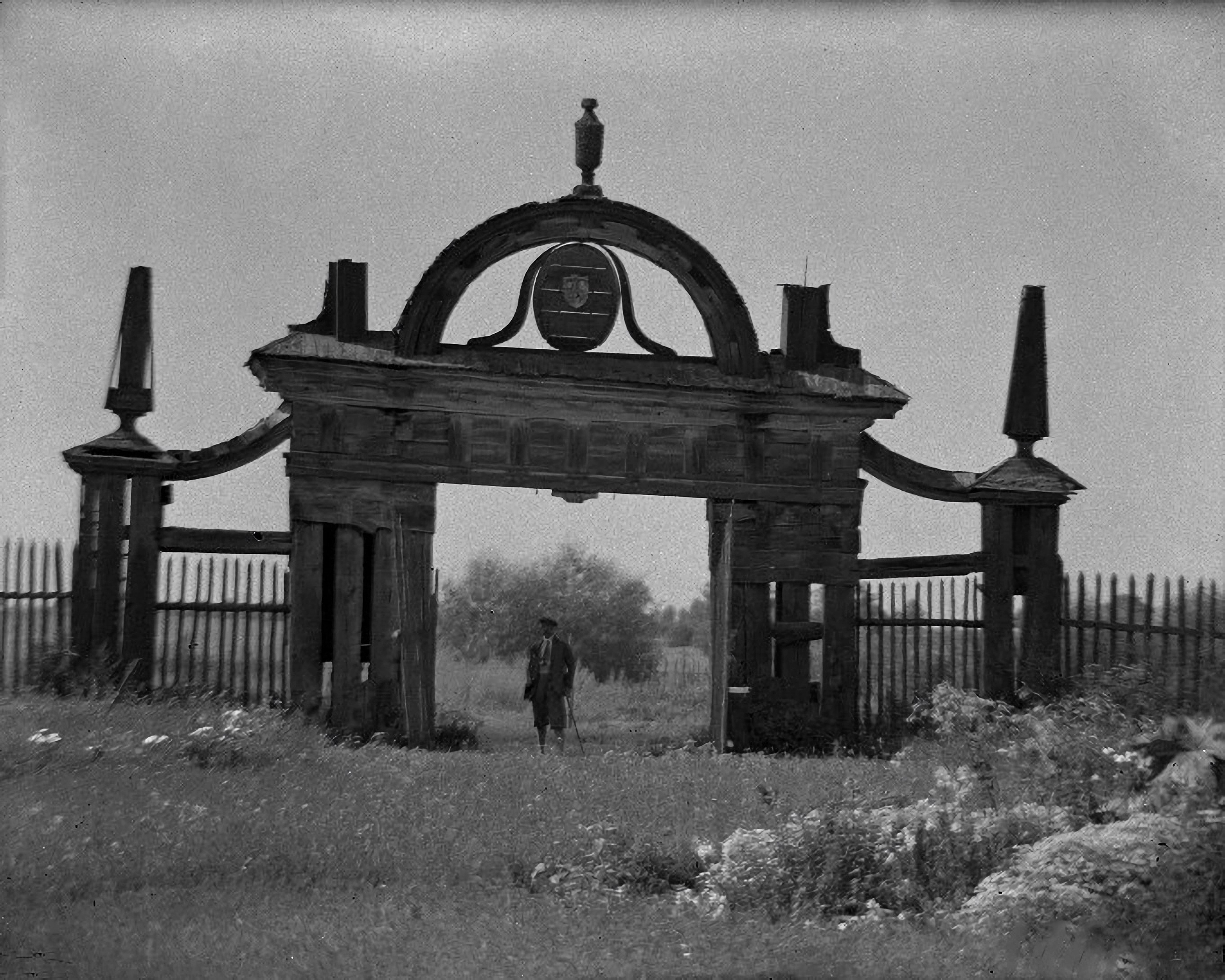
RB-01-011-24-00099
1929 г., а.г. Кажан-Гарадок, Лунінецкі р-н, Брэсцкая вобл. Брама сядзібы Шчытоў-Неміровічаў (страчаная). Фатограф Станіслаў Бохніг. Крыніца: Wikimedia Commons 471652867. Архіў VEHA, калекцыя 'Руіны Беларусі'.
1929, Kažan-Haradok, Luniniec District, Brest region. The gate of the Ščyt-Niemirovič manor (lost). Photographer Stanisław Bochnig. Source: Wikimedia Commons 471652867. From the VEHA archive, ״Ruins of Belarus״ collection.
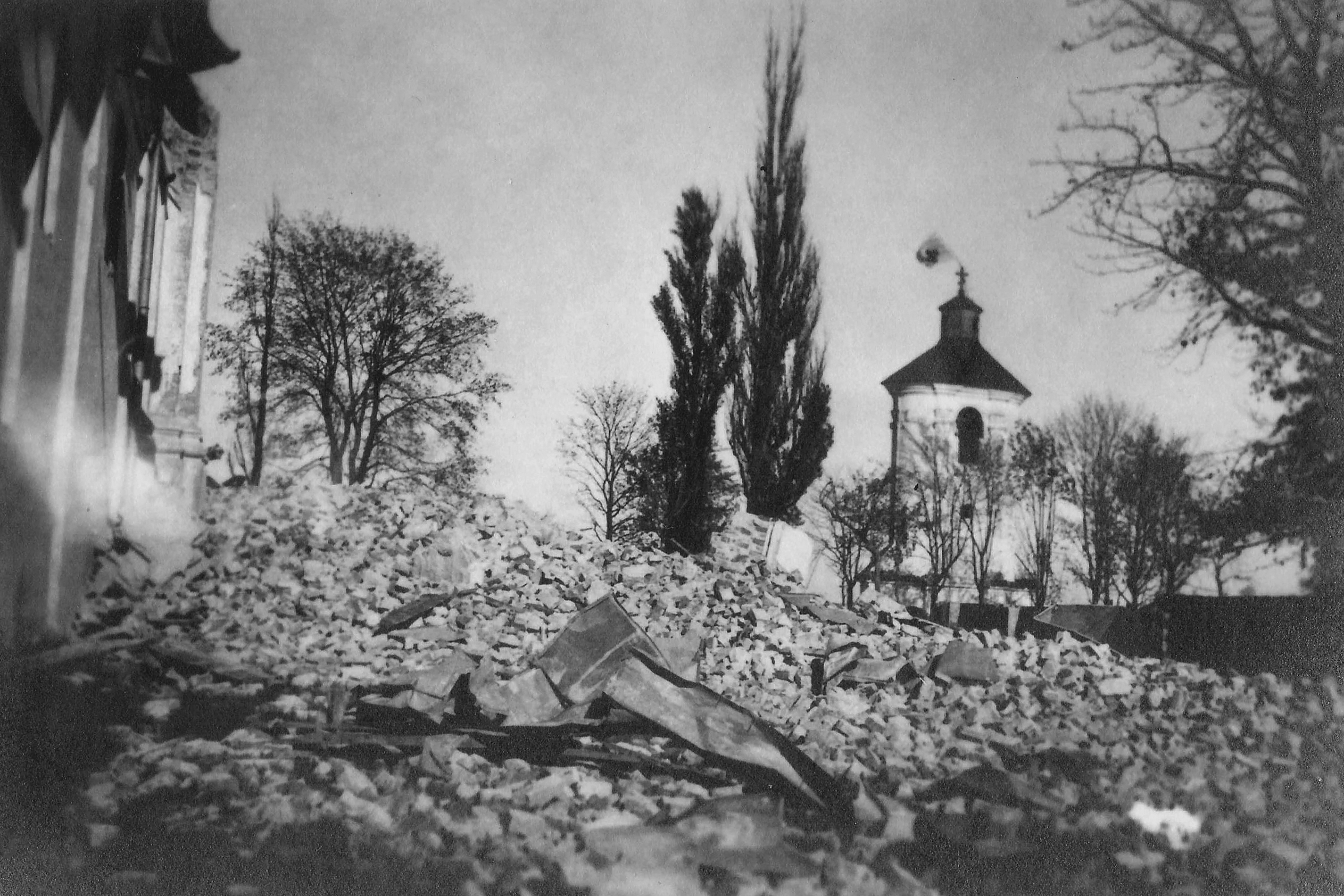
RB-01-008-25-00881
1915 г., Быцень, Івацэвіцкі р-н, Брэсцкая вобл. Руіны праваслаўнай царквы св. Пятра і Паўла, раней ўніяцкая царква св. Іасафата (узарваная адыходзячымі рускімі вайскамі ў Першую сусветную вайну, канчаткова зруйнаваная пасля Другой сусветнай вайны). Прадаставіў Яўген Мшар. Архіў VEHA, калекцыя 'Руіны Беларусі'.
1915, Bycień, Ivacevičy District, Brest Region. Church of Saints Peter and Paul, formerly the Uniate Church of St Josaphat (blown up by retreating Russian troops during the First World War, finally destroyed after the Second World War). Provided by Jaŭhien Mšar. From the VEHA archive, ״Ruins of Belarus״ collection.
Brest Fortress
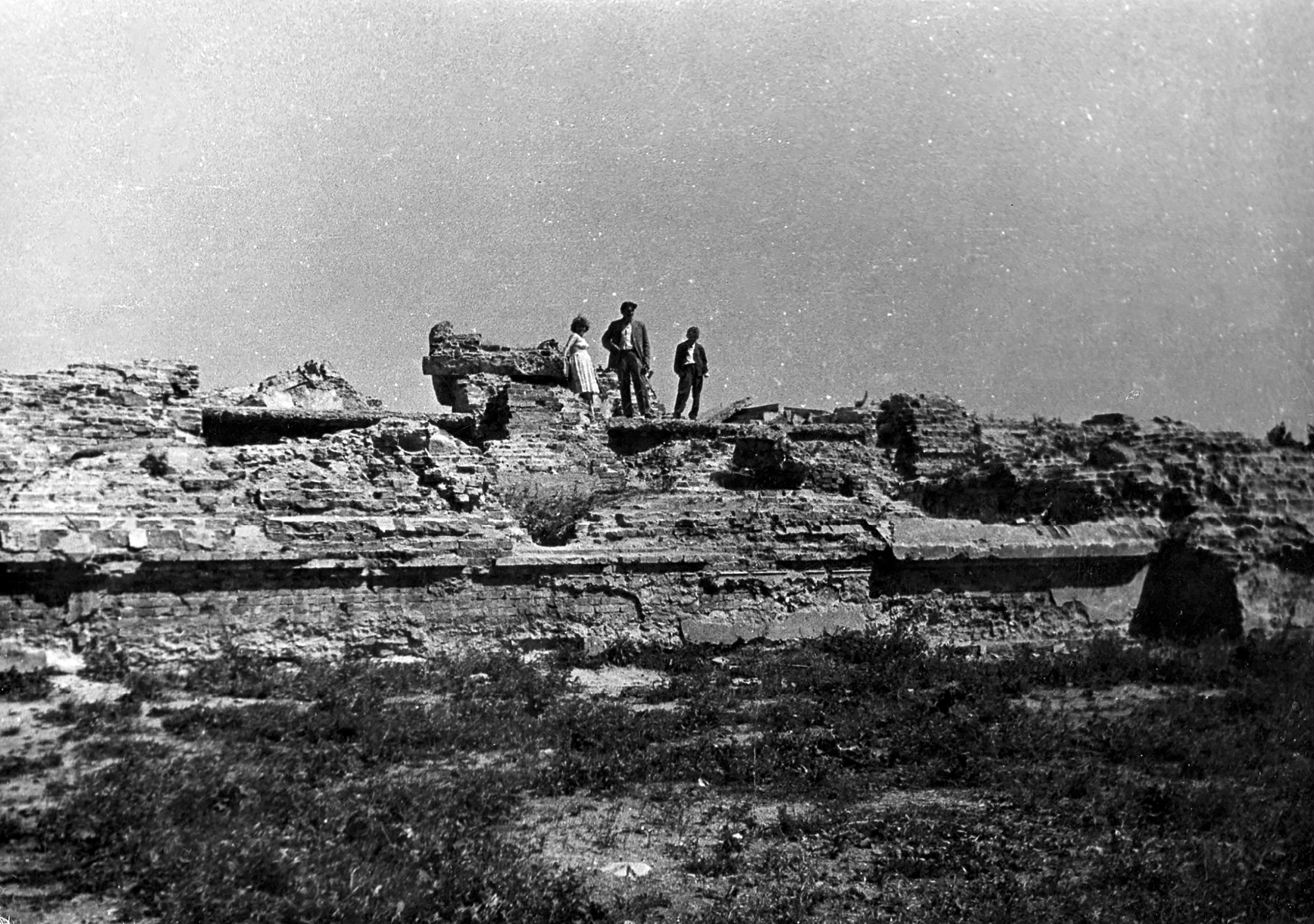
RB-01-002-25-00710
1960-я гг., г. Брэст. Зінаіда, Віктар і Генадзь Беразоўскія на руінах Брэсцкай крэпасці (моцна пацярпела ў Першую і Другую сусветныя войны, з 1971 г. месціць музейны комплекс з часткова закансерваванымі рэшткамі крэпасці). Прадаставіла Дзіяна Пінчук. Архіў VEHA, калекцыя 'Руіны Беларусі'.
1960s, Brest. Zinaida, Viktar and Hienadź Bierazoŭski at the ruins of the Brest Fortress (heavily damaged during the First and Second World Wars, since 1971 houses a museum complex with partially preserved remains of the fortress). Provided by Dzijana Pinčuk. From the VEHA archive, ״Ruins of Belarus״ collection.
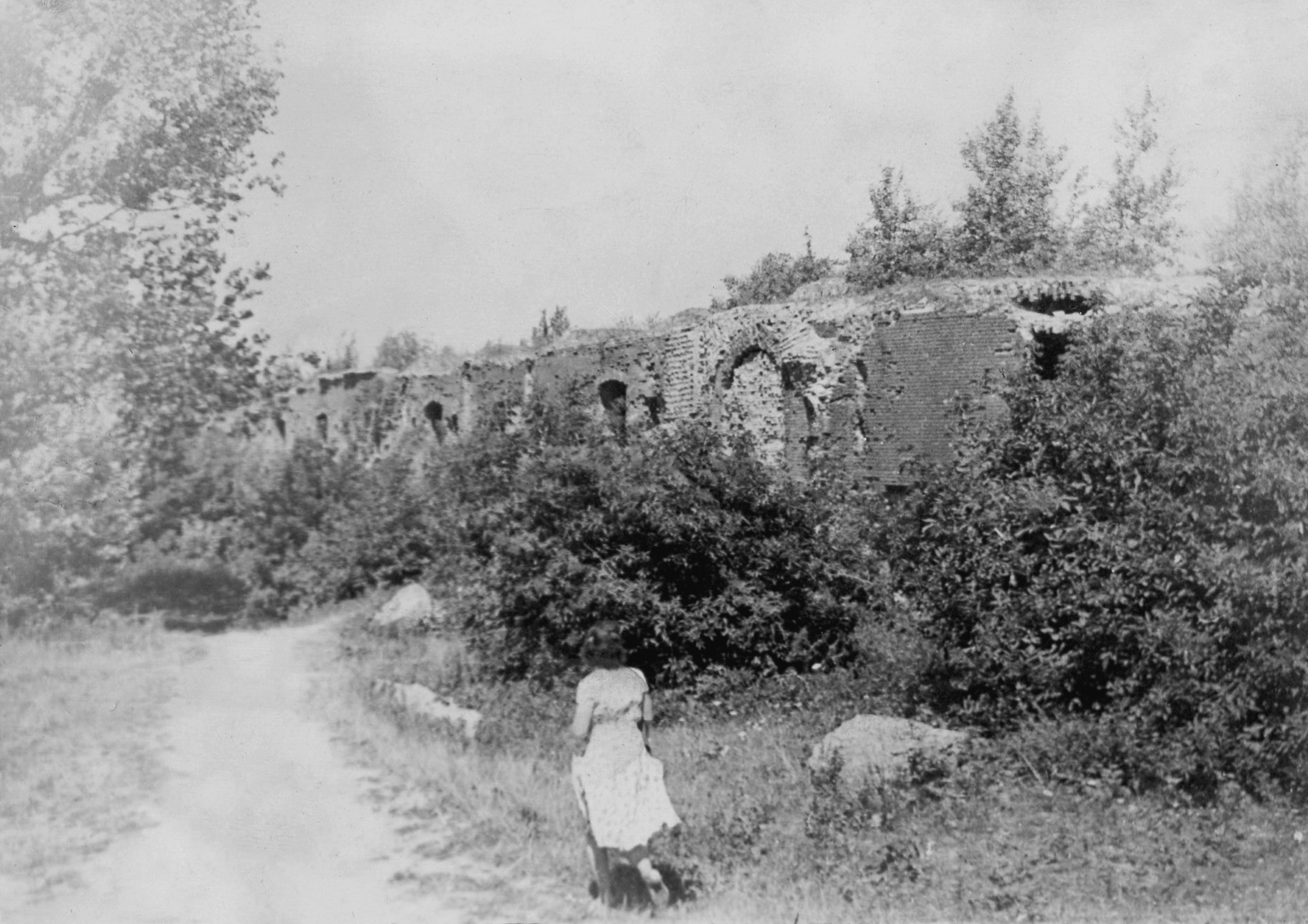
RB-01-002-25-00711
1960-я гг., г. Брэст. Зінаіда Беразоўская каля руін Брэсцкай крэпасці (моцна пацярпела ў Першую і Другую сусветныя войны, з 1971 г. месціць музейны комплекс з часткова закансерваванымі рэшткамі крэпасці). Прадаставіла Дзіяна Пінчук. Архіў VEHA, калекцыя 'Руіны Беларусі'.
1960s, Brest. Zinaida Bierazoŭskaja near the ruins of the Brest Fortress (heavily damaged during the First and Second World Wars, since 1971 houses a museum complex with partially preserved remains of the fortress). Provided by Dzijana Pinčuk. From the VEHA archive, ״Ruins of Belarus״ collection.
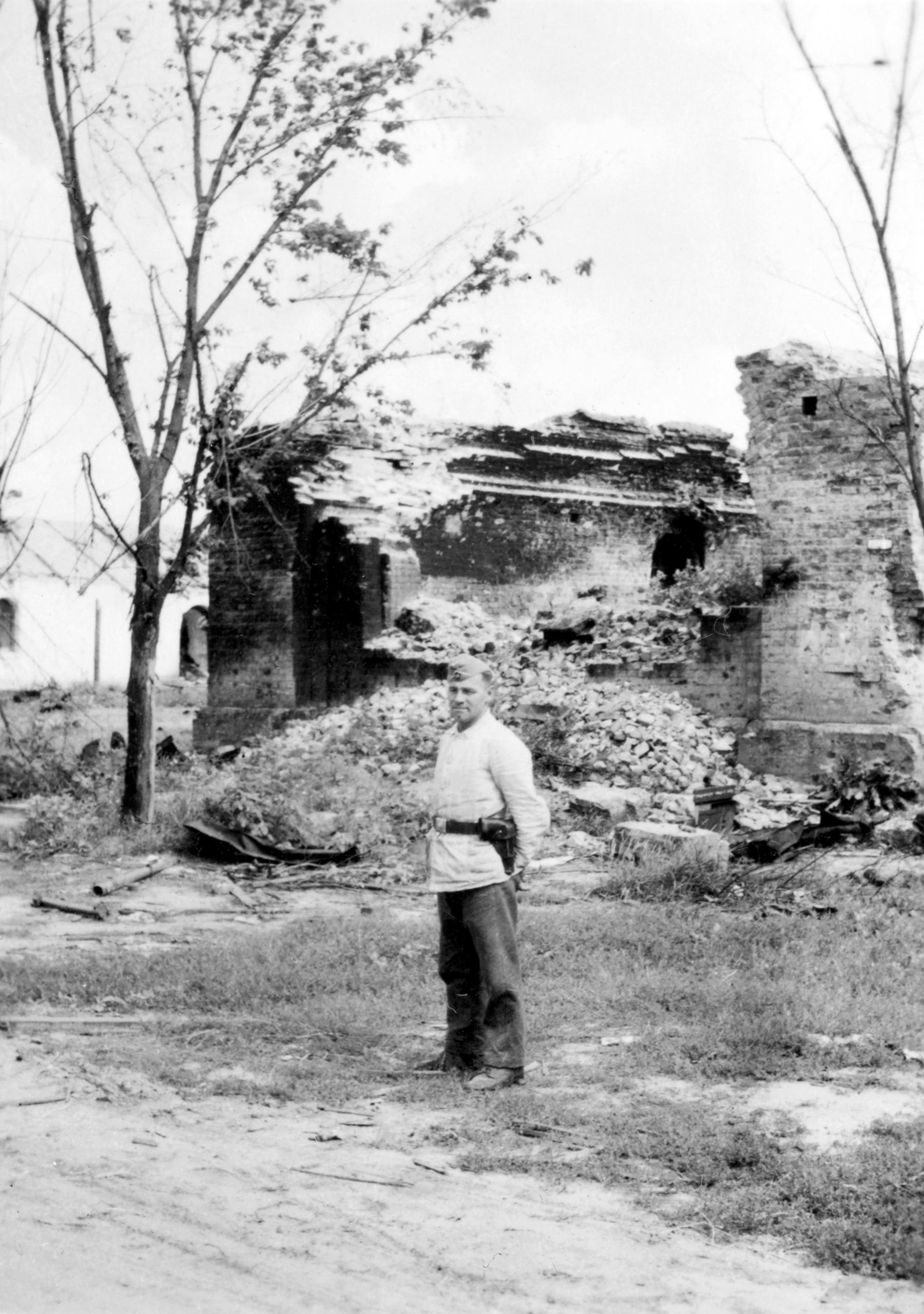
RB-01-002-25-00964
Пасля 1944-га г., Брэст. Мужчына на фоне руін Брэсцкай крэпасці. Прадаставіў Цэнтр беларускай культуры, Беласток. Архіў VEHA, калекцыя 'Руіны Беларусі'.
After 1944, Brest. A man at the ruins of the Brest Fortress. Provided by Centrum Kultury Białoruskiej w Białymstoku. From the VEHA archive, ״Ruins of Belarus״ collection.
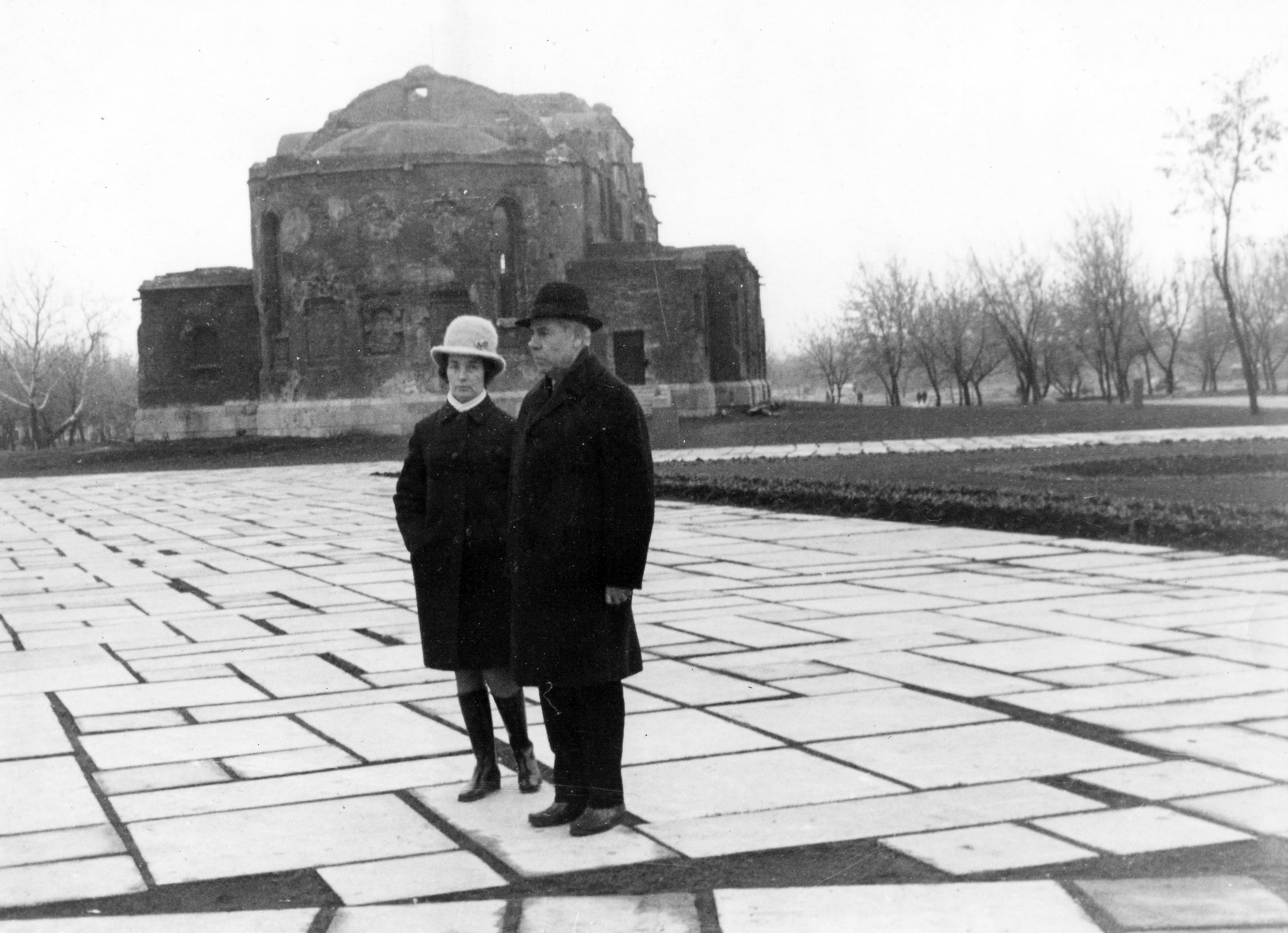
RB-01-002-25-00870
1960-я гг., Брэст. Пара перад руінамі Свята-Мікалаеўскага сабора ў Брэсцкай крэпасці (пабудаваны як праваслаўны, у 1919 г. пераасвечаны на каталіцкі касцёл св. Казіміра і перабудаваны, пацярпеў падчас Другой сусветнай вайны, у 1991 г. вернуты праваслаўнай царкве, адрэстаўраваны ў выглядзе, блізкім да першапачатковага). Прадаставіў Яўген Мшар. Архіў VEHA, калекцыя 'Руіны Беларусі'.
1960s, Brest. A couple in front of the ruins of the St. Nicholas Cathedral in the Brest Fortress (built as an Orthodox Church, in 1919 reconsecrated as a Catholic St. Casimir Church and rebuilt, damaged during World War II, in 1991 returned to the Orthodox Church, restored to a form close to its original). Provided by Jaŭhien Mšar. From the VEHA archive, ״Ruins of Belarus״ collection.
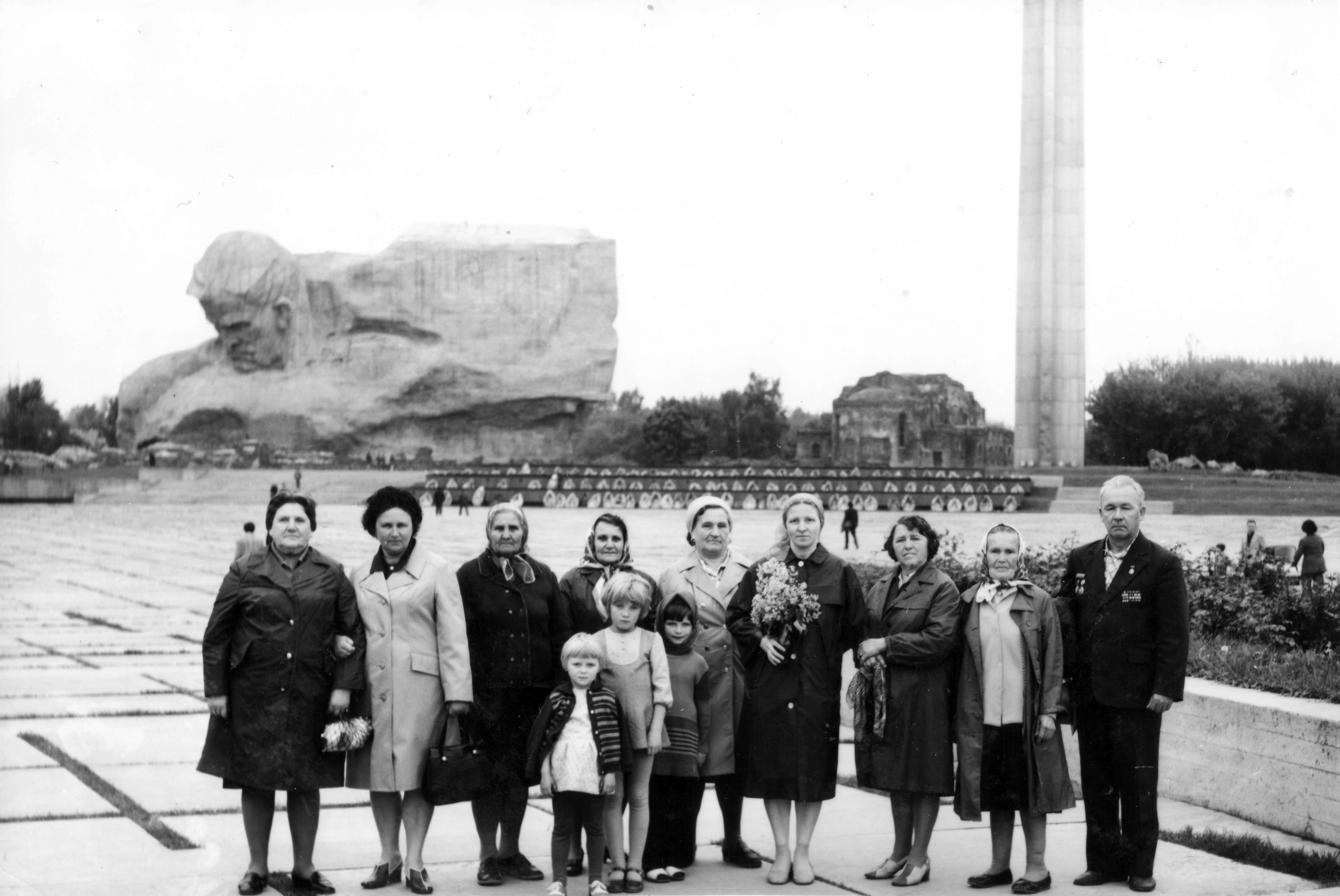
RB-01-002-25-00979
19 траўня 1977 г., Брэст. Група наведвальнікаў мемарыяльнага комплекса "Брэсцкая крэпасць" перад скульптурай "Мужнасць" (крэпасць моцна пацярпела ў Першую і Другую сусветныя войны, з 1971 г. месціць музейны комплекс з часткова закансерваванымі рэшткамі крэпасці). Прадаставіў Яўген Мшар. Архіў VEHA, калекцыя 'Руіны Беларусі'.
May 19, 1977, Brest. A group of visitors to the Brest Fortress memorial complex in front of the "Courage" sculpture (the fortress was badly damaged during the First and Second World Wars, and since 1971 has housed a museum complex with partially preserved remains of the fortress). Provided by Jaŭhien Mšar. From the VEHA archive, ״Ruins of Belarus״ collection.
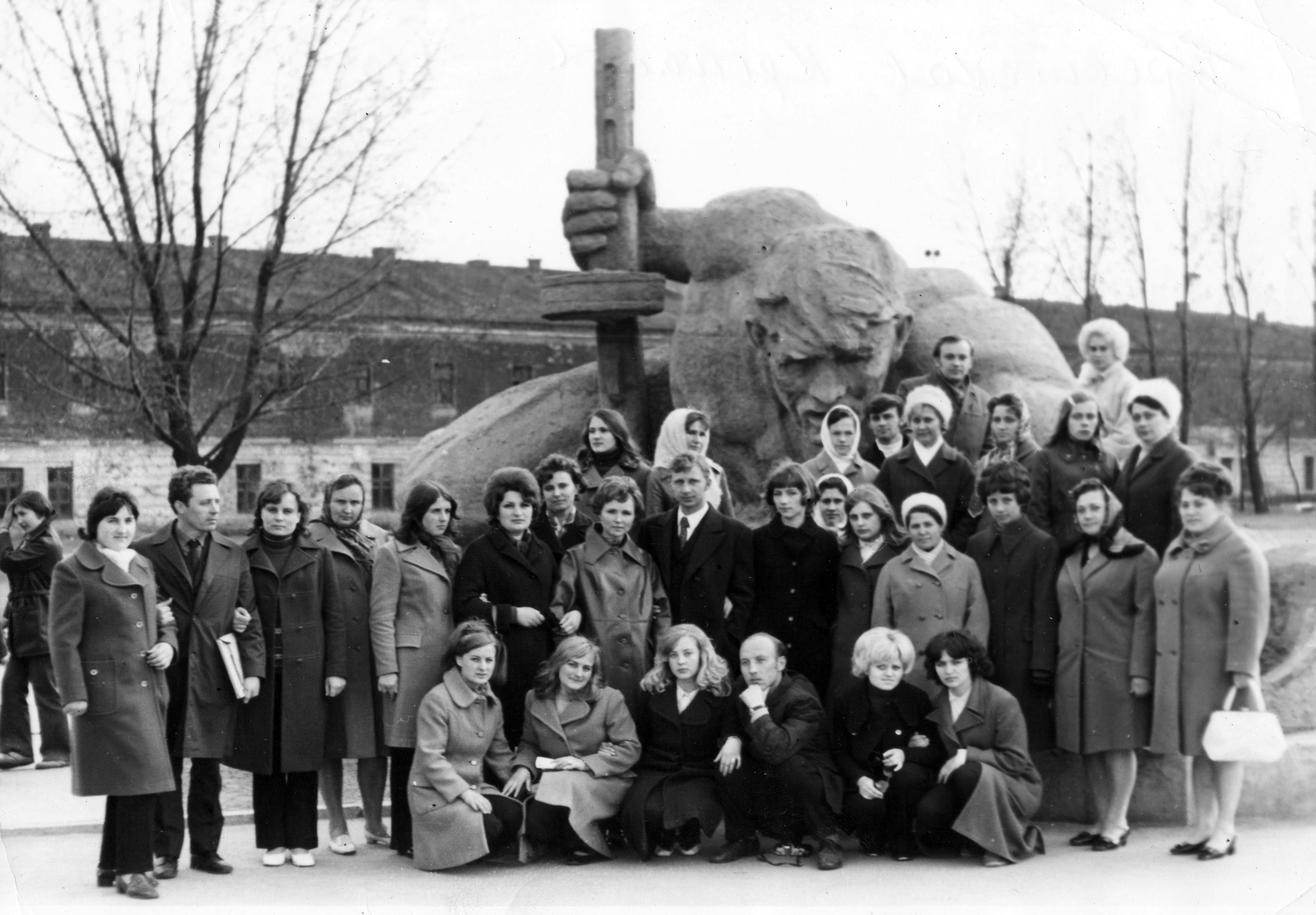
RB-01-002-25-00980
1970-я гг., Брэст. Група наведвальнікаў мемарыяльнага комплекса "Брэсцкая крэпасць" перад скульптурай "Смага" (крэпасць моцна пацярпела ў Першую і Другую сусветныя войны, з 1971 г. месціць музейны комплекс з часткова закансерваванымі рэшткамі крэпасці). Прадаставіў Яўген Мшар. Архіў VEHA, калекцыя 'Руіны Беларусі'.
1970s, Brest. A group of visitors to the Brest Fortress memorial complex in front of the "Thirst" sculpture (the fortress was badly damaged during the First and Second World Wars, and since 1971 has housed a museum complex with partially preserved remains of the fortress). Provided by Jaŭhien Mšar. From the VEHA archive, ״Ruins of Belarus״ collection.
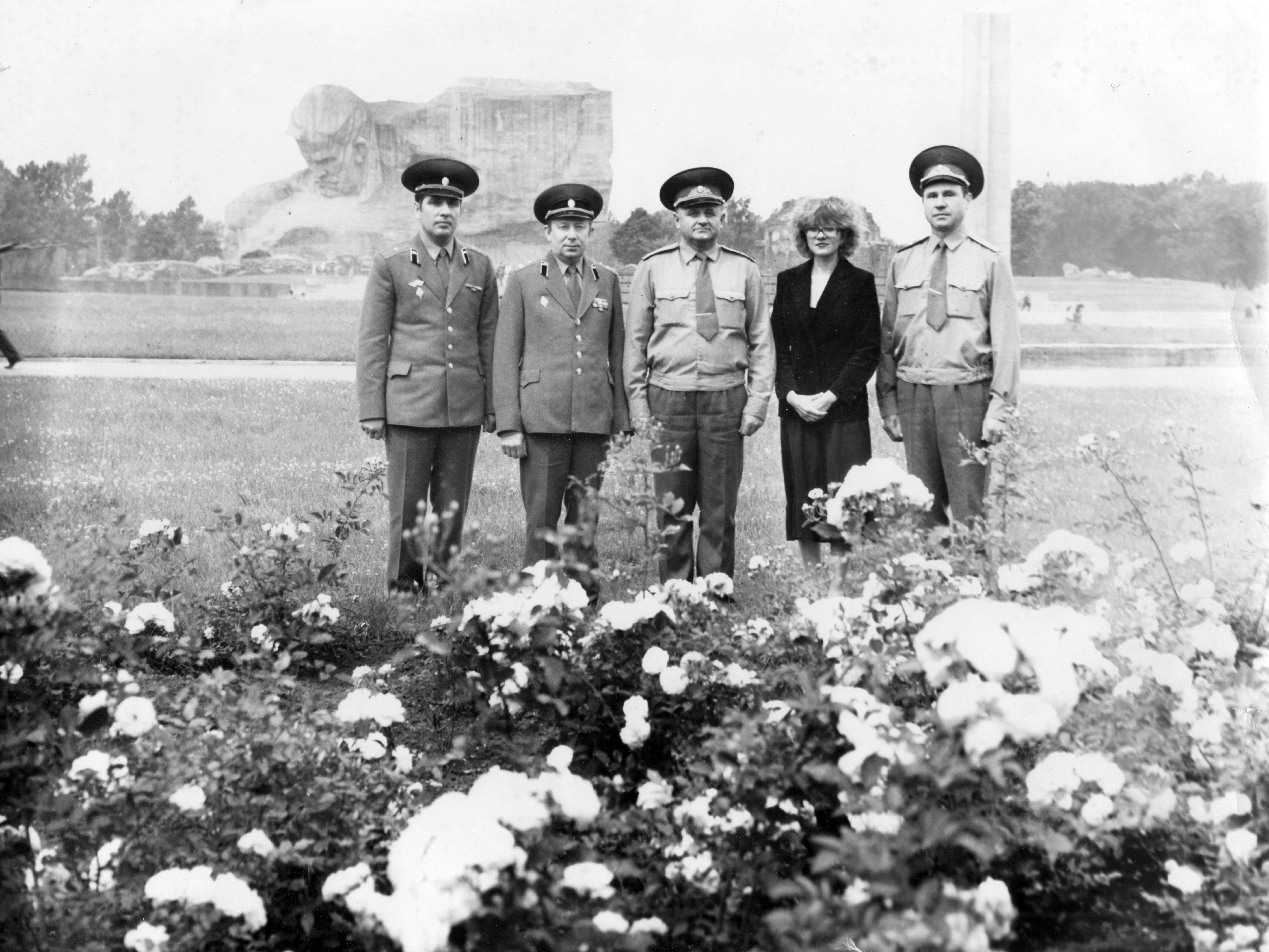
RB-01-002-25-00981
1970-ыя-1980-ыя гг., Брэст. Група наведвальнікаў мемарыяльнага комплекса "Брэсцкая крэпасць" перад скульптурай "Мужнасць", у цэнтры генерал Яўген Васільевіч Мікульчык (крэпасць моцна пацярпела ў Першую і Другую сусветныя войны, з 1971 г. месціць музейны комплекс з часткова закансерваванымі рэшткамі крэпасці). Прадаставіў Яўген Мшар. Архіў VEHA, калекцыя 'Руіны Беларусі'.
1970s-1980s, Brest. A group of visitors to the Brest Fortress memorial complex in front of the "Courage" sculpture, with General Evgeny Vasilyevich Mikulchyk in the center (the fortress was badly damaged during the First and Second World Wars, and since 1971 has housed a museum complex with partially preserved remains of the fortress). Provided by Jaŭhien Mšar. From the VEHA archive, ״Ruins of Belarus״ collection.
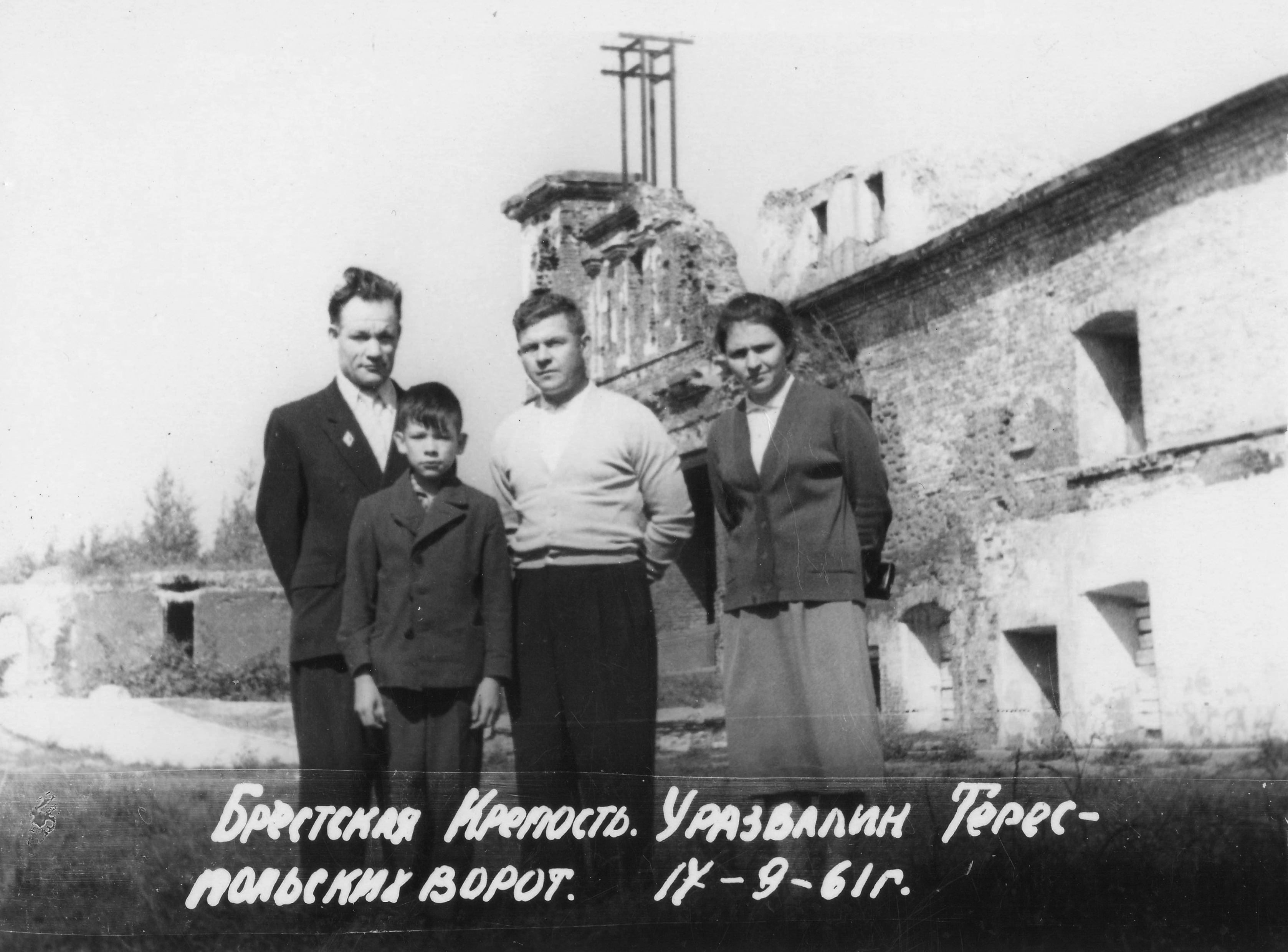
RB-01-002-25-00989
17 верасня 1961 г., Брэст. Група наведвальнікаў Брэсцкай крэпасці перад руінамі Цярэспальскай брамы (крэпасць моцна пацярпела ў Першую і Другую сусветныя войны, з 1971 г. месціць музейны комплекс з часткова закансерваванымі рэшткамі крэпасці). Прадаставіў Яўген Мшар. Архіў VEHA, калекцыя 'Руіны Беларусі'.
September 17, 1961, Brest. A group of visitors to the Brest Fortress in front of the ruins of the Ciarespaĺskaja Gate (the fortress was badly damaged in the First and Second World Wars, since 1971 it has housed a museum complex with partially preserved remains of the fortress). Provided by Jaŭhien Mšar. From the VEHA archive, ״Ruins of Belarus״ collection.
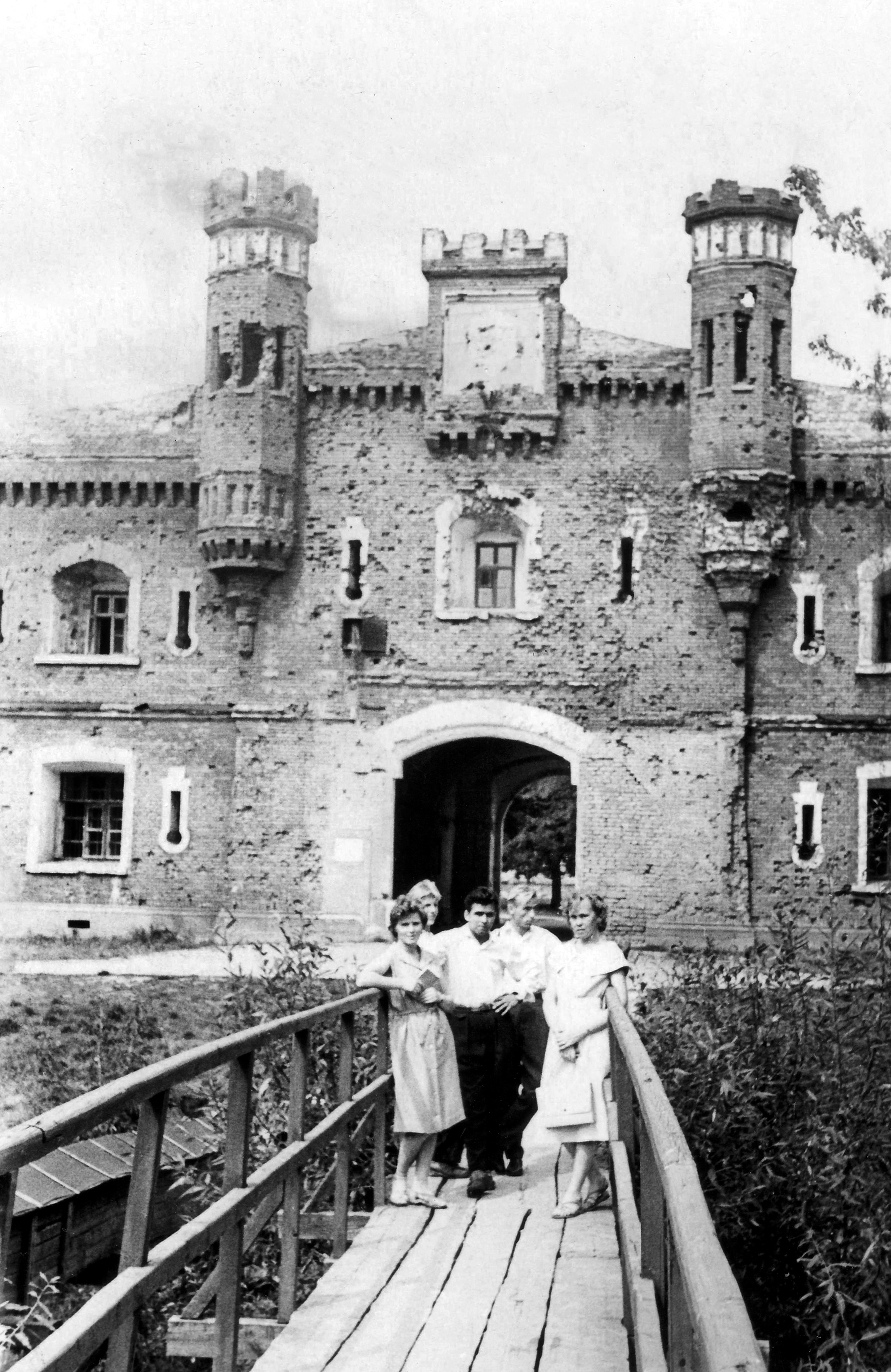
RB-01-002-25-00961
1950-ыя-1960-ыя гг., Брэст. Маладыя людзі на мосце над ракой Мухавец каля Холмскай брамы Брэсцкай крэпасці. Прадаставіў Яўген Мшар. Архіў VEHA, калекцыя 'Руіны Беларусі'.
1950s-1960s, Brest. Young people on the bridge over the Muchaviec River near the Cholmskaja Gate of the Brest Fortress. Provided by Jaŭhien Mšar. From the VEHA archive, ״Ruins of Belarus״ collection.
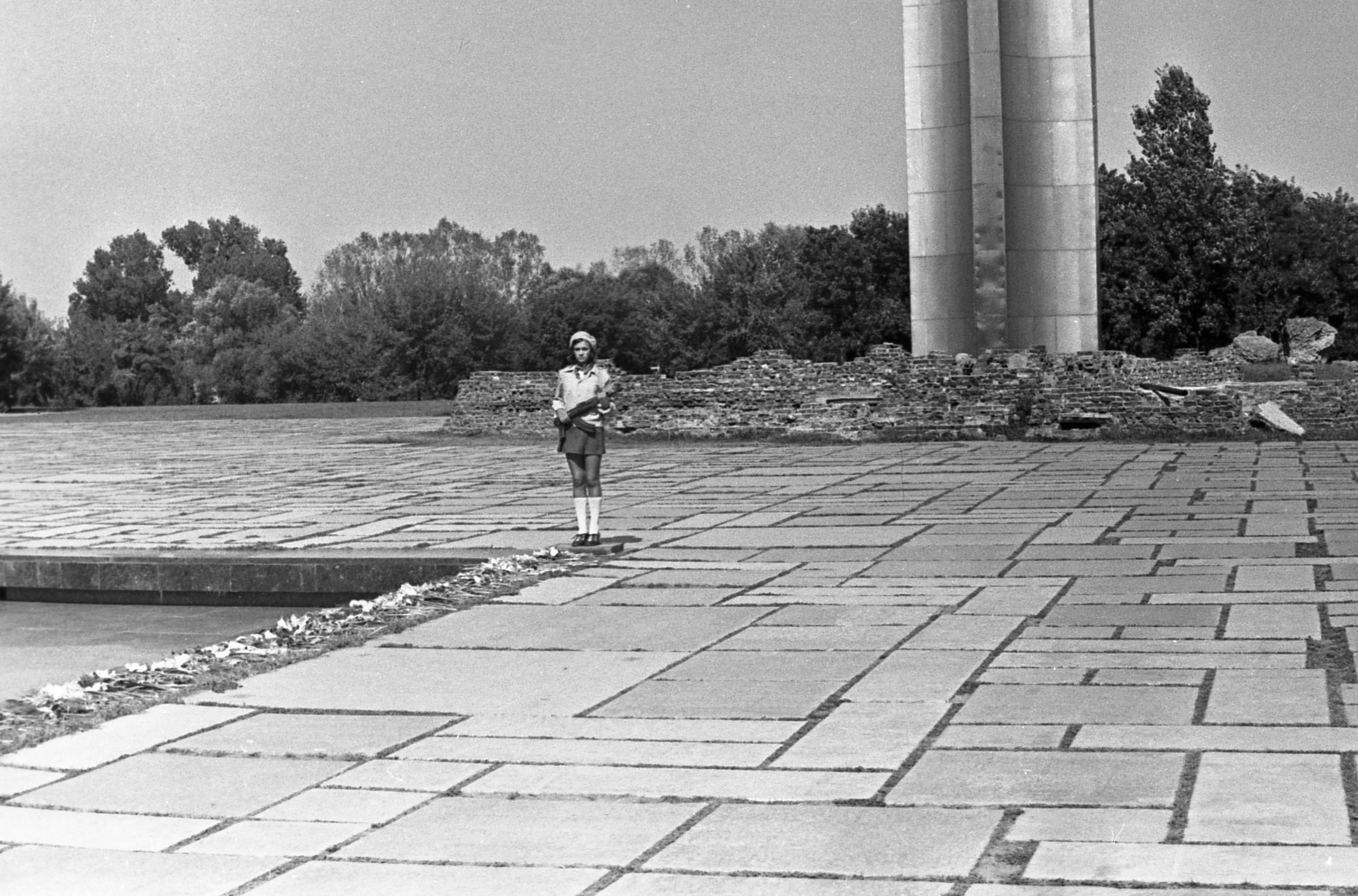
RB-01-002-23-00059
1975 г., Брэст. Ганаровая варта каля вечнага агню ў Брэсцкай крэпасці (моцна пацярпела ў Першую і Другую сусветныя войны, з 1971 г. месціць музейны комплекс з часткова закансерваванымі рэшткамі крэпасці). Фатограф Л.А. Мішын. Прадаставіў Расціслаў. Архіў VEHA, калекцыя 'Руіны Беларусі'.
1975, Brest. The guard of honor near the eternal fire in the Brest fortress (heavily damaged during the First and Second World Wars, since 1971 houses a museum complex with partially preserved remains of the fortress). Photographer L.A. Mishin. Provided by Rostislav. From the VEHA archive, ״Ruins of Belarus״ collection.
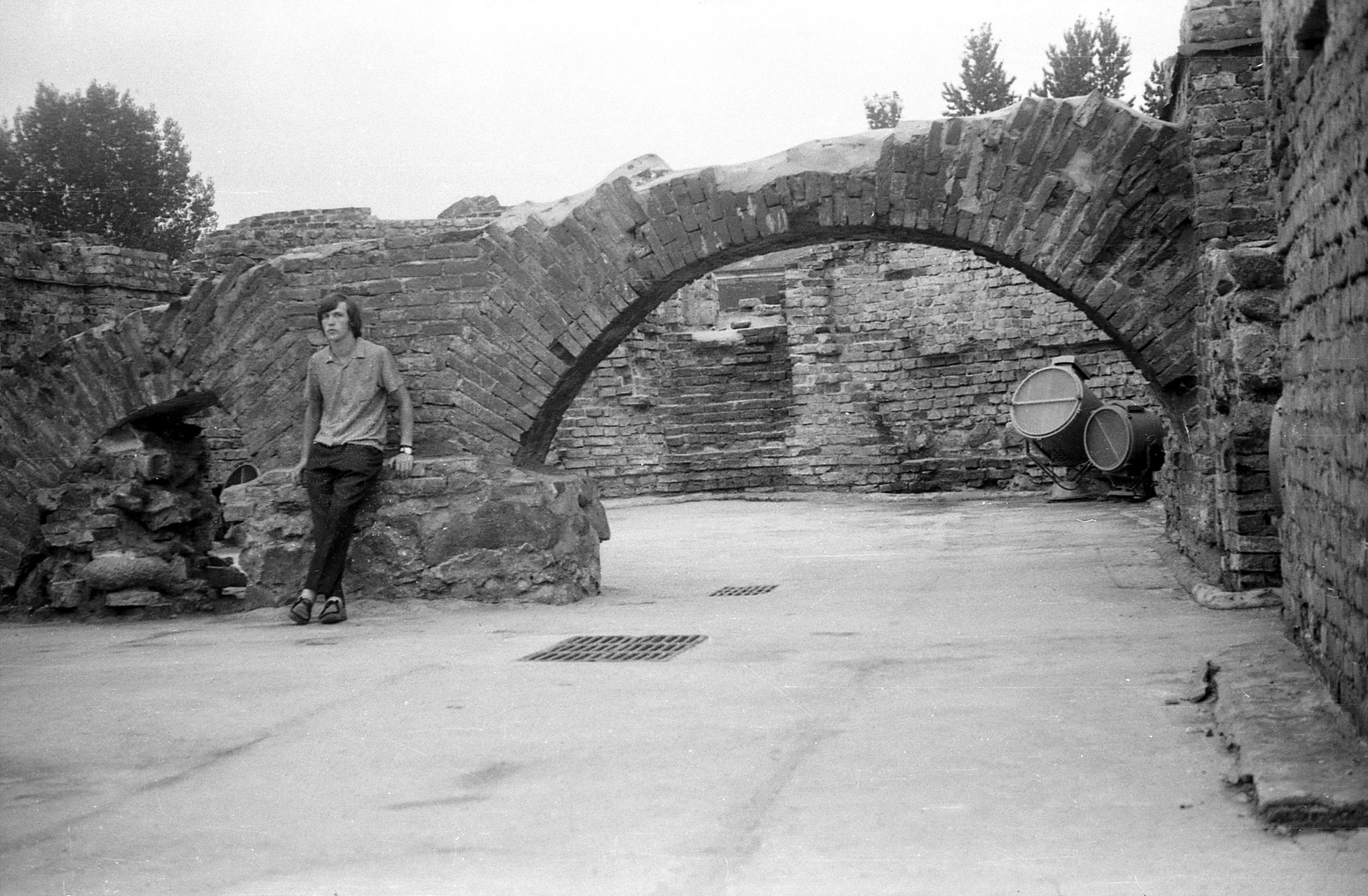
RB-01-002-23-00057
1975 г., г. Брэст. Турыст на руінах Белага палацў у Брэсцкай крэпасці (моцна пацярпела ў Першую і Другую сусветныя войны, з 1971 г. месціць музейны комплекс з часткова закансерваванымі рэшткамі крэпасці). Прадаставіў Расціслаў. Архіў VEHA, калекцыя 'Руіны Беларусі'.
1975, Brest. A tourist on the backgound of the ruins of the White Palace in the Brest Fortress (heavily damaged during the First and Second World Wars, since 1971 houses a museum complex with partially preserved remains of the fortress). Provided by Rostislav. From the VEHA archive, ״Ruins of Belarus״ collection.
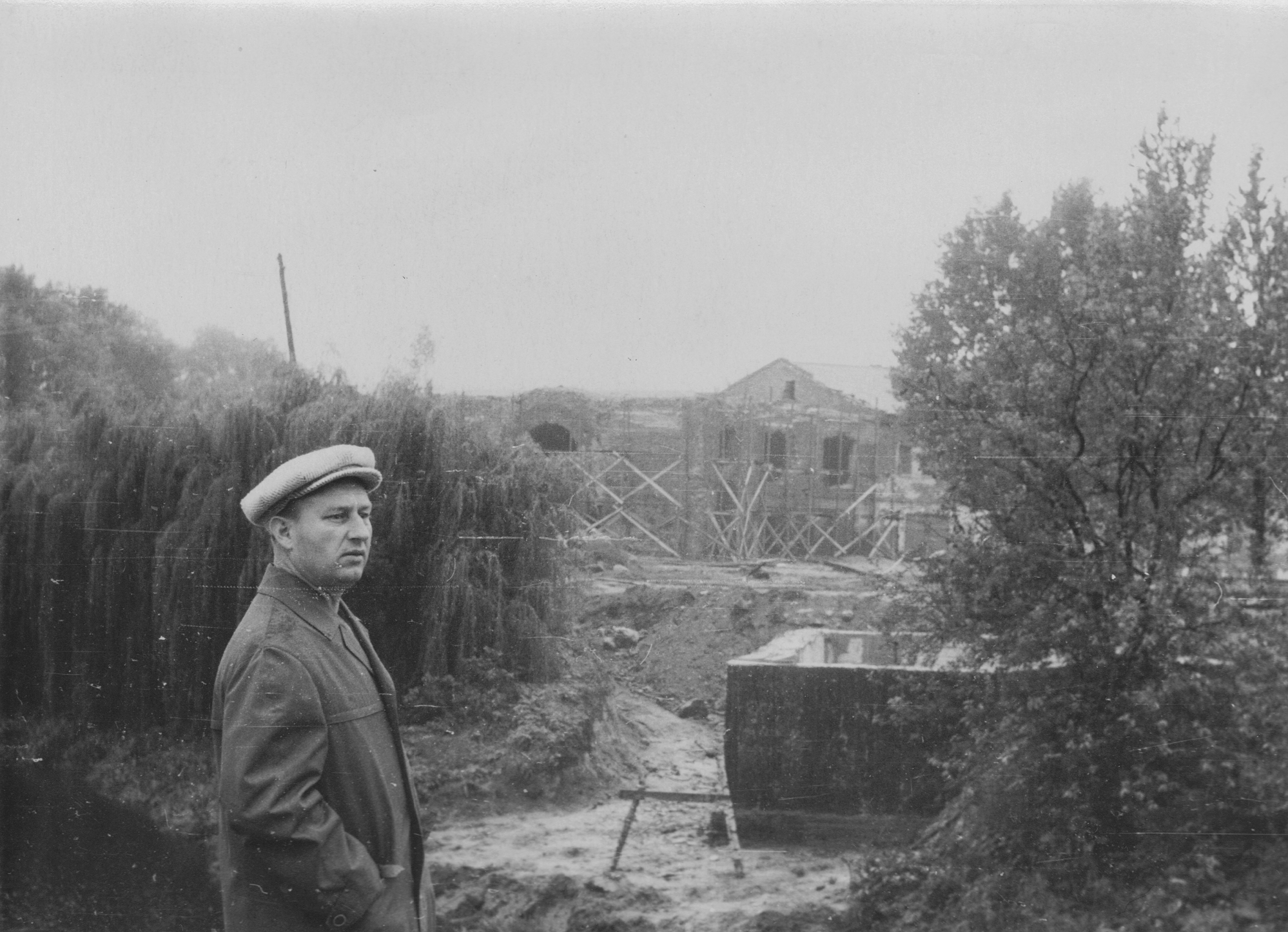
RB-01-002-25-00341
7 кастрычніка 1970 г., г. Брэст. Украінскій пісьменнік Іван Сямёнавіч Дробны у Брэсцкай крэпасці (моцна пацярпела ў Першую і Другую сусветныя войны, з 1971 г. месціць музейны комплекс з часткова закансерваванымі рэшткамі крэпасці). Крыніца: Wikimedia Commons. Архіў VEHA, калекцыя 'Руіны Беларусі'.
October 7, 1970, Brest. Ukrainian writer Ivan Siamionavič Drobny in the Brest Fortress (heavily damaged during the First and Second World Wars, since 1971 houses a museum complex with partially preserved remains of the fortress). Source: Wikimedia Commons. From the VEHA archive, ״Ruins of Belarus״ collection.
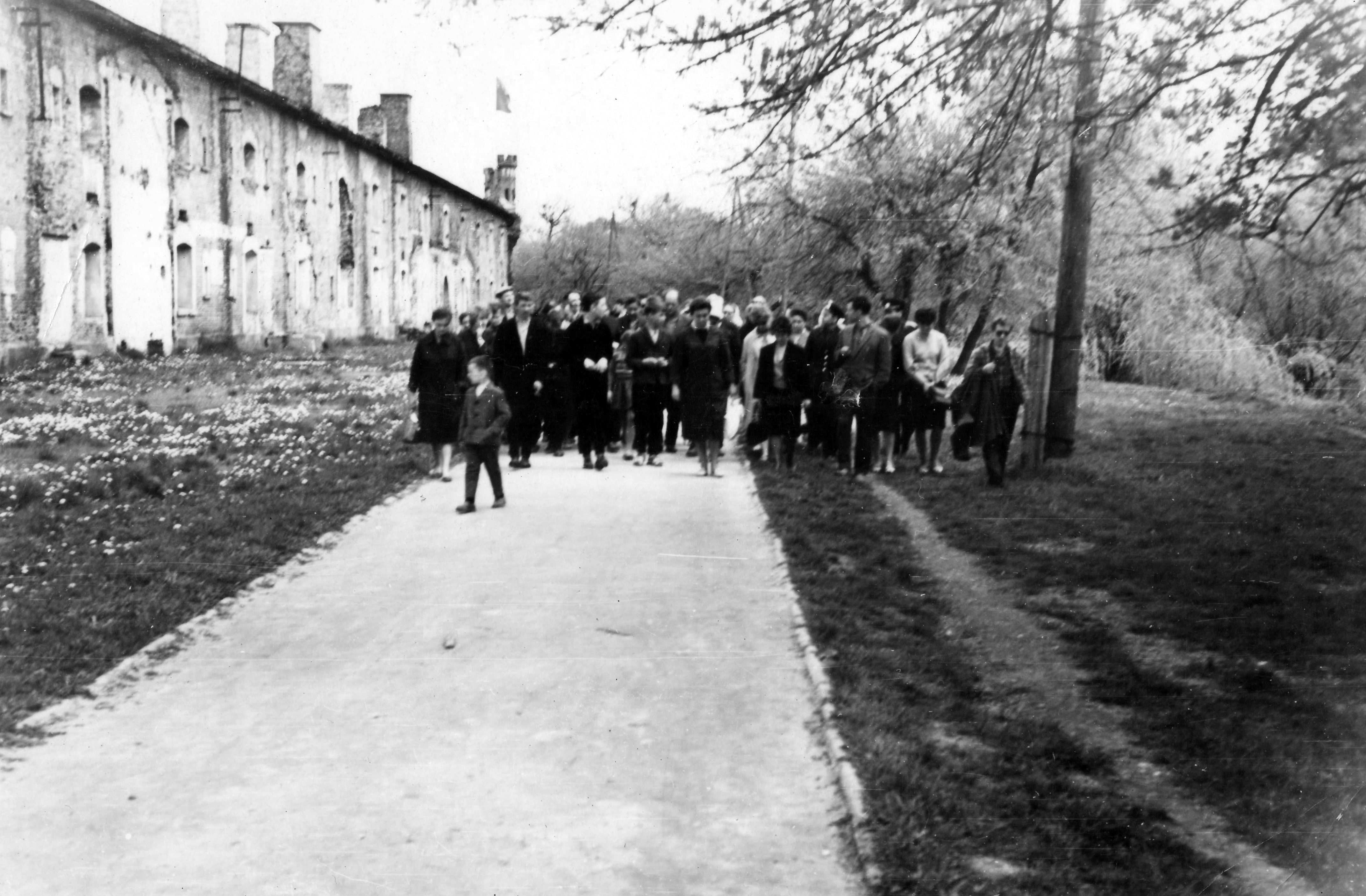
RB-01-002-25-00977
1960-я гг., Брэст. Група турыстаў у Брэсцкай крэпасці каля будынка казармы побач з Холмскай брамай (крэпасць моцна пацярпела ў Першую і Другую сусветныя войны, з 1971 г. месціць музейны комплекс з часткова закансерваванымі рэшткамі крэпасці). Прадаставіў Яўген Мшар. Архіў VEHA, калекцыя 'Руіны Беларусі'.
1960s, Brest. A group of tourists in the Brest Fortress near the barracks building next to the Cholmskaja Gate (the fortress was badly damaged in the First and Second World Wars, since 1971 it has housed a museum complex with partially preserved remains of the fortress). Provided by Jaŭhien Mšar. From the VEHA archive, ״Ruins of Belarus״ collection.

RB-01-002-25-00957
Пасля 1941-га г., Брэст. Мост над ракой Мухавец і Холмская брама Брэсцкай крэпасці. Прадаставіў Цэнтр беларускай культуры, Беласток. Архіў VEHA, калекцыя 'Руіны Беларусі'.
After 1941, Brest. The bridge over the Muchaviec River near the Cholmskaja Gate of the Brest Fortress. Provided by Centrum Kultury Białoruskiej w Białymstoku. From the VEHA archive, ״Ruins of Belarus״ collection.

RB-01-002-25-00875
1960-я гг., Брэст. Два вайскоўца перад рэшткамі Холмскай брамы Брэсцкай крэпасці (моцна пацярпела ў Першую і Другую сусветныя войны, з 1971 г. месціць музейны комплекс з часткова закансерваванымі рэшткамі крэпасці). Прадаставіў Яўген Мшар. Архіў VEHA, калекцыя 'Руіны Беларусі'.
1960s, Brest. Two soldiers in front of the remains of the Cholmskaja Gate of the Brest Fortress (heavily damaged in the First and Second World Wars, since 1971 houses a museum complex with partially preserved remains of the fortress). Provided by Jaŭhien Mšar. From the VEHA archive, ״Ruins of Belarus״ collection.
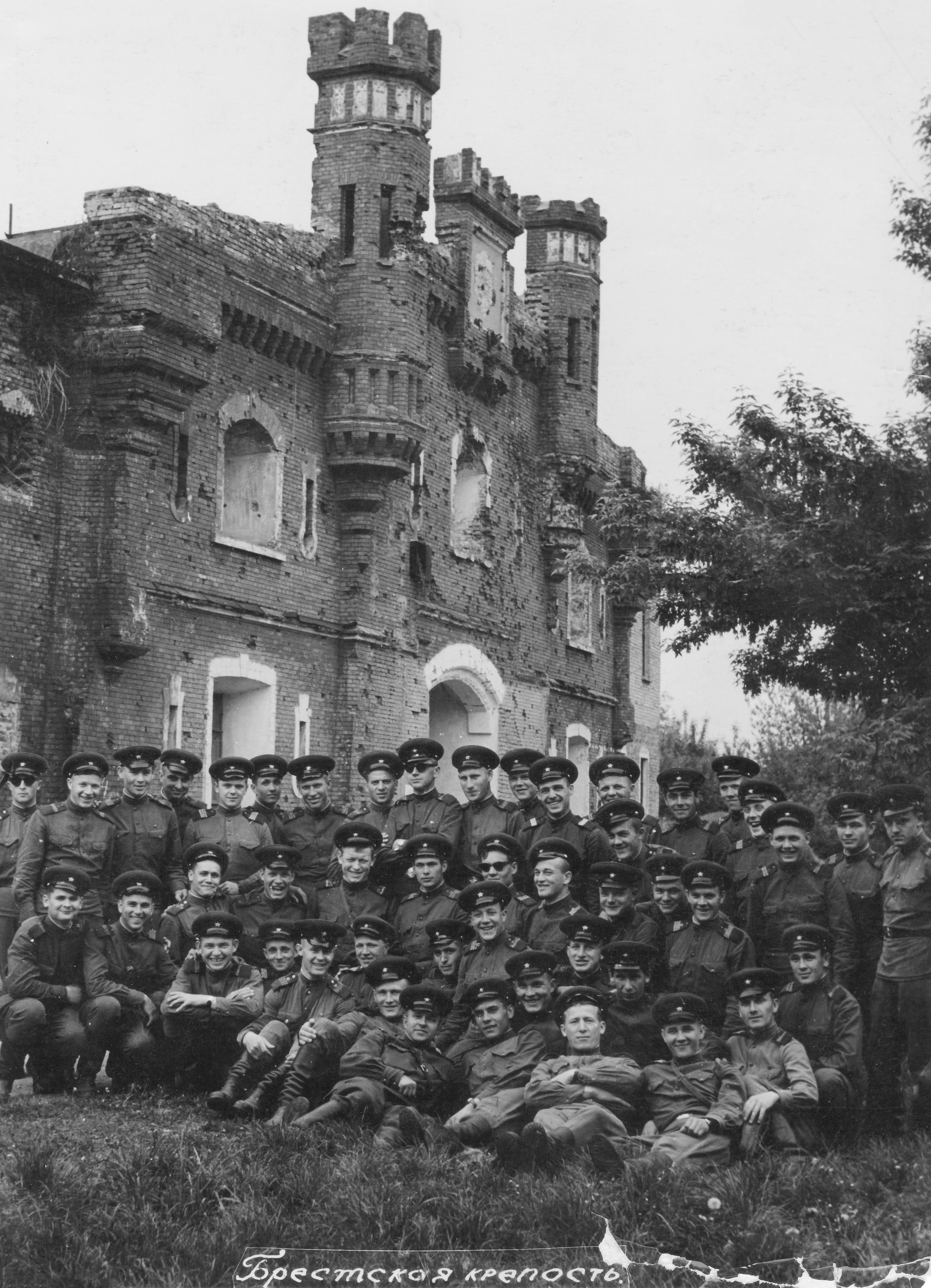
RB-01-002-25-00874
1960-я гг., Брэст. Группа жаўнёраў перад рэшткамі Холмскай брамы Брэсцкай крэпасці (моцна пацярпела ў Першую і Другую сусветныя войны, з 1971 г. месціць музейны комплекс з часткова закансерваванымі рэшткамі крэпасці). Прадаставіў Яўген Мшар. Архіў VEHA, калекцыя 'Руіны Беларусі'.
1960s, Brest. A group of soldiers in front of the remains of the Cholmskaja Gate of the Brest Fortress (heavily damaged in the First and Second World Wars, since 1971 houses a museum complex with partially preserved remains of the fortress). Provided by Jaŭhien Mšar. From the VEHA archive, ״Ruins of Belarus״ collection.

RB-01-002-23-00055
1967-1969 гг., г. Брэст. Tурыст на тле кальцавых кашар ў Брэсцкай крэпасці (моцна пацярпела ў Першую і Другую сусветныя войны, з 1971 г. месціць музейны комплекс з часткова закансерваванымі рэшткамі крэпасці). Прадаставіла Ганна Чабоўская. Архіў VEHA, калекцыя 'Руіны Беларусі'.
1967-1969, Brest. A tourist on the backgound of the ruins of the ring barracks in the Brest fortress (heavily damaged during the First and Second World Wars, since 1971 houses a museum complex with partially preserved remains of the fortress). Provided by Hanna Čaboŭskaja. From the VEHA archive, ״Ruins of Belarus״ collection.
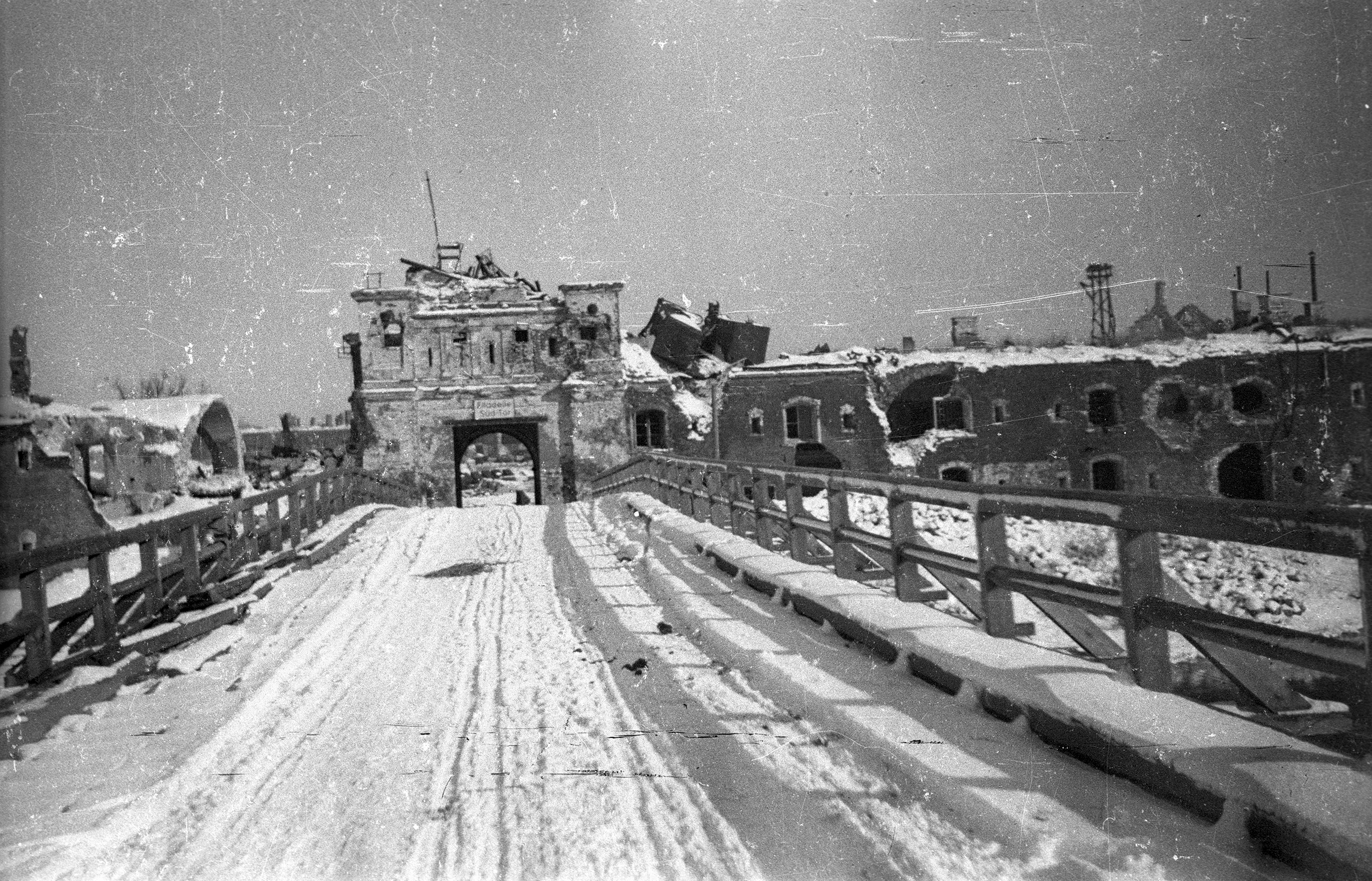
RB-01-002-23-00012
1944 г., г. Брэст. Выгляд на Цярэспальскія вароты Брэсцкай крэпасці ад ракі Буг (крэпасць моцна пацярпела ў Першую і Другую сусветныя войны, з 1971 г. месціць музейны комплекс з часткова закансерваванымі рэшткамі крэпасці).. Крыніца: Fortepan; Jezsuita Levéltár. Архіў VEHA, калекцыя 'Руіны Беларусі'.
1944, Brest. View of the Ciarespaĺ Gate of the Brest Fortress from the Buh River (the fortress is heavily damaged during the First and Second World Wars, since 1971 houses a museum complex with partially preserved remains of the fortress). Source: Fortepan; Jezsuita Levéltár. From the VEHA archive, ״Ruins of Belarus״ collection.
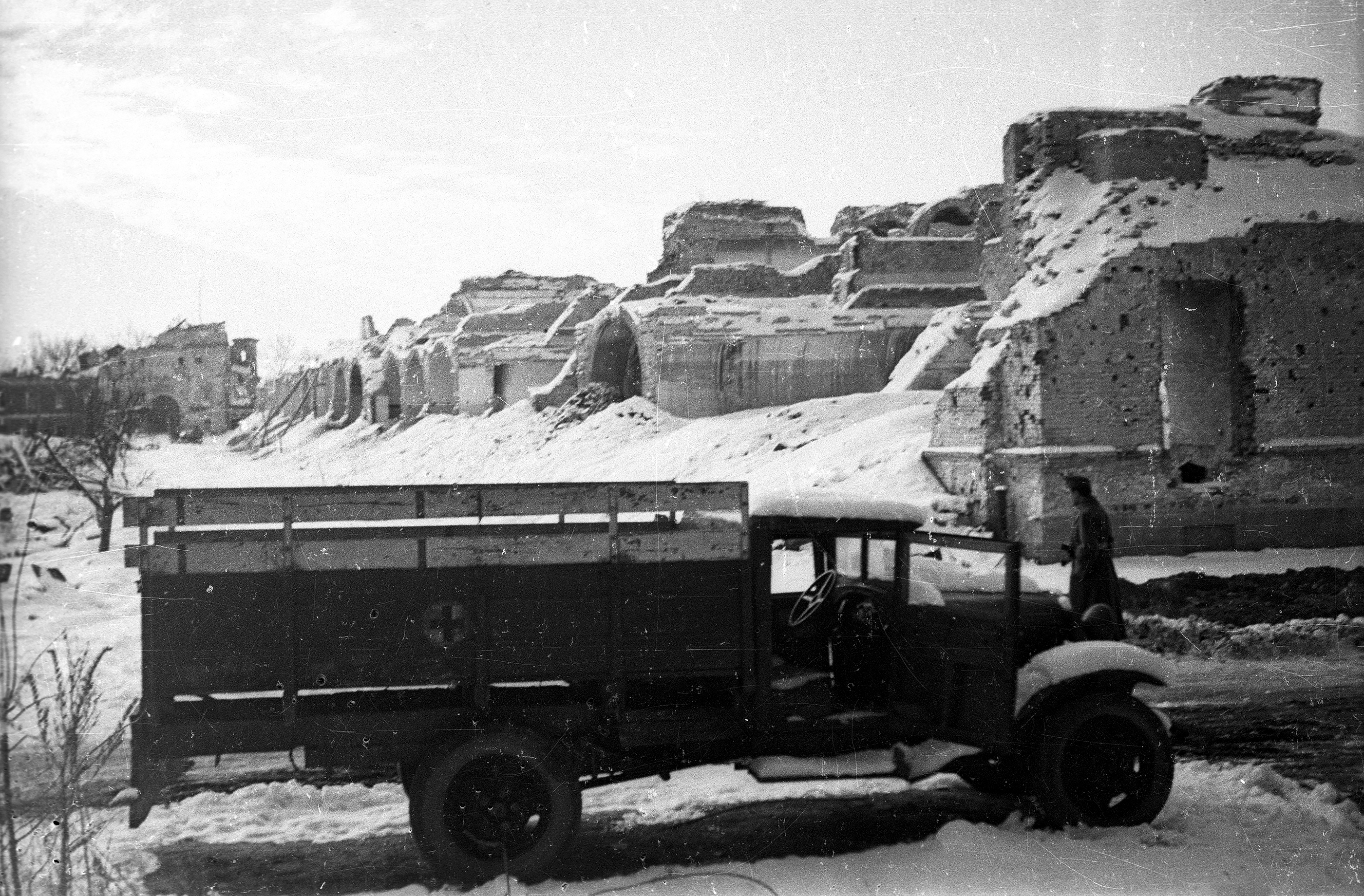
RB-01-002-23-00013
1944 г., г. Брэст. Крыніца: Fortepan Jezsuita Levéltár. Архіў VEHA, калекцыя 'Руіны Беларусі'.
1944, Brest. Source: Fortepan Jezsuita Levéltár. From the VEHA archive, ״Ruins of Belarus״ collection.
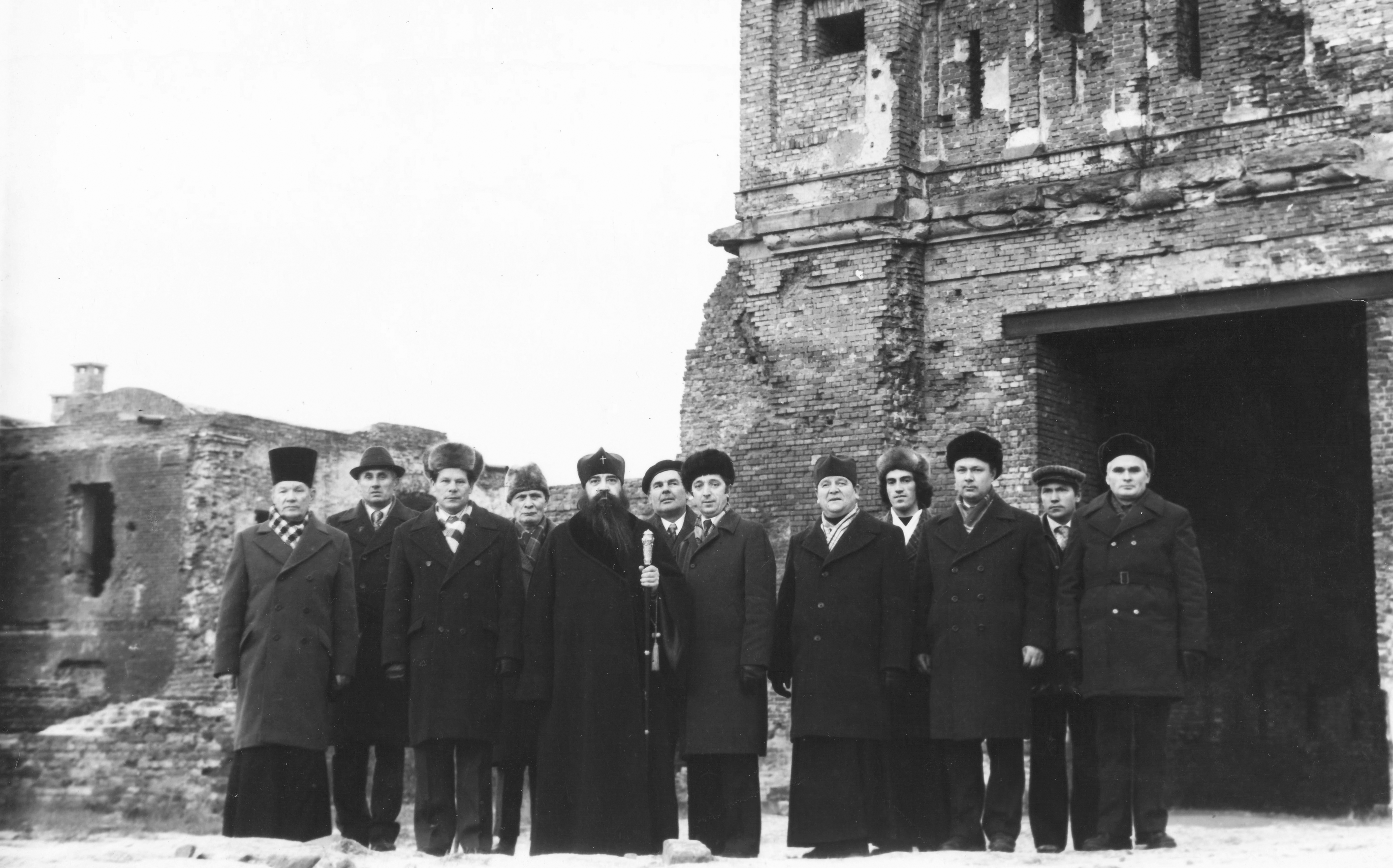
RB-01-002-25-00860
1979 г., Брэст. Група людзей, у цэнтры - мітрапаліт Мінскі і Слуцкі Філарэт (Вахрамееў) перад руінамі Цярэспальскай брамы Брэсцкай крэпасці (моцна пацярпела ў Першую і Другую сусветныя войны, з 1971 г. месціць музейны комплекс з часткова закансерваванымі рэшткамі крэпасці). Прадаставіў Яўген Мшар. Архіў VEHA, калекцыя 'Руіны Беларусі'.
1979, Brest. A group of people, in the center - Metropolitan of Minsk and Slutsk Filaret (Vachramiejeŭ) in front of the ruins of the Ciarespaĺskаja Gate of the Brest Fortress (severely damaged in the First and Second World Wars, since 1971 it houses a museum complex with partially preserved remains of the fortress). Provided by Jaŭhien Mšar. From the VEHA archive, ״Ruins of Belarus״ collection.
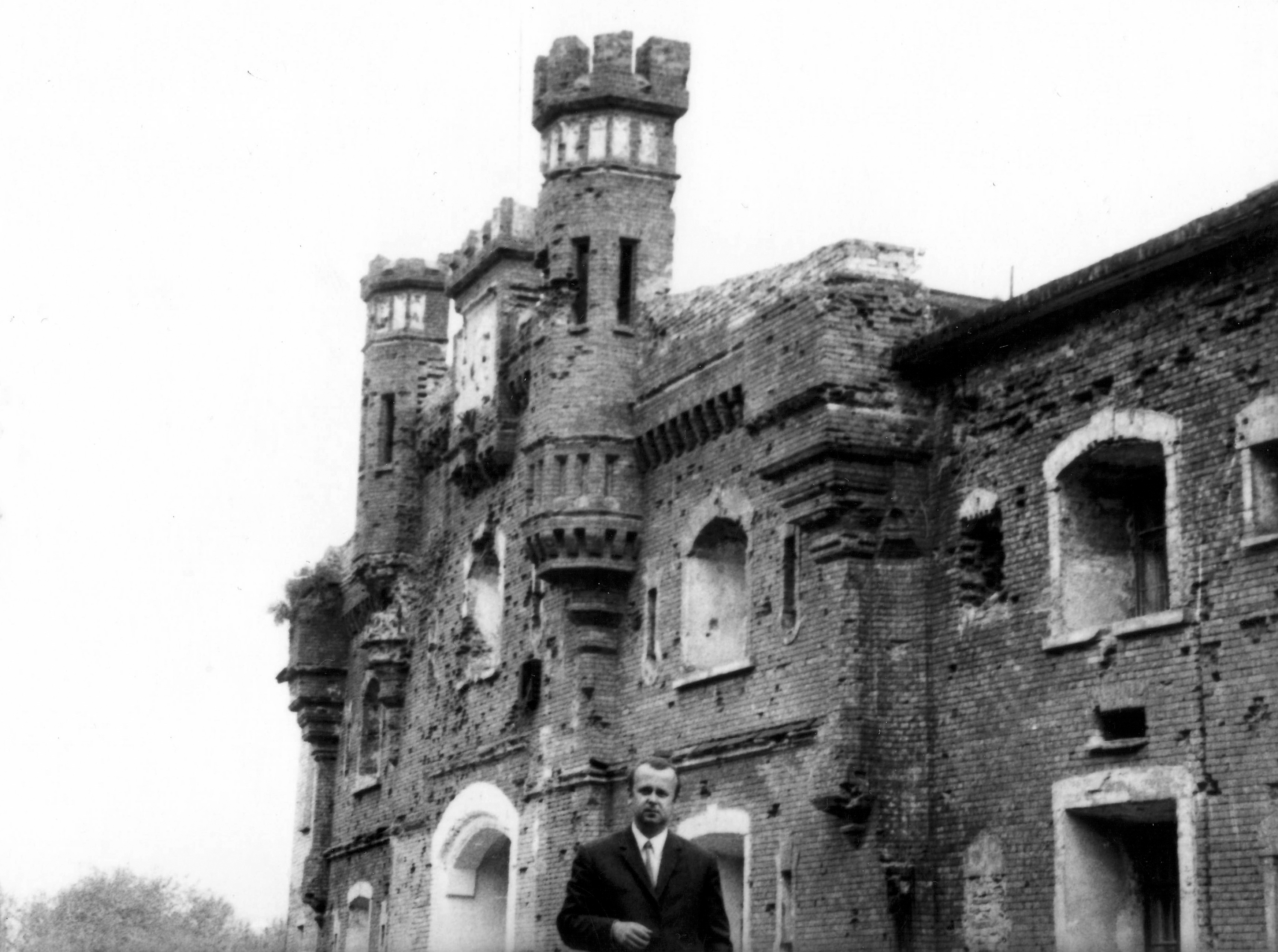
RB-01-002-25-00873
Травень 1967 г., Брэст. Мужчына перад рэшткамі Холмскай брамы Брэсцкай крэпасці (моцна пацярпела ў Першую і Другую сусветныя войны, з 1971 г. месціць музейны комплекс з часткова закансерваванымі рэшткамі крэпасці). Прадаставіў Яўген Мшар. Архіў VEHA, калекцыя 'Руіны Беларусі'.
May 1967, Brest. A man in front of the remains of the Cholmskaja Gate of the Brest Fortress (heavily damaged in the First and Second World Wars, since 1971 houses a museum complex with partially preserved remains of the fortress). Provided by Jaŭhien Mšar. From the VEHA archive, ״Ruins of Belarus״ collection.
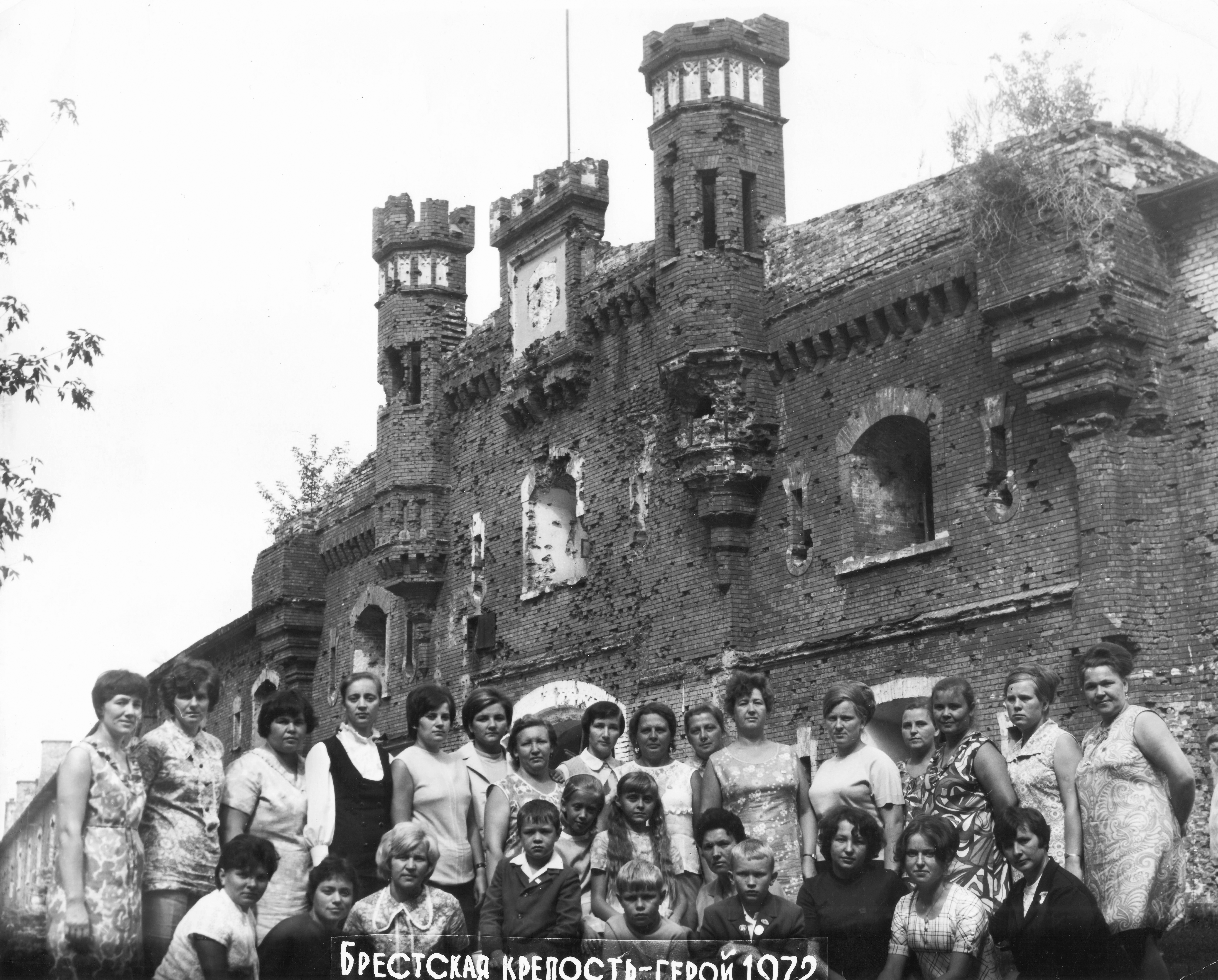
RB-01-002-25-00976
1972 г., Брэст. Група турыстаў перад холмскай брамай у Мемарыяльным комплексе "Брэсцкая крэпасць" Прадаставіў Яўген Мшар. Архіў VEHA, калекцыя 'Руіны Беларусі'.
1972, Brest. A group of tourists in front of the Cholmskaja Gate in the Brest Fortress Memorial Complex. Provided by Jaŭhien Mšar. From the VEHA archive, ״Ruins of Belarus״ collection.
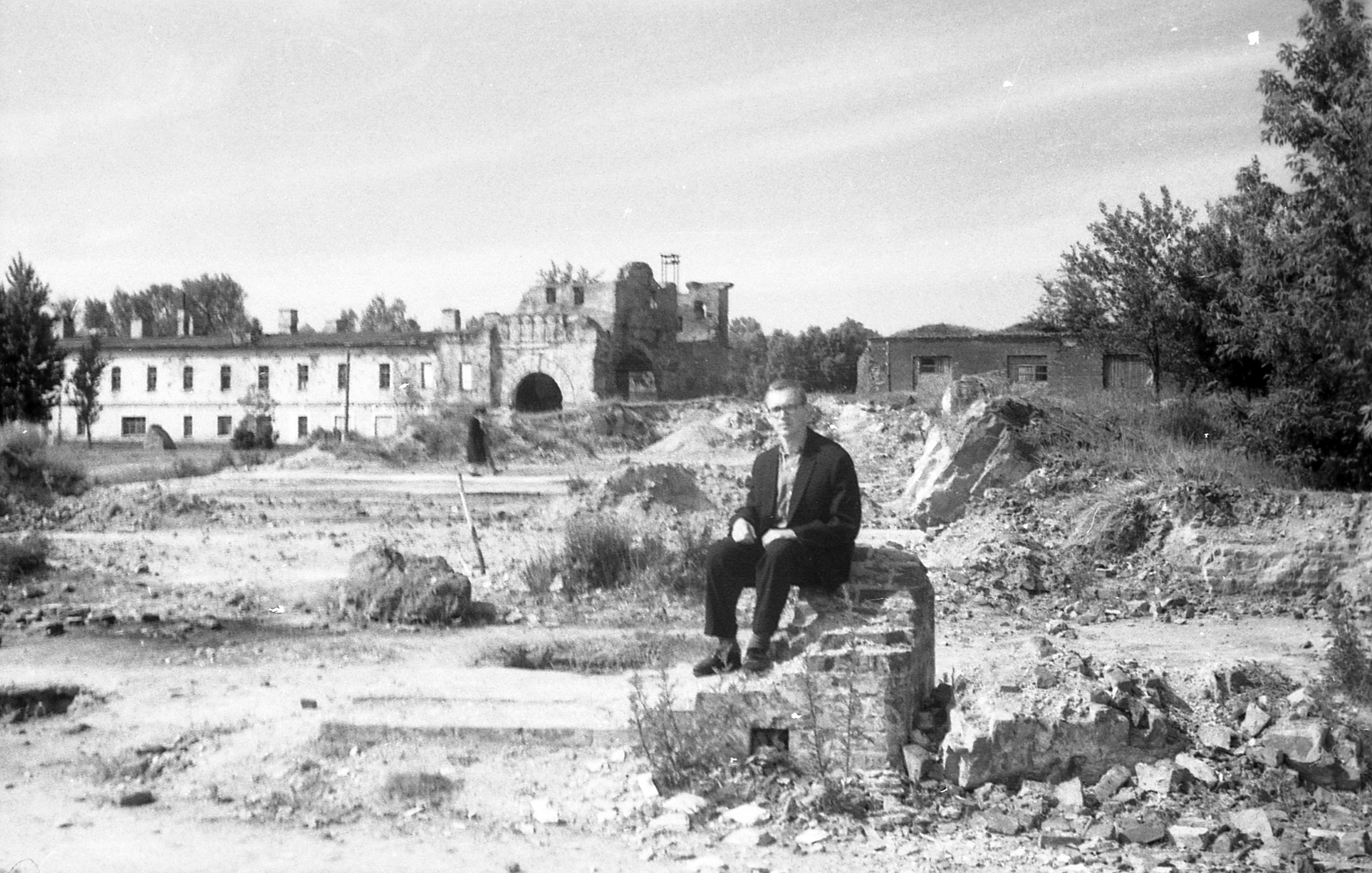
RB-01-002-23-00058
1975 г., г. Брэст. Турыст на руінах Брэсцкай крэпасці (моцна пацярпела ў Першую і Другую сусветныя войны, з 1971 г. месціць музейны комплекс з часткова закансерваванымі рэшткамі крэпасці). Прадаставіў Расціслаў. Архіў VEHA, калекцыя 'Руіны Беларусі'.
1975, Brest. A tourist on the backgound of the ruins of the Brest fortress (heavily damaged during the First and Second World Wars, since 1971 houses a museum complex with partially preserved remains of the fortress). Provided by Rostislav. From the VEHA archive, ״Ruins of Belarus״ collection.

RB-01-002-25-00869
1950-я гг., Брэст. Моладзь на амбоне ў касцёле св. Казіміра у Брэсцкай крэпасці (пабудаваны як праваслаўны Свята-Мікалаеўскі сабор, у 1919 г. пераасвечаны на каталіцкі і перабудаваны, пацярпеў падчас Другой сусветнай вайны, у 1991 г. вернуты праваслаўнай царкве, адрэстаўраваны ў выглядзе, блізкім да першапачатковага). Прадаставіў Яўген Мшар. Архіў VEHA, калекцыя 'Руіны Беларусі'.
1950s, Brest. Youth on the pulpit in the Church of St. Casimir in the Brest Fortress (built as an Orthodox St. Nicholas Cathedral, in 1919 reconsecrated as a Catholic and rebuilt, damaged during World War II, in 1991 returned to the Orthodox Church, restored to a form close to its original). Provided by Jaŭhien Mšar. From the VEHA archive, ״Ruins of Belarus״ collection.

RB-01-002-25-00712
1960-я гг., г. Брэст. Генадзь Беразоўскі (злева) і группа турыстак на рэштках Цярэспальскага маста праз Буг (часткова зруйнаваны ў 1915 г. пры адступленні рускай арміі, канчаткова страчаны ў 1944 г. пры адступленні нямецкай арміі, захаваліся рэшткі падмуркаў з абодвух берагоў). Прадаставіла Дзіяна Пінчук. Архіў VEHA, калекцыя 'Руіны Беларусі'.
1960s, Brest. Hienadź Bierazoŭski and a group of tourists at the remains of the Ciarespaĺski Bridge across the Buh (partially destroyed in 1915 during the retreat of the Russian army, finally lost in 1944 during the retreat of the German army, remains of the foundations on both banks have been preserved). Provided by Dzijana Pinčuk. From the VEHA archive, ״Ruins of Belarus״ collection.

RB-01-002-25-00959
19 траўня 1977 г., Брэст. Наведвальнікі мемарыяльнага комплекса "Брэсцкая крэпасць" перад скульптурай "Смага". Прадаставіў Яўген Мшар. Архіў VEHA, калекцыя 'Руіны Беларусі'.
May 19, 1977, Brest. Visitors to the Brest Fortress Memorial Complex in front of the sculpture "Thirst". Provided by Jaŭhien Mšar. From the VEHA archive, ״Ruins of Belarus״ collection.

RB-01-002-25-00872
1980 г., Брэст. Група турыстаў перад скульптурай "Мужнасць" у цытадэлі Брэсцкай крэпасці (моцна пацярпела ў Першую і Другую сусветныя войны, з 1971 г. месціць музейны комплекс з часткова закансерваванымі рэшткамі крэпасці). Прадаставіў Яўген Мшар. Архіў VEHA, калекцыя 'Руіны Беларусі'.
1980, Brest. A group of tourists in front of the sculpture "Courage" in the citadel of the Brest Fortress (heavily damaged in the First and Second World Wars, since 1971 houses a museum complex with partially preserved remains of the fortress). Provided by Jaŭhien Mšar. From the VEHA archive, ״Ruins of Belarus״ collection.
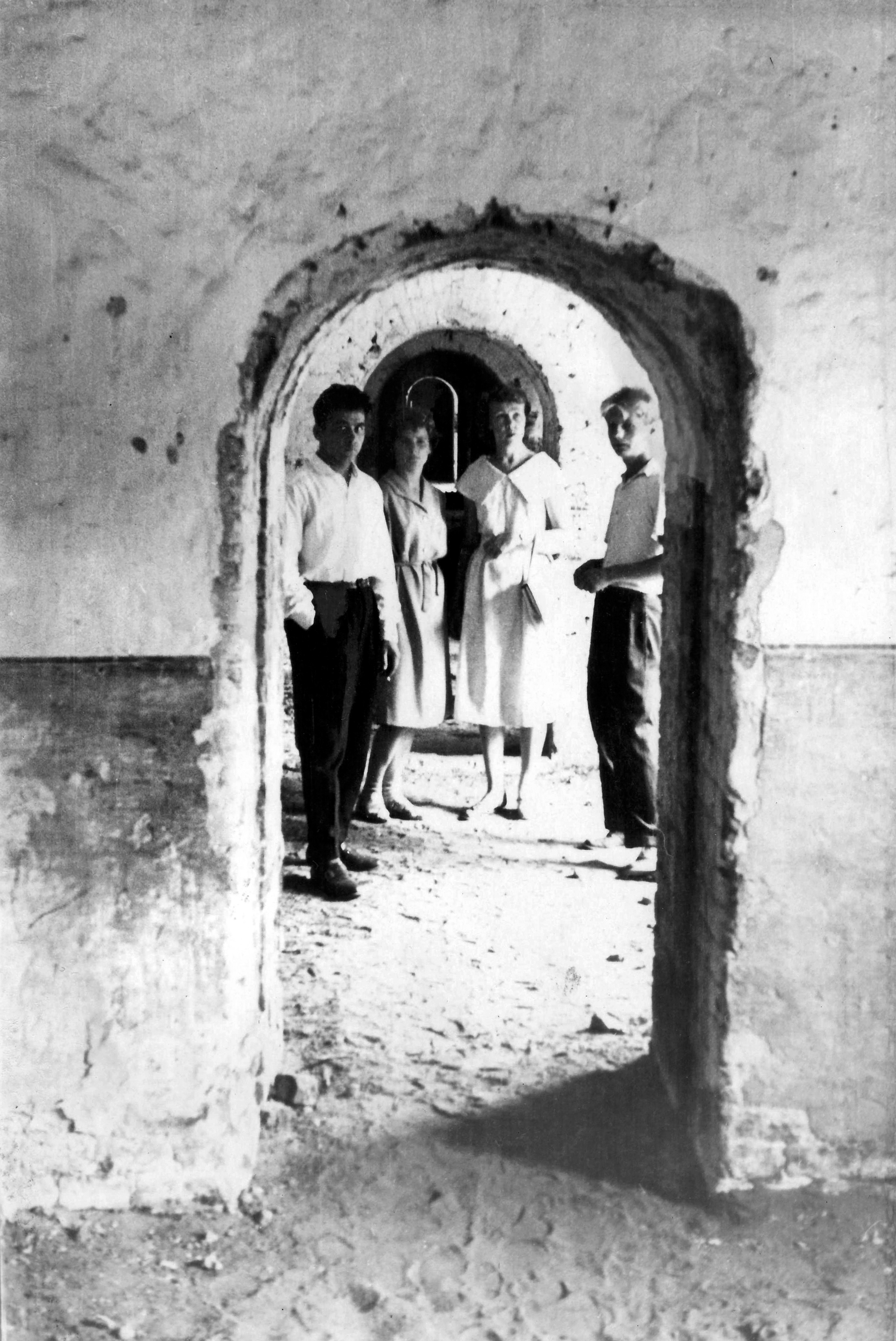
RB-01-002-25-00956
1950-ыя-1960-ыя гг., Брэст. Моладзь у Кобрынскіх умацаваннях Брэсцкай крэпасці. Прадаставіў Яўген Мшар. Архіў VEHA, калекцыя 'Руіны Беларусі'.
1950s-1960s, Brest. Young people in the Kobrin fortifications of the Brest Fortress. Provided by Jaŭhien Mšar. From the VEHA archive, ״Ruins of Belarus״ collection.

RB-01-002-25-00966
1941-1944 гг., Брэст. Нямецкій жаўнер перад мастом праз раку Мухавец і Холмскай брамай Брэсцкай крэпасці. Прадаставіў Цэнтр беларускай культуры, Беласток. Архіў VEHA, калекцыя 'Руіны Беларусі'.
1941-1944, Brest. A German soldier in front of the bridge over the Muchaviec River and the Cholmskaja Gate of the Brest Fortress. Provided by Centrum Kultury Białoruskiej w Białymstoku. From the VEHA archive, ״Ruins of Belarus״ collection.
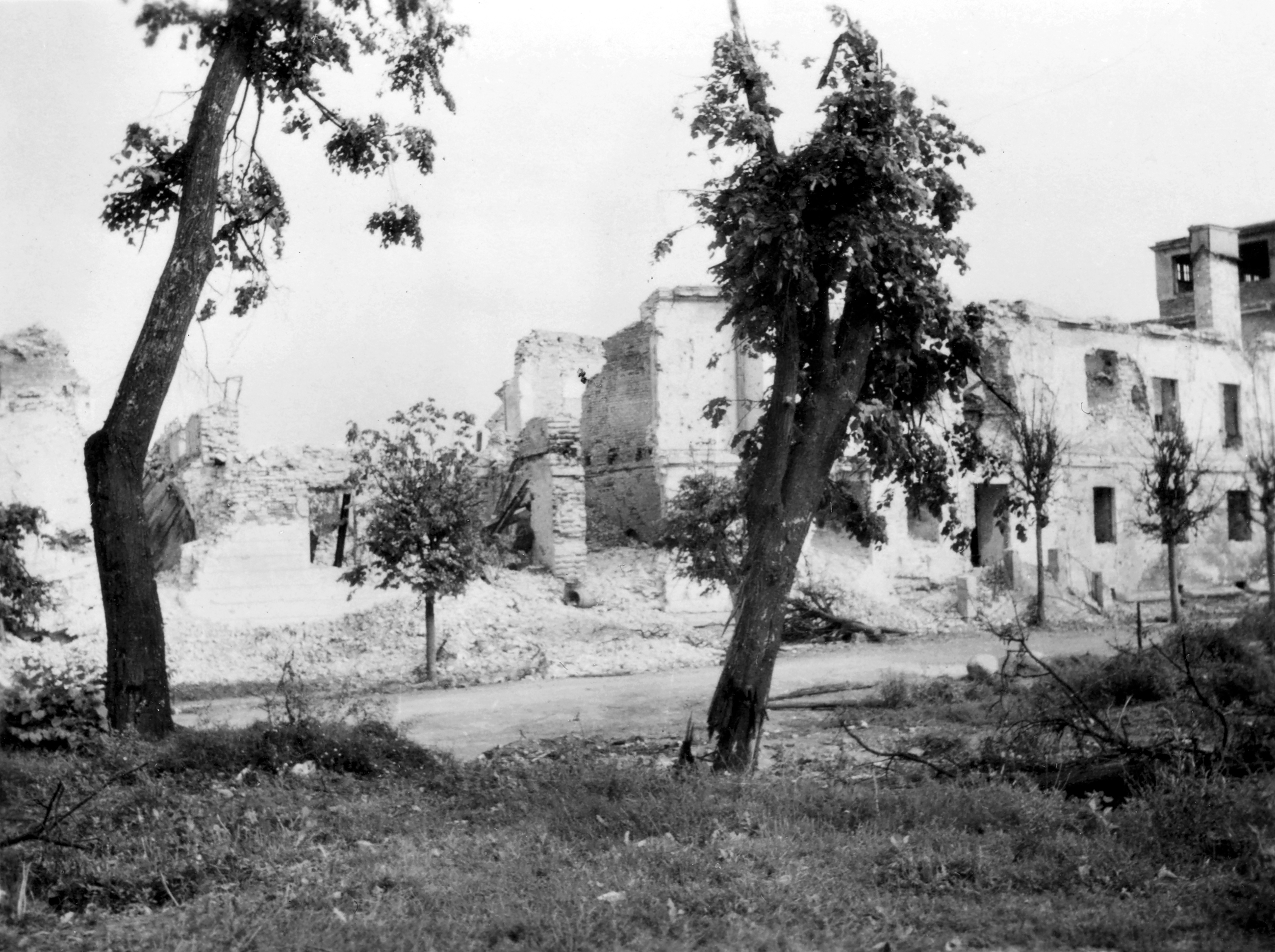
RB-01-002-25-00965
Пасля 1941-га г., Брэст. Руіны Брэсцкай крэпасці. Прадаставіў Цэнтр беларускай культуры, Беласток. Архіў VEHA, калекцыя 'Руіны Беларусі'.
After 1941, Brest. Ruins of the Brest Fortress. Provided by Centrum Kultury Białoruskiej w Białymstoku. From the VEHA archive, ״Ruins of Belarus״ collection.

RB-01-002-25-00960
1970-я гг., Брэст. Наведвальнікі мемарыяльнага комплекса "Брэсцкая крэпасць" на фоне будынка Кругавой казармы. Прадаставіў Яўген Мшар. Архіў VEHA, калекцыя 'Руіны Беларусі'.
1970s, Brest. Visitors to the Brest Fortress Memorial Complex with the Circular Barracks building in the background. Provided by Jaŭhien Mšar. From the VEHA archive, ״Ruins of Belarus״ collection.

RB-01-002-25-00859
1941-1944 гг., Нямецкія вайскоўцы на Цярэспальскім мосце каля руін Цярэспальскай брамы Брэскай крэпасці (моцна пацярпела ў Першую і Другую сусветныя войны, з 1971 г. месціць музейны комплекс з часткова закансерваванымі рэшткамі крэпасці). Прадаставіў Яўген Мшар. Архіў VEHA, калекцыя 'Руіны Беларусі'.
1941-1944, German soldiers on the Ciarespaĺski Bridge near the ruins of the Ciarespaĺskаja Gate of the Brest Fortress (heavily damaged in the First and Second World Wars, since 1971 houses a museum complex with partially preserved remains of the fortress). Provided by Jaŭhien Mšar. From the VEHA archive, ״Ruins of Belarus״ collection.
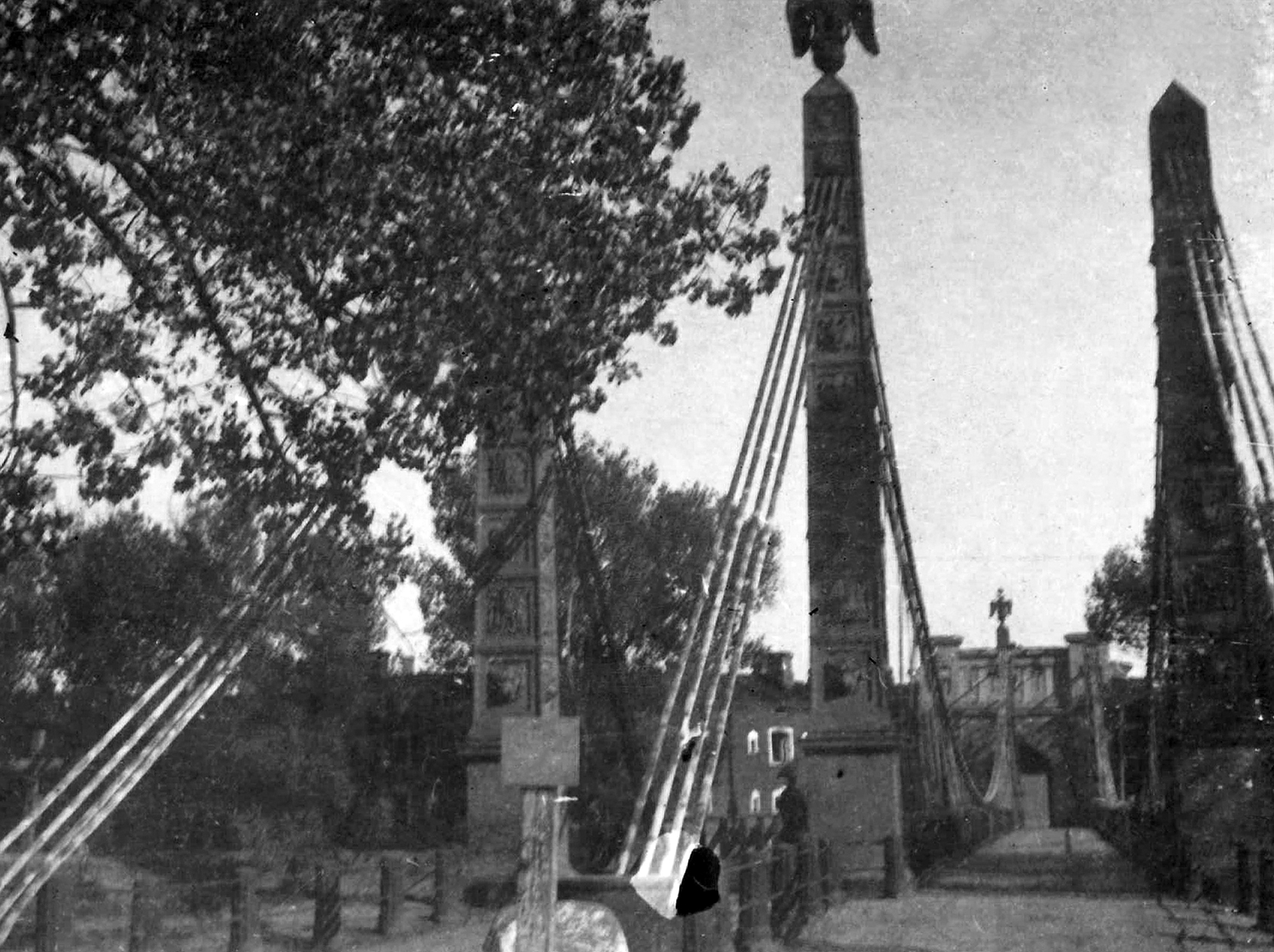
RB-01-002-25-00879
1915-1918 гг., Брэст. Цярэспальскі маст праз Буг (часткова зруйнаваны ў 1915 г. пры адступленні рускай арміі, канчаткова страчаны ў 1944 г. пры адступленні нямецкай арміі, захаваліся рэшткі падмуркаў з абодвух берагоў). Прадаставіў Яўген Мшар. Архіў VEHA, калекцыя 'Руіны Беларусі'.
1915-1918, Brest. Ciarespaĺski Bridge across the Buh (partially destroyed in 1915 during the retreat of the Russian army, finally lost in 1944 during the retreat of the German army, remains of the foundations on both banks have been preserved). Provided by Jaŭhien Mšar. From the VEHA archive, ״Ruins of Belarus״ collection.
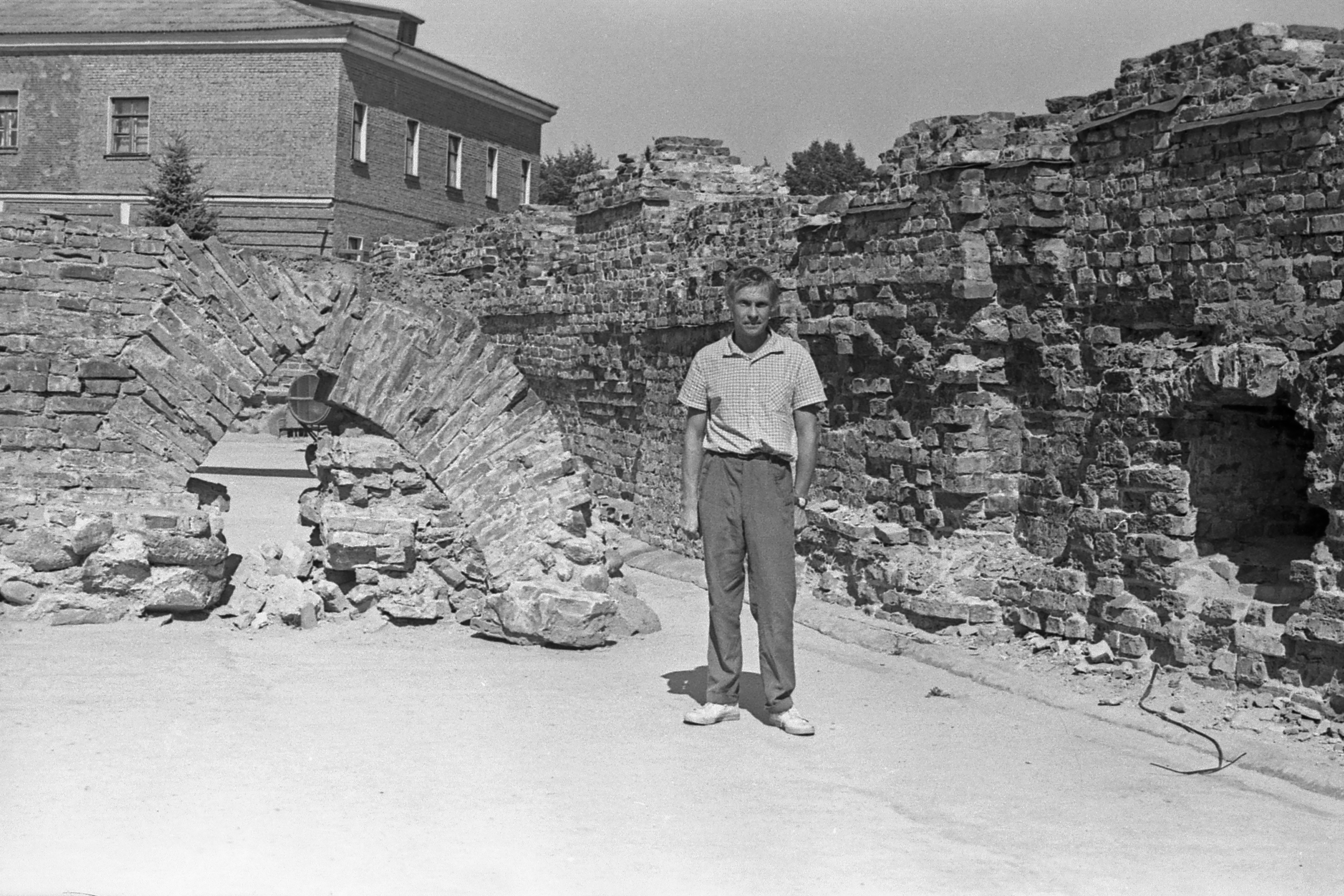
RB-01-002-23-00056
1975 г., Брэст. Турыст сярод руін Белага палаца ў Брэсцкай крэпасці (моцна пацярпела ў Першую і Другую сусветныя войны, з 1971 г. месціць музейны комплекс з часткова закансерваванымі рэшткамі крэпасці). Фатограф Л.А. Мішын. Прадаставіў Расціслаў. Архіў VEHA, калекцыя 'Руіны Беларусі'.
1975, Brest. A tourist on the backgound of the ruins of the White Palace in Brest Fortress (heavily damaged during the First and Second World Wars, since 1971 houses a museum complex with partially preserved remains of the fortress). Photographer L.A. Mishin. Provided by Rostislav. From the VEHA archive, ״Ruins of Belarus״ collection.
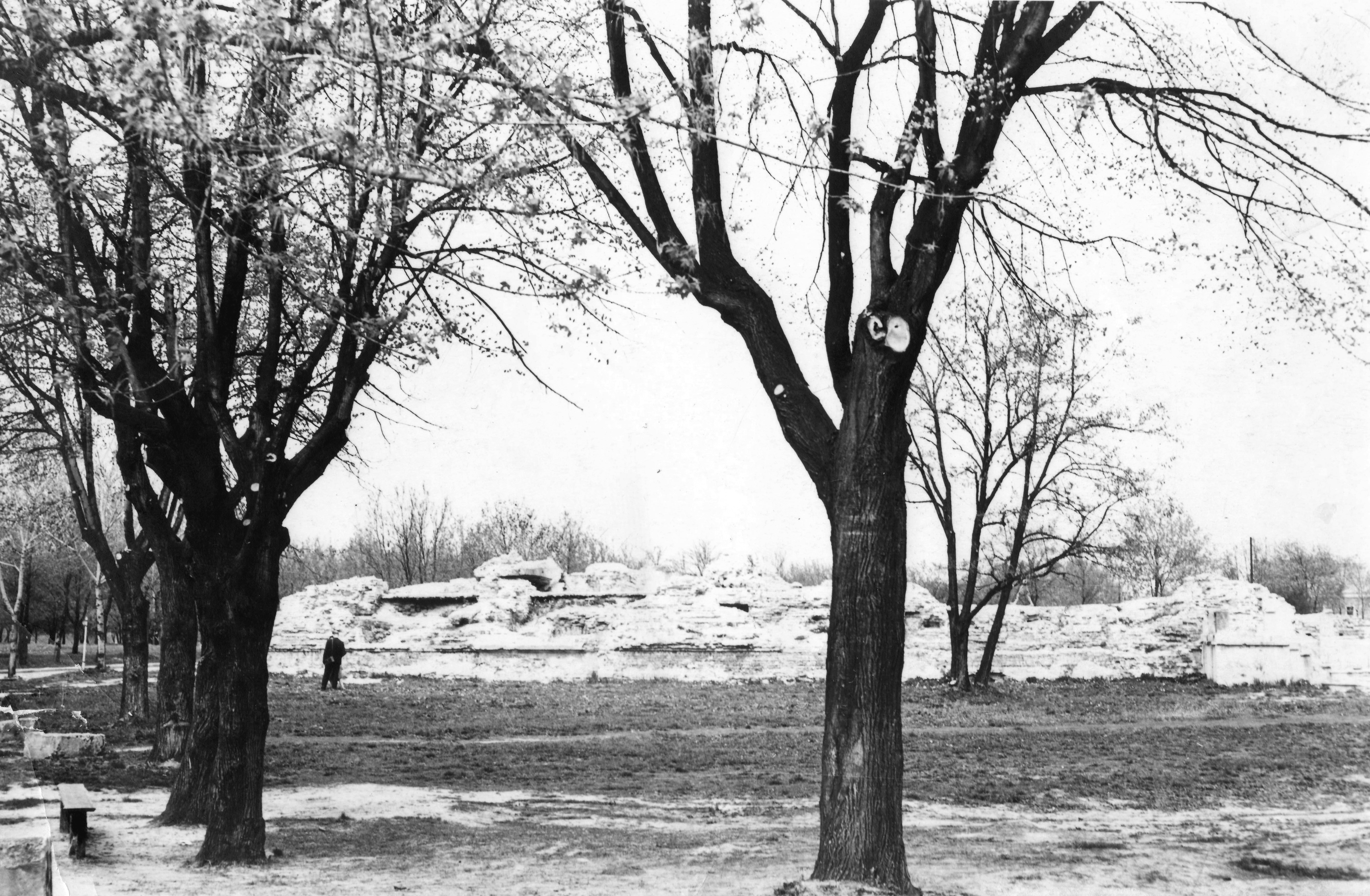
RB-01-002-25-00988
1960-я гг., Брэст. Руіны інжынернага корпуса Брэсцкай крэпасці (корпус пабудаваны як кляштар і калегіўм езуітаў, перабудаваны падчас уладкавання Брэсцкай крэпасці, моцна пацярпелі падчас Другой сусветнай вайны, часткова разабраныя, а часткова закансерваваныя у пасляваенны час пры стварэнні мемарыяльнага комплекса "Брэсцкая крэпасць"). Прадаставіў Яўген Мшар. Архіў VEHA, калекцыя 'Руіны Беларусі'.
1960s, Brest. Ruins of the engineering corps of the Brest Fortress (the corps was built as a monastery and collegium of the Jesuits, rebuilt during the development of the Brest Fortress, badly damaged during World War II, partially dismantled, and partially preserved in the post-war period when the memorial complex "Brest fortress"). Provided by Jaŭhien Mšar. From the VEHA archive, ״Ruins of Belarus״ collection.
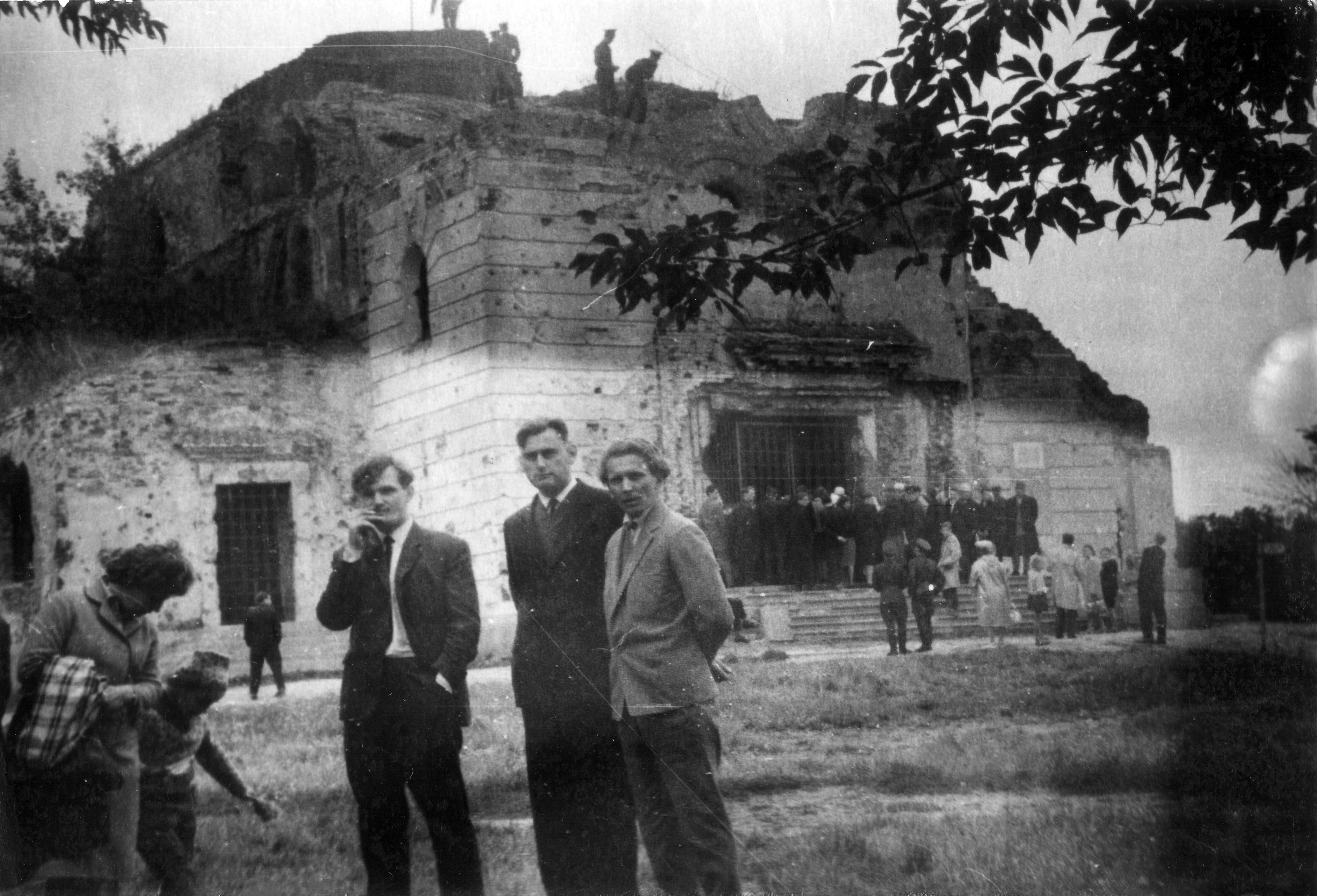
RB-01-002-25-00984
1960-я гг., Брэст. Група людзей перад руінамі Мікольскага сабора ў Брэсцкай крэпасці (сабор пацярпеў падчас Другой сусветнай вайны, закансерваваны ў зруйнаваным стане ў паваенны час, з 1994 г. пераданы праваслаўнай царкве, адбудаваны). Прадаставіў Яўген Мшар. Архіў VEHA, калекцыя 'Руіны Беларусі'.
1960s, Brest. A group of people in front of the ruins of St. Nicholas Cathedral in the Brest Fortress (the cathedral was damaged during World War II, preserved in a ruined state in the post-war period, transferred to the Orthodox Church in 1994, rebuilt). Provided by Jaŭhien Mšar. From the VEHA archive, ״Ruins of Belarus״ collection.
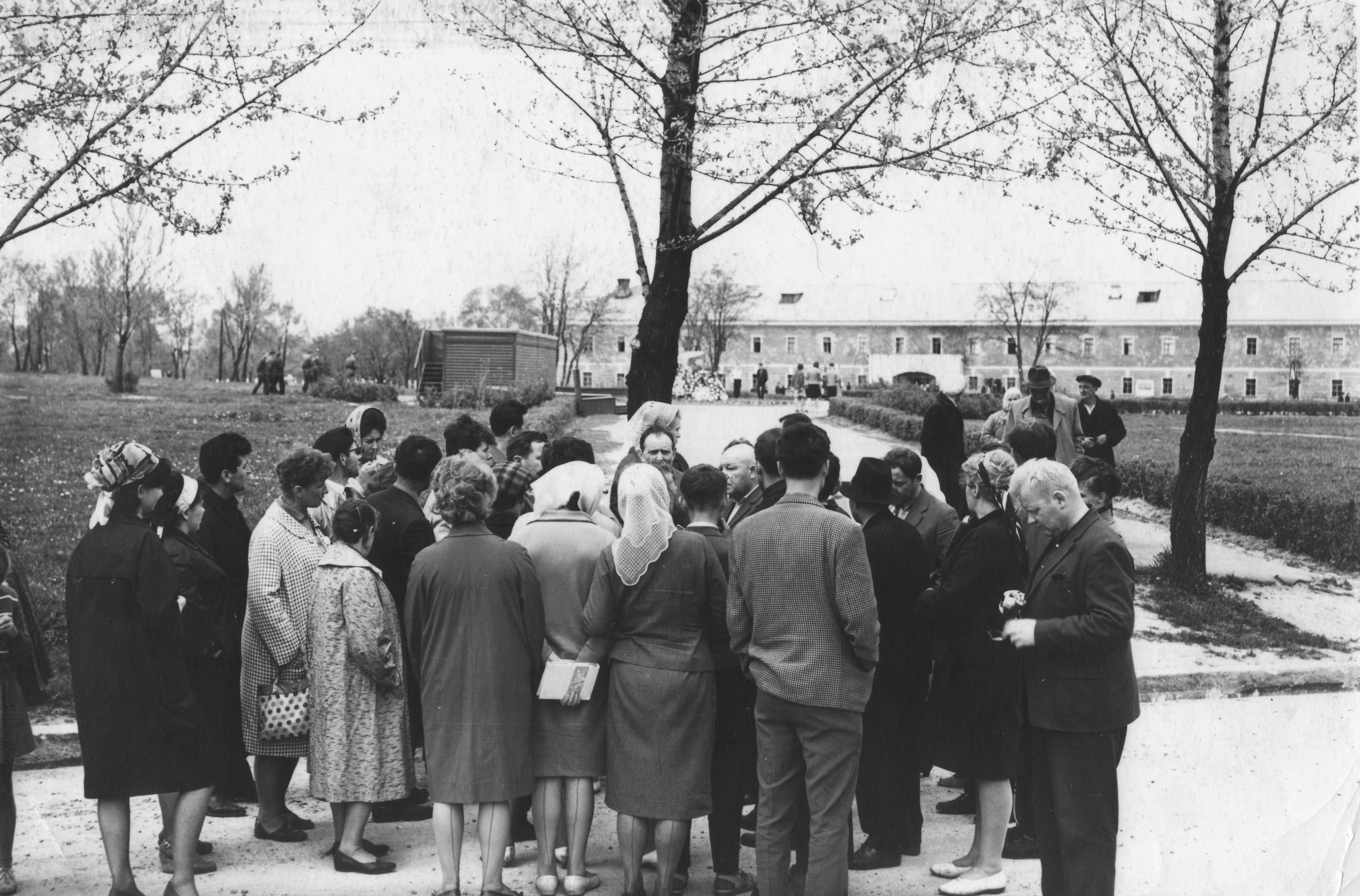
RB-01-002-25-00986
1960-я гг., Брэст. Група наведвальнікаў Брэсцкай крэпасці перад Цытадэлью, дзе месціўся музей (крэпасць моцна пацярпела ў Першую і Другую сусветныя войны, з 1971 г. месціць музейны комплекс з часткова закансерваванымі рэшткамі крэпасці). Прадаставіў Яўген Мшар. Архіў VEHA, калекцыя 'Руіны Беларусі'.
1960s, Brest. A group of visitors to the Brest Fortress in front of the Citadel, which housed the museum (the fortress was badly damaged in the First and Second World Wars, and since 1971 has housed a museum complex with partially preserved remains of the fortress). Provided by Jaŭhien Mšar. From the VEHA archive, ״Ruins of Belarus״ collection.

RB-01-002-25-00871
1980 г., Брэст. Група турыстаў у каля скульптуры "Смага" у цытадэлі Брэсцкай крэпасці (моцна пацярпела ў Першую і Другую сусветныя войны, з 1971 г. месціць музейны комплекс з часткова закансерваванымі рэшткамі крэпасці). Прадаставіў Яўген Мшар. Архіў VEHA, калекцыя 'Руіны Беларусі'.
1980, Brest. A group of tourists near the sculpture "Thirst" in the citadel of the Brest Fortress (severely damaged during the First and Second World Wars, since 1971 houses a museum complex with partially preserved remains of the fortress). Provided by Jaŭhien Mšar. From the VEHA archive, ״Ruins of Belarus״ collection.
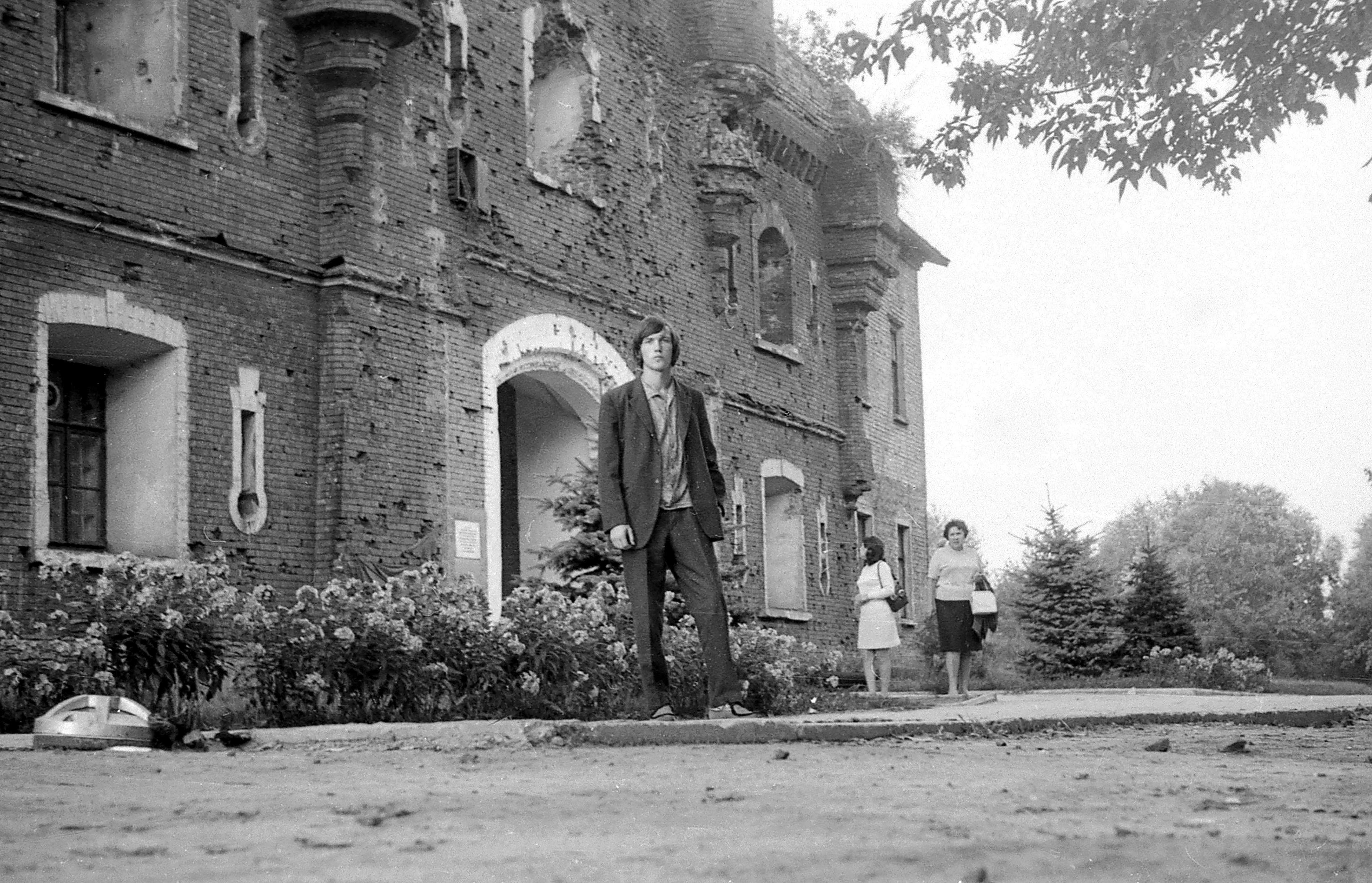
RB-01-002-23-00060
1975 г., г. Брэст. Турыст на тле Холмскай брамы Брэсцкай крэпасці (моцна пацярпела ў Першую і Другую сусветныя войны, з 1971 г. месціць музейны комплекс з часткова закансерваванымі рэшткамі крэпасці). Прадаставіў Расціслаў. Архіў VEHA, калекцыя 'Руіны Беларусі'.
1975, Brest. A tourist on the backgound of the ruins of the Cholmskaja Gate of the Brest Fortress (heavily damaged during the First and Second World Wars, since 1971 houses a museum complex with partially preserved remains of the fortress). Provided by Rostislav. From the VEHA archive, ״Ruins of Belarus״ collection.
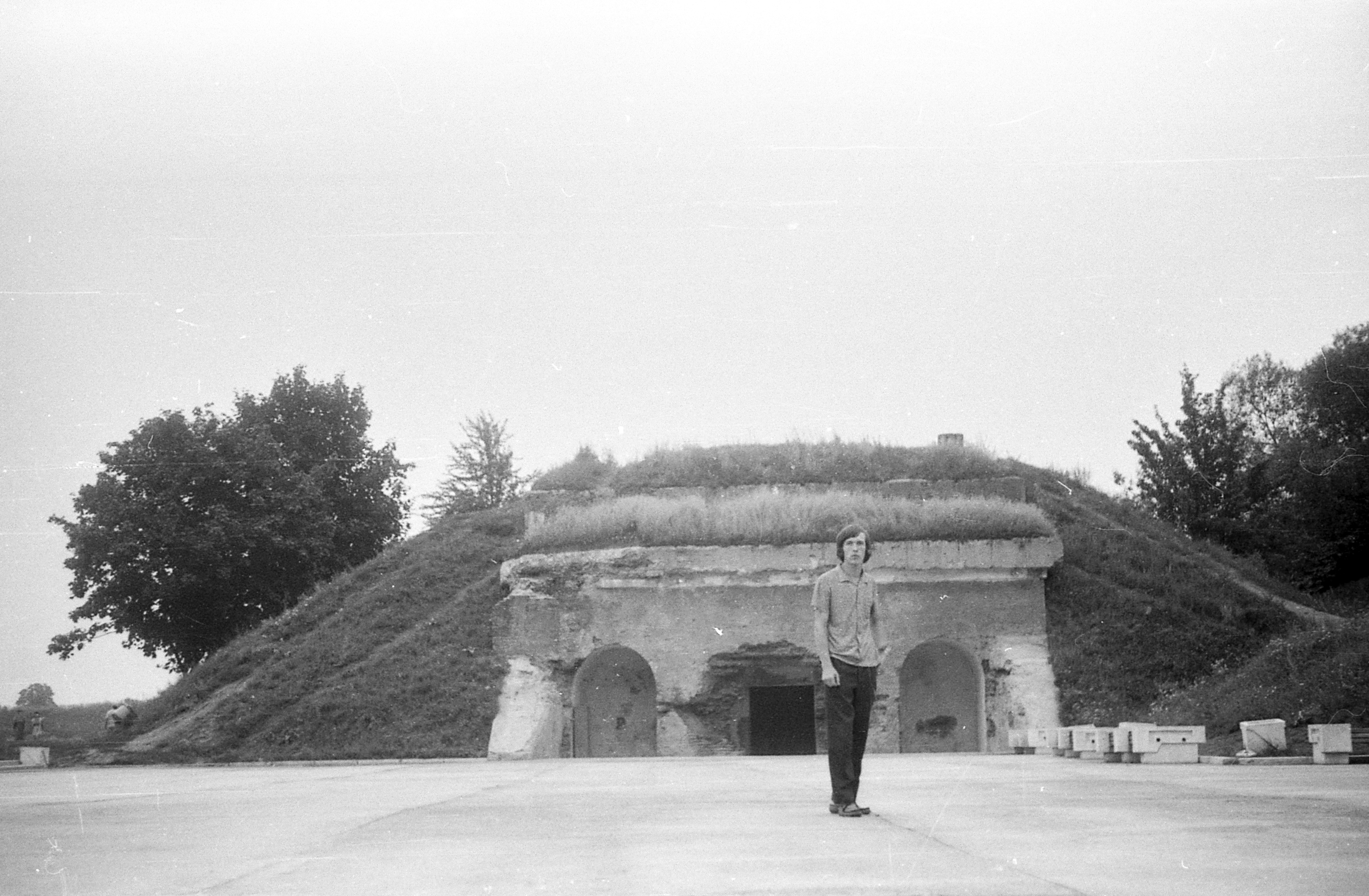
RB-01-002-23-00061
1975 г., г. Брэст. Турыст на тле руін Брэсцкай крэпасці (моцна пацярпела ў Першую і Другую сусветныя войны, з 1971 г. месціць музейны комплекс з часткова закансерваванымі рэшткамі крэпасці). Прадаставіў Расціслаў. Архіў VEHA, калекцыя 'Руіны Беларусі'.
1975, Brest. A tourist on the backgound of the ruins of the Brest fortress (heavily damaged during the First and Second World Wars, since 1971 houses a museum complex with partially preserved remains of the fortress). Provided by Rostislav. From the VEHA archive, ״Ruins of Belarus״ collection.
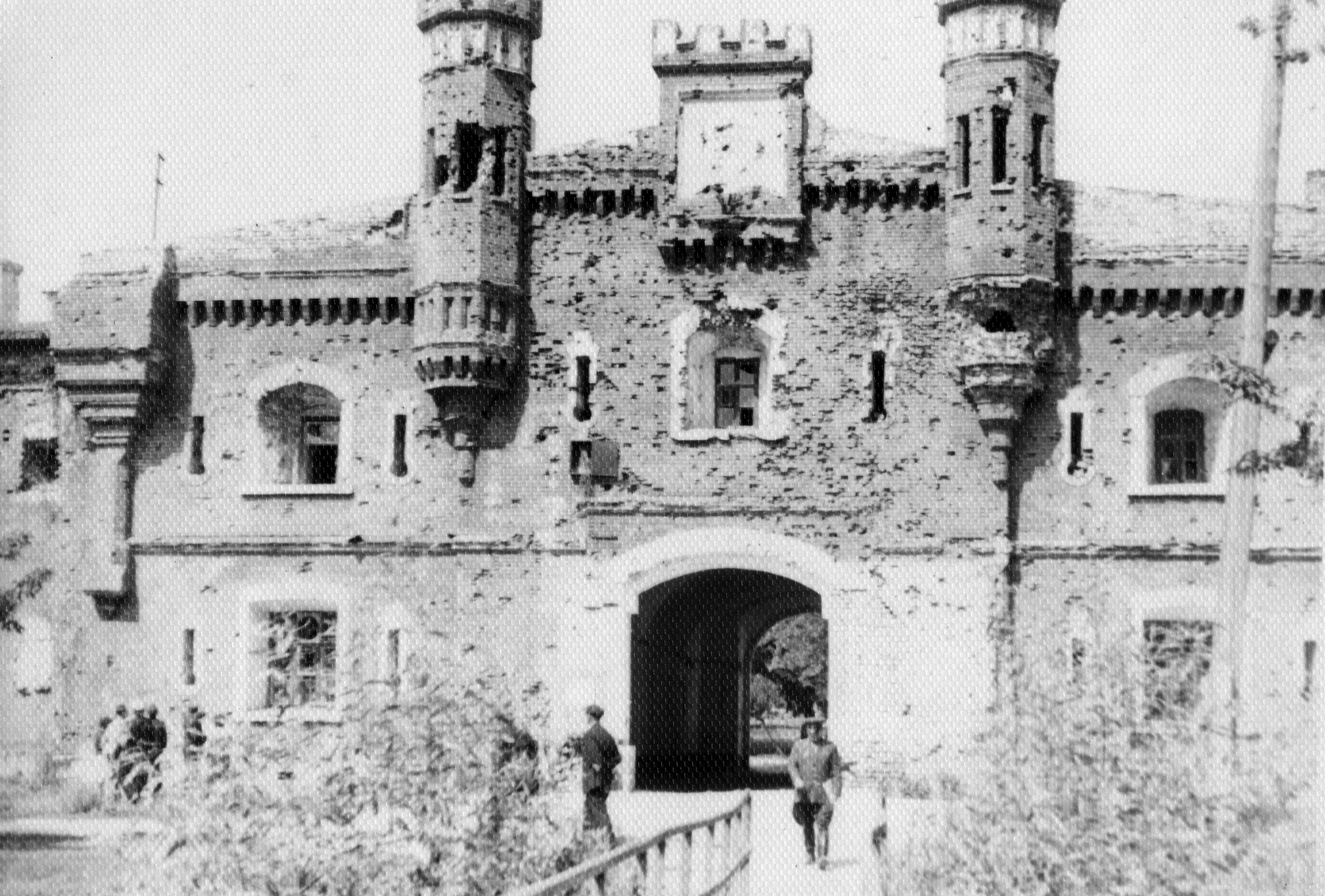
RB-01-002-25-00985
1950-я гг., Брэст. Холмская брама Брэсцкай крэпасці (крэпасць моцна пацярпела ў Першую і Другую сусветныя войны, з 1971 г. месціць музейны комплекс з часткова закансерваванымі рэшткамі крэпасці). Прадаставіў Яўген Мшар. Архіў VEHA, калекцыя 'Руіны Беларусі'.
1950s, Brest. Cholmskaja Gate of the Brest Fortress (the fortress was badly damaged during the First and Second World Wars, since 1971 it has housed a museum complex with partially preserved remains of the fortress). Provided by Jaŭhien Mšar. From the VEHA archive, ״Ruins of Belarus״ collection.
Provided by :
Aliaksiej Trubkin, Archiwa Państwowe, Centrum Kultury Białoruskiej w Białymstoku, Centrum Kultury Białoruskiej w Białymstoku Jaŭhien Mšar, Kastuś Šytal, Uladzimir Hramovič, Uladzimir Sadoŭski, Vadzim Citoŭ, Wikimedia Commons Jaŭhien Mšar

RB-02-029-25-00699
1915-1917 гг., г. Паставы, Віцебская вобл. Малады чалавек на руінах Мікалаеўскага паляўнічага палацыка, дзе месцілася Школа парфорснага паляванне - палявое аддзяленне Санкт-Пецярбургскай Вышэйшай афіцэрскай кавалерыйскай школы (палацык пацярпеў падчас баёў Першай сусветнай вайны, страчаны). Прадаставіў Кастусь Шыталь. Архіў VEHA, калекцыя 'Руіны Беларусі'.
1915-1917, Pastavy, Viciebsk Region. A young man in the ruins of the Mikalajeŭski Hunting Lodge, which housed the School of Par Force Hunting - a field branch of the St. Petersburg Higher Officer Cavalry School (the lodge was damaged during the battles of World War I, lost). Provided by Kastuś Šytal. From the VEHA archive, ״Ruins of Belarus״ collection.

RB-02-036-25-00336
Да 7 лютага 1937 г., в. Гарадзец, Шаркаўшчынскі р-н, Віцебская вобл. Вінакурня ў сядзібе Плятараў (захавалася ў перабудаваным стане). Photo: Feliks Dangel. Крыніца: Archiwa Państwowe; 1-U-1627-2. Архіў VEHA, калекцыя 'Руіны Беларусі'.
Before Fabruary 7, 1937, Haradziec, Šarkaŭščyna district, Viciebsk Region. Distillery in the Platery estate (preserved in a rebuilt state). Photo: Feliks Dangel. Source: Archiwa Państwowe; 1-U-1627-2. From the VEHA archive, ״Ruins of Belarus״ collection.

RB-02-024-25-00698
Да 2 ліпеня 1944 г., Крулеўшчына, Докшыцкі р-н, Віцебская вобл. Разбураныя чыгуначныя рэйкі і станцыя Крулеўшчына перад тым, як была ўзарвная нямецкімі вайскамі пры адыходзе (чыгуначны вакзал адбудаваны ў спрошчаным выглядзе). Прадаставіў Кастусь Шыталь. Архіў VEHA, калекцыя 'Руіны Беларусі'.
Befor July 2, 1944 , Krulieŭščyna, Dokšycy District, Viciebsk Region. Destroyed railway tracks and Krulieŭščyna station before it was blown up by German troops during the retreat (the railway station was rebuilt in a simplified form). Provided by Kastuś Šytal. From the VEHA archive, ״Ruins of Belarus״ collection.

RB-02-032-25-00680
1944-1949 гг., Сянно, Віцебская вобл. Касцёл Найсвяцейшай Тройцы (зачынены савецкімі ўладамі ў 1937 г., пацярпеў у Другую сусветную вайну, канчаткова зруйнаваны ў 1962 г., на захаваўшыхся падмурках у 2010-я быў пабудаваны новы касцёл). Прадаставіў Уладзімір Садоўскі; з архіва Міхаіла Кацара, Інстутут гісторыі Нацыянальнай акадэміі навук Беларусі. Архіў VEHA, калекцыя 'Руіны Беларусі'.
1944-1949, Sianno, Viciebsk Region. Holy Trinity Church (closed by the Soviet authorities in 1937, damaged during World War II, finally destroyed in 1962, a new church was built on the surviving foundations in the 2010s). Provided by Uladzimir Sadoŭski; from the archive of Mikhail Katsar, Institute of History of the National Academy of Sciences of Belarus. From the VEHA archive, ״Ruins of Belarus״ collection.

RB-02-018-24-00251
Ліпень 1941 г., а.г. Бачэйкава, Бешанковіцкі р-н, Віцебская вобл. Палац Цеханавецкіх (пацярпеў у Другую сусветную вайну, пазней разбураны праз занядбанасць). Прадаставіў Кастусь Шыталь. Архіў VEHA, калекцыя 'Руіны Беларусі'.
July 1941, Bačejkava, Biešankovičy District, Viciebsk Region. Ciechanaviecki Palace (damaged during World War II, later destroyed due to neglect). Provided by Kastuś Šytal. From the VEHA archive, ״Ruins of Belarus״ collection.

RB-02-029-25-00893
1916-1918 гг., Задзеўе, Пастаўскі р-н, Віцебская вобл. Касцёл Перамянення Пана (зруйнаваны падчас боёў Першай сусветнай вайны). Прадаставіў Кастусь Шыталь. Архіў VEHA, калекцыя 'Руіны Беларусі'.
1916-1918, Zadzieŭje, Pastavy District, Viciebsk Region. Church of the Transfiguration of the Lord (destroyed during the battles of the First World War). Provided by Kastuś Šytal. From the VEHA archive, ״Ruins of Belarus״ collection.

RB-02-020-25-00360
1941-1944 гг., а.г. Валынцы, Верхнядзвінскі р-н, Віцебская вобл. Касцёл св. Юрыя (знаходізіўся ў фальварку Забелы, пашкоджаны падчас Другой сусьветнай вайны, канчаткова зруйнаваны савецкімі ўладамі ў 1960-я гады). Крыніца: Wikimedia Commons. Архіў VEHA, калекцыя 'Руіны Беларусі'.
1941-1944, Valyncy, Vierchniadzvinsk District, Viciebsk Region. Church of St. George (located in the Zabela manor, damaged during World War II, finally destroyed by the Soviet authorities in the 1960s). Source: Wikimedia Commons. From the VEHA archive, ״Ruins of Belarus״ collection.

RB-02-020-24-00250
1941-1944 гг., а.г. Валынцы, Верхнядзвінскі р-н, Віцебская вобл. Нямецкія ваенныя машыны на тле касцёла св. Юрыя і кляштару дамініканцаў (знаходізілся ў фальварку Забелы, пашкоджаныя падчас Другой сусьветнай вайны, канчаткова зруйнаваныя савецкімі ўладамі ў 1960-я гады). Прадаставіў Кастусь Шыталь. Архіў VEHA, калекцыя 'Руіны Беларусі'.
1941-1944, Valyncy, Vierchniadzvinsk District, Viciebsk Region. German military vehicles in the background of the Church of St. George and the Dominican monastery (located in the Zabiely manor, damaged during World War II, finally destroyed by the Soviet authorities in the 1960s). Provided by Kastuś Šytal. From the VEHA archive, ״Ruins of Belarus״ collection.
Vidzy

RB-02-019-23-00042
1917 г., Відзы, Браслаўскі р-н, Віцебская вобл. Группа нямецкіх жаўнераў перад Троіцкім касцёлам, які пацярпеў ад баёў Першай сусветнай вайны (захаваўся). Прадаставіў Яўген Мшар. Архіў VEHA, калекцыя 'Руіны Беларусі'.
1917, Vidzy, Braslaŭ District, Viciebsk Region. A group of German soldiers in front of the Trinity Church, damaged by the battles of the First World War (preserved). Provided by Jaŭhien Mšar. From the VEHA archive, ״Ruins of Belarus״ collection.

RB-02-019-25-00894
1915-1918 гг., Відзы, Браслаўскі р-н, Віцебская вобл. Троіцкі касцёл, які пацярпеў ад баёў Першай сусветнай вайны (захаваўся). Прадаставіў Кастусь Шыталь. Архіў VEHA, калекцыя 'Руіны Беларусі'.
1915-1918, Vidzy, Braslaŭ District, Viciebsk Region. The Trinity Church, damaged by the battles of the First World War (preserved). Provided by Kastuś Šytal. From the VEHA archive, ״Ruins of Belarus״ collection.

RB-02-019-25-00868
1915-1916 гг., Відзы, Браслаўскі р-н, Віцебская вобл. Вуліца горада і Троіцкі касцёл, які пацярпеў ад баёў Першай сусветнай вайны (захаваўся). Прадаставіў Цэнтр беларускай культуры, Беласток. Архіў VEHA, калекцыя 'Руіны Беларусі'.
1915-1916, Vidzy, Braslaŭ District, Viciebsk Region. Trinity Church, damaged by the battles of the First World War (preserved). Provided by Centrum Kultury Białoruskiej w Białymstoku. From the VEHA archive, ״Ruins of Belarus״ collection.

RB-02-019-25-00866
1915-1918 гг., Відзы, Браслаўскі р-н, Віцебская вобл. Троіцкі касцёл, які пацярпеў ад баёў Першай сусветнай вайны (захаваўся). Прадаставіў Цэнтр беларускай культуры, Беласток. Архіў VEHA, калекцыя 'Руіны Беларусі'.
1915-1918, Vidzy, Braslaŭ District, Viciebsk Region. Trinity Church, damaged by the battles of the First World War (preserved). Provided by Centrum Kultury Białoruskiej w Białymstoku. From the VEHA archive, ״Ruins of Belarus״ collection.
Viciebsk

RB-02-021-25-00832
1940-я гг., Віцебск. Ратуша і касцёл св. Антонія (ратуша захавалася, касцёл знесены савецкімі урадамі ў 1961 г.). Прадаставіў Яўген Мшар. Архіў VEHA, калекцыя 'Руіны Беларусі'.
1940s, Viciebsk. Town Hall and St. Anthony's Church (the town hall is preserved, the church was demolished by the Soviet government in 1961). Provided by Jaŭhien Mšar. From the VEHA archive, ״Ruins of Belarus״ collection.

RB-02-021-25-00833
1941-1944 гг., Віцебск. У далечыні ратуша і касцёл св. Антонія (ратушка захавалася, касцёл знесены савецкімі урадамі ў 1961 г.), справа былы касцёл св. Іосіфа (па 1839 г. перададзены праваслаўнай царкве, перабудаваны і пераасвечаны на царкву св. Мікалая, зруйнаваны савецкімі ўладамі ў 1957 г.). Прадаставіў Яўген Мшар. Архіў VEHA, калекцыя 'Руіны Беларусі'.
1941-1944, Viciebsk. In the distance the town hall and the church of St. Anthony (the town hall survived, the church was demolished by the Soviet government in 1961), on the right was the church of St. Joseph (after 1839, transferred to the Orthodox Church, rebuilt and reconsecrated as the church of St. Nicholas, destroyed by the Soviet authorities in 1957). Provided by Jaŭhien Mšar. From the VEHA archive, ״Ruins of Belarus״ collection.

RB-02-021-25-00402
1941 г., г. Віцебск. Касцёл св. Антонія ад вуліцы Фрунзэ (касцёл знесены савецкімі урадамі ў 1961 г.). Прадаставіў Уладзімір Грамовіч. Архіў VEHA, калекцыя 'Руіны Беларусі'.
1941, Viciebsk. St. Anthony's Church from Frunze Street (the church was demolished by the Soviet government in 1961). Provided by Uladzimir Hramovič. From the VEHA archive, ״Ruins of Belarus״ collection.

RB-02-021-25-00831
1941-1944 гг., Віцебск. Касцёл св. Антонія (знесены савецкімі урадамі ў 1961 г.). Прадаставіў Яўген Мшар. Архіў VEHA, калекцыя 'Руіны Беларусі'.
1941-1944, Viciebsk. St. Anthony's Church (demolished by the Soviet government in 1961). Provided by Jaŭhien Mšar. From the VEHA archive, ״Ruins of Belarus״ collection.

RB-02-021-25-00406
1941-1944 гг., г. Віцебск. Нямецкі жаўнер з сабакам на тле руінаў горада. Прадаставіў Уладзімір Грамовіч. Архіў VEHA, калекцыя 'Руіны Беларусі'.
1941-1944, Viciebsk. A German soldier with a dog against the backdrop of the ruins of the city. Provided by Uladzimir Hramovič. From the VEHA archive, ״Ruins of Belarus״ collection.

RB-02-021-25-00387
1941-1944 гг., г. Віцебск. Чыгуначны вакзал (разбураны падчас Другой сусветнай вайны). Прадаставіў Уладзімір Грамовіч. Архіў VEHA, калекцыя 'Руіны Беларусі'.
1941-1944, Viciebsk. Railway station (destroyed during World War II). Provided by Uladzimir Hramovič. From the VEHA archive, ״Ruins of Belarus״ collection.

RB-02-021-25-00399
1941-1944 гг., г. Віцебск. Чыгуначны вакзал (разбураны падчас Другой сусветнай вайны). Прадаставіў Уладзімір Грамовіч. Архіў VEHA, калекцыя 'Руіны Беларусі'.
1941-1944, Viciebsk. Railway station (destroyed during World War II). Provided by Uladzimir Hramovič. From the VEHA archive, ״Ruins of Belarus״ collection.

RB-02-021-25-00864
Віцебск. Руіны горада, у далечыні бачны касцёл св. Антонія (касцёл знесены савецкімі урадамі ў 1961 г.). Прадаставіў Цэнтр беларускай культуры, Беласток. Архіў VEHA, калекцыя 'Руіны Беларусі'.
Viciebsk. The ruins of the city, further on St. Anthony's Church (the church was demolished by the Soviet government in 1961). Provided by Centrum Kultury Białoruskiej w Białymstoku. From the VEHA archive, ״Ruins of Belarus״ collection.

RB-02-021-25-00830
1941-1944 гг., Віцебск. Царква Раства Хрыстова (уніяцкая царква, па 1839 г. пераданая праваслаўным, перабудаваная ў неарускім стылі ў другой палове 19 ст., пацярпела ў Другую сусветную вайну і была канчаткова зруйнаваная савецкімі ўладамі ў паваенны час). Прадаставіў Яўген Мшар. Архіў VEHA, калекцыя 'Руіны Беларусі'.
1941-1944, Viciebsk. The Church of the Nativity of Christ (a Uniate church, after 1839 transferred to the Orthodox, rebuilt in the neo-Russian style in the second half of the 19th century, damaged during World War II and finally destroyed by the Soviet authorities in the post-war period). Provided by Jaŭhien Mšar. From the VEHA archive, ״Ruins of Belarus״ collection.

RB-02-021-25-00388
1941-1943 гг., г. Віцебск. Руіны горада. Прадаставіў Уладзімір Грамовіч. Архіў VEHA, калекцыя 'Руіны Беларусі'.
1941-1943, Viciebsk. Ruins of the city. Provided by Uladzimir Hramovič. From the VEHA archive, ״Ruins of Belarus״ collection.

RB-02-021-25-00389
1941-1944 гг., г. Віцебск. Руіны горада і выгляд на стары горад. Прадаставіў Уладзімір Грамовіч. Архіў VEHA, калекцыя 'Руіны Беларусі'.
1941-1944, Viciebsk. City ruins and view of the old city. Provided by Uladzimir Hramovič. From the VEHA archive, ״Ruins of Belarus״ collection.
Hlybokaye

RB-02-023-25-00347
1942-1944 гг., г. Глыбокае, Віцебская вобл. Царква апосталаў Пятра і Паўла (царква разабраная на цэглу ў 1950-я гг.). Знаходзілася ў вёсцы Беразвечча, якая ўвайшла ў склад Глыбокага. Прадаставіў Кастусь Шыталь. Архіў VEHA, калекцыя 'Руіны Беларусі'.
1942-1944, Hlybokaye, Viciebsk Region. The Church of the Apostles Peter and Paul (the church was dismantled for bricks in the 1950s). It was located in the village of Bierazviečča, which became part of Hlybokaje. Provided by Kastuś Šytal. From the VEHA archive, ״Ruins of Belarus״ collection.

RB-02-023-25-00801
1938 г., Глыбокае, Віцебская вобл. Царква апосталаў Пятра і Паўла перад рэмонтам па доўгім перыядзе занядбання (царква разабраная на цэглу ў 1950-я гг.). Знаходзілася ў вёсцы Беразвечча, якая ўвайшла ў склад Глыбокага. Фатограф Ян Булгак. Крыніца: Wikimedia Commons. Архіў VEHA, калекцыя 'Руіны Беларусі'.
1938, Hlybokaye, Viciebsk Region. The Church of the Apostles Peter and Paul before renovations after a long period of neglect (the church was dismantled for bricks in the 1950s). It was located in the village of Bierazviečča, which became part of Hlybokaje. Photographer Jan Bułhak. Source: Wikimedia Commons. From the VEHA archive, ״Ruins of Belarus״ collection.

RB-02-023-25-00689
1917 г., Глыбокае, Віцебская вобл. Царква апосталаў Пятра і Паўла перад рэмонтам па доўгім перыядзе занядбання (царква разабраная на цэглу ў 1950-я гг.). Знаходзілася ў вёсцы Беразвечча, якая ўвайшла ў склад Глыбокага. Крыніца: Wikimedia Commons; Mińszczyzna w zbiorach Stanisława bar. Dangla. Museum Tomatorum. Архіў VEHA, калекцыя 'Руіны Беларусі'.
1917, Hlybokaye, Viciebsk Region. The Church of the Apostles Peter and Paul before renovations after a long period of neglect (the church was dismantled for bricks in the 1950s). It was located in the village of Bierazviečča, which became part of Hlybokaje. Source: Wikimedia Commons; Mińszczyzna w zbiorach Stanisława bar. Dangla. Museum Tomatorum. From the VEHA archive, ״Ruins of Belarus״ collection.

RB-02-023-24-00211
Канец 1900, г. Глыбокае, Віцебская вобл. Царква апосталаў Пятра і Паўла перад рэмонтам па доўгім перыядзе занядбання (царква разабраная на цэглу ў 1950-я гг.). Знаходзілася ў вёсцы Беразвечча, якая ўвайшла ў склад Глыбокага. Фатограф Генрык Віньча. Крыніца: Wikimedia Commons; 600663704. Архіў VEHA, калекцыя 'Руіны Беларусі'.
End of the 1900, Hlybokaye, Viciebsk Region. The Church of the Apostles Peter and Paul before renovations after a long period of neglect (the church was dismantled for bricks in the 1950s). It was located in the village of Bierazviečča, which became part of Hlybokaje. Photographer Hienryk Vińča. Source: Wikimedia Commons; 600663704. From the VEHA archive, ״Ruins of Belarus״ collection.
Orša

RB-02-017-25-00826
1941-1944 гг., Орша, Віцебская вобл. Выгляд на горад і уніяцкі касцёл Апекі Маці Божай (у 1842 г. перароблены на царкву Покрыва Багародзіцы, знесены ў 1969 г.). Прадаставіў Яўген Мшар. Архіў VEHA, калекцыя 'Руіны Беларусі'.
1941-1944, Orša, Viciebsk Region. City view with the Uniate Church of the Protection of the Mother of God (rebuilt into the Church of the Protection of the Virgin Mary in 1842, demolished in 1969). Provided by Jaŭhien Mšar. From the VEHA archive, ״Ruins of Belarus״ collection.

RB-02-017-25-00827
1941 г., Орша, Віцебская вобл. Уніяцкі касцёл Апекі Маці Божай (у 1842 г. перароблены на царкву Покрыва Багародзіцы, знесены ў 1969 г.). Прадаставіў Яўген Мшар. Архіў VEHA, калекцыя 'Руіны Беларусі'.
1941, Orša, Viciebsk Region. Uniate Church of the Protection of the Mother of God (rebuilt into the Church of the Protection of the Virgin Mary in 1842, demolished in 1969). Provided by Jaŭhien Mšar. From the VEHA archive, ״Ruins of Belarus״ collection.

RB-02-017-25-00390
1941-1944 гг., г. Орша, Віцебская вобл. Касцёл Св. Антонія і кляштар францысканаў (касцёл знішчаны ў 1970-я г., кляштарны корпус захаваўся ў занядбаным стане). Прадаставіў Уладзімір Грамовіч. Архіў VEHA, калекцыя 'Руіны Беларусі'.
1941-1944, Orša, Viciebsk Region. St. Anthony's Church and the Franciscan Monastery (the church was destroyed in the 1970s, the monastery building has survived in a neglected state). Provided by Uladzimir Hramovič. From the VEHA archive, ״Ruins of Belarus״ collection.

RB-02-017-25-00391
1941-1944 гг., г. Орша, Віцебская вобл. Касцёл Св. Антонія і кляштар францысканаў (касцёл знішчаны ў 1970-я г., кляштарны корпус захаваўся ў занядбаным стане). Прадаставіў Уладзімір Грамовіч. Архіў VEHA, калекцыя 'Руіны Беларусі'.
1941-1944, Orša, Viciebsk Region. St. Anthony's Church and the Franciscan Monastery (the church was destroyed in the 1970s, the monastery building has survived in a neglected state). Provided by Uladzimir Hramovič. From the VEHA archive, ״Ruins of Belarus״ collection.
Dzisna

RB-02-028-24-00249
Ліпень 1941 г., г. Дзісна, Мёрскі р-н, Віцебская вобл. Жаўнёры нямецкай арміі на тле касцёла Беззаганнага Зачацця Найсвяцейшай Дзевы Марыі (часткова узарваны савецкімі ўладамі ў 1958 г., знаходзіцца на рэканструкцыі). Прадаставіў Кастусь Шыталь. Архіў VEHA, калекцыя 'Руіны Беларусі'.
July 1941, Dzisna, Miory District, Viciebsk Region. German army soldiers in the background of the Church of the Immaculate Conception of the Blessed Virgin Mary (partially blown up by the Soviet authorities in 1958, currently is under reconstruction). Provided by Kastuś Šytal. From the VEHA archive, ״Ruins of Belarus״ collection.

RB-02-028-25-00344
Ліпень 1941 г., г. Дзісна, Мёрскі р-н, Віцебская вобл. Нямецкія жаўнёры на тле касцёла Беззаганнага Зачацця Найсвяцейшай Дзевы Марыі (пашкоджаны ў Другую сусьветную вайну, узарваны савецкімі ўладамі ў 1958 г., зараз адбудоўваецца з руін). Прадаставіў Кастусь Шыталь. Архіў VEHA, калекцыя 'Руіны Беларусі'.
July 1941, Dzisna, Miory District, Viciebsk Region. German soldiers in the background of the Church of the Immaculate Conception of the Blessed Virgin Mary (damaged during World War II, blown up by the Soviet authorities in 1958, currently being rebuilt from the ruins). Provided by Kastuś Šytal. From the VEHA archive, ״Ruins of Belarus״ collection.

RB-02-028-25-00343
Ліпень 1941 г., г. Дзісна, Мёрскі р-н, Віцебская вобл. Руіны горада. Прадаставіў Кастусь Шыталь. Архіў VEHA, калекцыя 'Руіны Беларусі'.
July 1941, Dzisna, Miory District, Viciebsk Region. Ruins of the city. Provided by Kastuś Šytal. From the VEHA archive, ״Ruins of Belarus״ collection.
Połack

RB-02-030-25-00779
1950-1955 гг., Полацк, Віцебская вобл. Касцёл Святога Стэфана (ў 1936 г. былі разабраныя вежы, у 1964 г. узарваны савецкімі ўладамі). Прадаставіў Уладзімір Садоўскі; з архіва Міхаіла Кацара, Інстутут гісторыі Нацыянальнай акадэміі навук Беларусі. Архіў VEHA, калекцыя 'Руіны Беларусі'.
1950-1955, Połack, Vitsebsk Region. St. Stephen's Church (towers were dismantled in 1936, blown up by the Soviet authorities in 1964). Provided by Uladzimir Sadoŭski; from the archive of Mikhail Katsar, Institute of History of the National Academy of Sciences of Belarus. From the VEHA archive, ״Ruins of Belarus״ collection.

RB-02-030-25-00795
1936-1964 гг., Полацк, Віцебская вобл. Дзеці катаюцца на санках на тле руін касцёла св. Стэфана (ў 1936 г. былі разабраныя вежы, у 1964 г. узарваны савецкімі ўладамі). Прадаставіў Вадзім Цітоў. Архіў VEHA, калекцыя 'Руіны Беларусі'.
1936-1964, Połack, Vitsebsk Region. Children sledding against the backgound of St. Stephen's Church (towers were dismantled in 1936, blown up by the Soviet authorities in 1964). Provided by Vadzim Citoŭ. From the VEHA archive, ״Ruins of Belarus״ collection.

RB-02-030-25-00385
1941-1944 гг., г. Полацк, Віцебская вобл. Выгляд на цэнтр горада ад Задзвіння, у цэнтры бачны сабор св. Сафіі (захаваўся ў перабудаваным стане), справа Богаяўленскі сабор (захаваўся ў перабудаваным стане), далей сабор св. Стефана (узарваны ў 1964 годзе). Прадаставіў Аляксей Трубкін. Архіў VEHA, калекцыя 'Руіны Беларусі'.
1941-1944, Połack, Vitsebsk Region. View of the city center from Zadzvinnie, in the center you can see the Cathedral of St. Sophia (preserved in a rebuilt state), on the right the Epiphany Cathedral (preserved in a rebuilt state), further on St. Stephen's Cathedral (blown down in 1964). Provided by Aliaksiej Trubkin. From the VEHA archive, ״Ruins of Belarus״ collection.

RB-02-030-25-00384
1941-1944 гг., г. Полацк, Віцебская вобл. Выгляд на цэнтр горада ад Задзвіння, злева бачны сабор св. Сафіі (захаваўся ў перабудаваным стане), справа Богаяўленскі сабор (захаваўся ў перабудаваным стане), далей сабор св. Стефана (узарваны ў 1964 годзе). Прадаставіў Аляксей Трубкін. Архіў VEHA, калекцыя 'Руіны Беларусі'.
1941-1944, Połack, Vitsebsk Region. View of the city center from Zadzvinnie, on the left is the Cathedral of St. Sophia (preserved in a rebuilt state), on the right the Epiphany Cathedral (preserved in a rebuilt state), further on St. Stephen's Cathedral (blown down in 1964). Provided by Aliaksiej Trubkin. From the VEHA archive, ״Ruins of Belarus״ collection.

RB-02-030-25-00383
1941-1944 гг., г. Полацк, Віцебская вобл. Выгляд на цэнтр горада ад Задзвіння. Прадаставіў Аляксей Трубкін. Архіў VEHA, калекцыя 'Руіны Беларусі'.
1941-1944, Połack, Vitsebsk Region. View of the city center from Zadzvinnie. Provided by Aliaksiej Trubkin. From the VEHA archive, ״Ruins of Belarus״ collection.

RB-02-030-25-00802
1936-1964 гг., Полацк, Віцебская вобл. Жанчына з дзецём на тле руін касцёла св. Стэфана (ў 1936 г. былі разабраныя вежы, у 1964 г. узарваны савецкімі ўладамі). Прадаставіў Вадзім Цітоў. Архіў VEHA, калекцыя 'Руіны Беларусі'.
1936-1964, Połack, Vitsebsk Region. A woman and a child against the backgound of St. Stephen's Church (towers were dismantled in 1936, blown up by the Soviet authorities in 1964). Provided by Vadzim Citoŭ. From the VEHA archive, ״Ruins of Belarus״ collection.

RB-02-030-25-00380
1941-1944 гг., г. Полацк, Віцебская вобл. Выгляд на цэнтр горада ад Задзвіння, злева бачны сабор св. Сафіі (захаваўся ў перабудаваным стане), справа сабор св. Стефана (узарваны ў 1964 годзе), бліжэй да берага - Богаяўленскі сабор (захаваўся ў перабудаваным стане). Прадаставіў Аляксей Трубкін. Архіў VEHA, калекцыя 'Руіны Беларусі'.
1941-1944, Połack, Vitsebsk Region. View of the city center from Zadzvinnie, on the left is the Cathedral of St. Sophia (preserved in a rebuilt state), on the right is the Cathedral of St. Stephen (blown down in 1964), closer to the shore is the Epiphany Cathedral (preserved in a rebuilt state). Provided by Aliaksiej Trubkin. From the VEHA archive, ״Ruins of Belarus״ collection.
Sielišča

RB-02-034-25-00769
1941-1944 гг., Селішча, Ушацкі р-н, Віцебская вобл. Касцёл св. Веранікі і кляштар бернардзінцаў (знаходзіцца ў паўзруйнаваным стане). Прадаставіў Уладзімір Грамовіч. Архіў VEHA, калекцыя 'Руіны Беларусі'.
1941-1944, Sielišča, Ušačy District, Viciebsk Region. The Church of St. Veronica and the Bernardine monastery (currently in an abandoned state). Provided by Uladzimir Hramovič. From the VEHA archive, ״Ruins of Belarus״ collection.

RB-02-034-25-00768
1941-1944 гг., Селішча, Ушацкі р-н, Віцебская вобл. Цэнтральны ўваход у касцёл св. Веранікі і кляштар бернардзінцаў (знаходзіцца ў паўзруйнаваным стане). Прадаставіў Уладзімір Грамовіч. Архіў VEHA, калекцыя 'Руіны Беларусі'.
1941-1944, Sielišča, Ušačy District, Viciebsk Region. The central entrance to the Church of St. Veronica and the Bernardine monastery (currently in an abandoned state). Provided by Uladzimir Hramovič. From the VEHA archive, ״Ruins of Belarus״ collection.

RB-02-034-25-00407
Ліпень 1941 г., в. Селішча, Ушацкі р-н, Віцебская вобл. Касцёл Святой Веранікі і кляштар бернардзінцаў (знаходзіцца ў паўзруйнаваным стане). Прадаставіў Уладзімір Грамовіч. Архіў VEHA, калекцыя 'Руіны Беларусі'.
July 1941, Sielišča, Ušačy District, Viciebsk Region. The Church of St. Veronica and the Bernardine monastery (currently in an abandoned state). Provided by Uladzimir Hramovič. From the VEHA archive, ״Ruins of Belarus״ collection.

RB-02-034-24-00248
Ліпень 1941 г., в. Селішча, Ушацкі р-н, Віцебская вобл. Касцёл Святой Веранікі і кляштар бернардзінцаў (знаходзіцца ў паўзруйнаваным стане). Прадаставіў Кастусь Шыталь. Архіў VEHA, калекцыя 'Руіны Беларусі'.
July 1941, Sielišča, Ušačy District, Viciebsk Region. The Church of St. Veronica and the Bernardine monastery (currently in an abandoned state). Provided by Kastuś Šytal. From the VEHA archive, ״Ruins of Belarus״ collection.
Provided by :
Andruś Horvat, Biblioteka Narodowa, Centrum Kultury Białoruskiej w Białymstoku, Fortepan, Jaŭhien Mšar, Jury Pankoŭ, Reményi József, Uladzimir Hramovič, Uladzimir Sadoŭski

RB-03-058-24-00128
1950-я гг., Чачэрск, Гомельская вобл. Касьцёл Найсьвяцейшай Тройцы (зруйнаваны ў 1950-я гады). Прадаставіў Уладзімір Садоўскі; з архіва Міхаіла Кацара, Інстутут гісторыі Нацыянальнай акадэміі навук Беларусі. Архіў VEHA, калекцыя 'Руіны Беларусі'.
1950s, Čačersk, Homieĺ Region. Church of the Holy Trinity (destroyed in the 1950s). Provided by Uladzimir Sadoŭski; from the archive of Mikhail Katsar, Institute of History of the National Academy of Sciences of Belarus. From the VEHA archive, ״Ruins of Belarus״ collection.

RB-03-058-25-00897
1941-1944 гг., Чачэрск, Гомельская вобл. Руіны горада, далей бачная ратуша (захавалася). Прадаставіў Цэнтр беларускай культуры, Беласток. Архіў VEHA, калекцыя 'Руіны Беларусі'.
1941-1944, Čačersk, Homieĺ Region. Ruins of the city, the town hall is further on (preserved). Provided by Centrum Kultury Białoruskiej w Białymstoku. From the VEHA archive, ״Ruins of Belarus״ collection.

RB-03-039-24-00227
Каля 1910-га г., в. Астрагляды (не існуе), Брагінскі р-н, Гомельская вобл. Новыя гаспадары палаца Прозараў Альгерд і Ванда Гардзялкоўскія (палац разбураны падчас паўстання 1863 года, руіны знаходяцца на тэрыторі Палескага радыяцыйна-экалагічнага запаведніка). Крыніца: Biblioteka Narodowa Album zdjęć rodziny Świackich z Bielicy. Архіў VEHA, калекцыя 'Руіны Беларусі'.
About 1910, Astrahliady (no longer exists), Brahin District, Homieĺ Region. The new owners of the Prozors palace Olgierd and Wanda Gordzialkowski (the palace was destroyed during the uprising of 1863, the ruins are located on the territory of the Paleski radiation-ecological reserve). Source: Biblioteka Narodowa Album zdjęć rodziny Świackich z Bielicy. From the VEHA archive, ״Ruins of Belarus״ collection.

RB-03-045-25-00780
Стрэшын, Жлобінскі р-н, Гомельская вобл. Царква Покрыва Прасвятой Багародзіцы (захавалася ў перабудаваным стане). Прадаставіў Уладзімір Садоўскі; з архіва Міхаіла Кацара, Інстутут гісторыі Нацыянальнай акадэміі навук Беларусі. Архіў VEHA, калекцыя 'Руіны Беларусі'.
Strešyn, Žlobin District, Homieĺ Region. Orthodox Church of the Protection of the Holy Virgin (preserved in a rebuilt state). Provided by Uladzimir Sadoŭski; from the archive of Mikhail Katsar, Institute of History of the National Academy of Sciences of Belarus.From the VEHA archive, ״Ruins of Belarus״ collection.

RB-03-052-25-00955
1948 г., Нароўля, Гомельская вобл. Палац Горватаў (пацярпеў у Другую сусветную вайну, месціў школу, пазней школу-інтэрнат, у 1980-я гады быў закінуты і разбураўся, выкуплены прыватнымі асобамі і знаходзіцца ў стане адбудовы). Фатограф Васіль Крэмень. Source: Naroŭlia Historical and Ethnographic Museum. Provided by Andruś Horvat. Архіў VEHA, калекцыя 'Руіны Беларусі'.
1948, Naroŭlia, Homieĺ Region. Horvat Palace (damaged during World War II, housed a school, later an orphanage, in the 1980s it was abandoned and was falling apart, bought by private individuals and is in a state of reconstruction). Photographer Vasiĺ Kremień. Source: Naroŭlia Historical and Ethnographic Museum. Provided by Andruś Horvat. From the VEHA archive, ״Ruins of Belarus״ collection.

RB-03-052-25-00456
25 сакавіка 1946 г., Нароўля, Гомельская вобл. Палац Горватаў (пацярпеў у Другую сусветную вайну, месціў школу, пазней школу-інтэрнат, у 1980-я гады быў закінуты і разбураўся, выкуплены прыватнымі асобамі і знаходзіцца ў стане адбудовы). Крыніца: Нараўлянскі гісторыка-этнаграфічны музей. Прадаставіў Андрусь Горват. Архіў VEHA, калекцыя 'Руіны Беларусі'.
March 25, 1946, Naroŭlia, Homieĺ Region. Horvat Palace (damaged during World War II, housed a school, later an orphanage, in the 1980s it was abandoned and was falling apart, bought by private individuals and is in a state of reconstruction). Source: Naroŭlia Historical and Ethnographic Museum. Provided by Andruś Horvat. From the VEHA archive, ״Ruins of Belarus״ collection.

RB-03-039-24-00229
Каля 1910-га г., в. Астрагляды (не існуе), Брагінскі р-н, Гомельская вобл. Новыя гаспадары сядзібы Прозараў Альгерд (стаіць трэці справа ў першым радзе) і Ванда (над мужам, трэцяя справа ў другім радзе) Гардзялкоўскія з гасцямі на тле палаца (палац Прозараў разбураны падчас паўстання 1863 года, руіны знаходяцца на тэрыторі Палескага радыяцыйна-экалагічнага запаведніка). Крыніца: Biblioteka Narodowa Album zdjęć rodziny Świackich z Bielicy. Архіў VEHA, калекцыя 'Руіны Беларусі'.
About 1910, Astrahliady (no longer exists), Brahin District, Homieĺ Region. The new owners of the Prozors palace Olgierd (third from the right in the first row) and Wanda (above him, third from the right in the second row) Gordzialkowski (the palace was destroyed during the uprising of 1863, the ruins are located on the territory of the Paleski radiation-ecological reserve). Source: Biblioteka Narodowa Album zdjęć rodziny Świackich z Bielicy. From the VEHA archive, ״Ruins of Belarus״ collection.

RB-03-039-24-00226
Каля 1910-га г., в. Астрагляды (не існуе), Брагінскі р-н, Гомельская вобл. Новыя гаспадары сядзібы Прозараў Альгерд (стаіць трэці справа ў першым радзе) і Ванда (над мужам, трэцяя справа ў другім радзе) Гардзялкоўскія з гасцямі на тле палаца (палац Прозараў разбураны падчас паўстання 1863 года, руіны знаходяцца на тэрыторі Палескага радыяцыйна-экалагічнага запаведніка). Крыніца: Biblioteka Narodowa Album zdjęć rodziny Świackich z Bielicy. Архіў VEHA, калекцыя 'Руіны Беларусі'.
About 1910, Astrahliady (no longer exists), Brahin District, Homieĺ Region. The new owners of the Prozors palace Olgierd (third from the right in the first row) and Wanda (above him, third from the right in the second row) Gordzialkowski (the palace was destroyed during the uprising of 1863, the ruins are located on the territory of the Paleski radiation-ecological reserve). Source: Biblioteka Narodowa Album zdjęć rodziny Świackich z Bielicy. From the VEHA archive, ״Ruins of Belarus״ collection.
Homieĺ

RB-03-042-23-00002
1942 г., Гомель. Від на сучасны праспект Леніна, удалечыні бачны дом-камуна (захаваўся). Крыніца: Fortepan; Reményi József. Архіў VEHA, калекцыя 'Руіны Беларусі'.
1942, Homieĺ. A view of the modern Lenin Avenue, the commune house is visible in the distance (preserved) Source: Fortepan; Reményi József. From the VEHA archive, ״Ruins of Belarus״ collection.

RB-03-042-23-00006
1942 г., г. Гомель. Сучасная плошча Леніна, від на спаленную пажарную станцыю (адрамантаваная ў паваенныя часы, але знесенная ў 1970-я). Крыніца: Fortepan Reményi József. Архіў VEHA, калекцыя 'Руіны Беларусі'.
1942, Homieĺ. Now days Lenin Square, view of the burned fire station (renovated in post-war times, but demolished in the 1970s) Source: Fortepan Reményi József. From the VEHA archive, ״Ruins of Belarus״ collection.

RB-03-042-23-00003
1942 г., Гомель. Нямецкі ваяр на тле палаца Румянцавых і Паскевічаў (экспрапрыяваны савецкімі ўладамі, з 1919 г. месціў музей,пацярпеў у Першую і Другую сусветныя войны, рэстаўраваны, дасяжны для наведвання). Крыніца: Fortepan; Reményi József. Архіў VEHA, калекцыя 'Руіны Беларусі'.
1942, Homieĺ. German soldier against the background of the Rumiancaŭs and Paskievičs Palace (expropriated by the Soviet authorities, housed a museum since 1919, suffered damage during the First and Second World Wars, restored, and is open to the public). Source: Fortepan; Reményi József. From the VEHA archive, ״Ruins of Belarus״ collection.

RB-03-042-23-00004
1942 г., Гомель. Нямецкія ваяры і медсястра на тле палаца Румянцавых і Паскевічаў (экспрапрыяваны савецкімі ўладамі, з 1919 г. месціў музей,пацярпеў у Першую і Другую сусветныя войны, рэстаўраваны, дасяжны для наведвання). Крыніца: Fortepan; Reményi József. Архіў VEHA, калекцыя 'Руіны Беларусі'.
1942, Homieĺ. German soldiers and a nurse in the background of the Rumiancaŭs and Paskievičs palace (expropriated by the Soviet authorities, since 1919 housed a museum, suffered during the First and Second World Wars, restored, accessible for visits). Source: Fortepan; Reményi József. From the VEHA archive, ״Ruins of Belarus״ collection.
RB-03-042-25-00412Лістапад 1943 г., Гомель. Ангар аэрадрома, зруйнаваны нямецкімі войскамі пры адыходзе. Прадаставіў Уладзімір Грамовіч. Архіў VEHA, калекцыя 'Руіны Беларусі'.
November 1943, Homieĺ. The airfield hangar, destroyed by German troops during their retreat. Provided by Uladzimir Hramovič. From the VEHA archive, ״Ruins of Belarus״ collection.

RB-03-042-25-00413
1941-1944 гг., Гомель. Пажар у горадзе. Прадаставіў Уладзімір Грамовіч. Архіў VEHA, калекцыя 'Руіны Беларусі'.
1941-1944, Homieĺ. Fire in the city. Provided by Uladzimir Hramovič. From the VEHA archive, ״Ruins of Belarus״ collection.

RB-03-042-25-00414
Лістапад 1943 г., Гомель. Руйнаваннне аэрадрома нямецкімі войскамі пры адыходзе. Прадаставіў Уладзімір Грамовіч. Архіў VEHA, калекцыя 'Руіны Беларусі'.
November 1943, Homieĺ. Destruction of the airfield by German troops during the retreat. Provided by Uladzimir Hramovič. From the VEHA archive, ״Ruins of Belarus״ collection.

RB-03-042-25-00411
1943 г., г. Гомель. Пажар. Прадаставіў Уладзімір Грамовіч. Архіў VEHA, калекцыя 'Руіны Беларусі'.
1943, Homieĺ. Fire. Provided by Uladzimir Hramovič. From the VEHA archive, ״Ruins of Belarus״ collection.

RB-03-042-25-00516
1950-я гг., Гомель. Дзяўчына ў форме на тле палаца Румянцавых і Паскевічаў (экспрапрыяваны савецкімі ўладамі, з 1919 г. месціў музей,пацярпеў у Першую і Другую сусветныя войны, рэстаўраваны, дасяжны для наведвання). Прадаставіў Юры Панкоў. Архіў VEHA, калекцыя 'Руіны Беларусі'.
1950s, Homieĺ. Girl in uniform on background of Rumyantsev and Paskevich Palace (expropriated by the Soviet authorities, housed a museum since 1919, suffered damage during the First and Second World Wars, restored, accessible for visits). Provided by Jury Pankoŭ. From the VEHA archive, ״Ruins of Belarus״ collection.

RB-03-042-23-00005
1942 г., Гомель. Нямецкі ваяр і медсястра на руінах палаца Румянцавых і Паскевічаў (экспрапрыяваны савецкімі ўладамі, з 1919 г. месціў музей,пацярпеў у Першую і Другую сусветныя войны, рэстаўраваны, дасяжны для наведвання). Крыніца: Fortepan; Reményi József. Архіў VEHA, калекцыя 'Руіны Беларусі'.
1942, Homieĺ. German soldier and a nurse in the ruins of the Rumiancaŭs and Paskievičs palace (expropriated by the Soviet authorities, since 1919 housed a museum, suffered during the First and Second World Wars, restored, accessible for visits). Source: Fortepan; Reményi József. From the VEHA archive, ״Ruins of Belarus״ collection.

RB-03-042-25-00410
1941-1944 гг., г. Гомель. Спалены ангар. Прадаставіў Уладзімір Грамовіч. Архіў VEHA, калекцыя 'Руіны Беларусі'.
1941-1944, Homieĺ. Burnt hangar. Provided by Uladzimir Hramovič. From the VEHA archive, ״Ruins of Belarus״ collection.
Rahačoŭ

RB-03-054-25-00398
1941 г., Рагачоў, Гомельская вобл. Царква Святога Аляксандра Неўскага (пашкоджаная ад артылерэйскага агню, канчаткова cтрачаная пасля 1944 г.). Прадаставіў Уладзімір Грамовіч. Архіў VEHA, калекцыя 'Руіны Беларусі'.
1941, Rahačoŭ, Homieĺ Region. Church of St. Alexander Nevsky (damaged by artillery fire, finally lost after 1944). Provided by Uladzimir Hramovič. From the VEHA archive, ״Ruins of Belarus״ collection.

RB-03-054-25-00834
1915-1918 гг., Рагачоў, Гомельская вобл. Трое юнакоў перад Царквой св. Аляксандра Неўскага (пашкоджаная ад артылерэйскага агню ў 1941 г., канчаткова cтрачаная пасля 1944 г.). Прадаставіў Яўген Мшар. Архіў VEHA, калекцыя 'Руіны Беларусі'.
1915-1918, Rahačoŭ, Homieĺ Region. Three young men in front of St. Alexander Nevsky Church (damaged by artillery fire in 1941, finally lost after 1944). Provided by Jaŭhien Mšar. From the VEHA archive, ״Ruins of Belarus״ collection.

RB-03-054-25-00835
1941-1944 гг., Рагачоў, Гомельская вобл. Царква Святога Аляксандра Неўскага (пашкоджаная ад артылерэйскага агню ў 1941 г., канчаткова cтрачаная пасля 1944 г.). Прадаставіў Яўген Мшар. Архіў VEHA, калекцыя 'Руіны Беларусі'.
1941-1944, Rahačoŭ, Homieĺ Region. St. Alexander Nevsky Church (damaged by artillery fire in 1941, finally lost after 1944). Provided by Jaŭhien Mšar. From the VEHA archive, ״Ruins of Belarus״ collection.

RB-03-054-25-00895
1941 г., Рагачоў, Гомельская вобл. Царква Святога Аляксандра Неўскага (пашкоджаная ад артылерэйскага агню, канчаткова cтрачаная пасля 1944 г.). Прадаставіў Цэнтр беларускай культуры, Беласток. Архіў VEHA, калекцыя 'Руіны Беларусі'.
1941, Rahačoŭ, Homieĺ Region. St. Alexander Nevsky Church (damaged by artillery fire, finally lost after 1944). Provided by Centrum Kultury Białoruskiej w Białymstoku. From the VEHA archive, ״Ruins of Belarus״ collection.

RB-03-054-25-00396
1941 г., Рагачоў, Гомельская вобл. Царква Святога Аляксандра Неўскага (пашкоджаная ад артылерэйскага агню, канчаткова cтрачаная пасля 1944 г.). Прадаставіў Уладзімір Грамовіч. Архіў VEHA, калекцыя 'Руіны Беларусі'.
1941, Rahačoŭ, Homieĺ Region. Church of St. Alexander Nevsky (damaged by artillery fire, finally lost after 1944). Provided by Uladzimir Hramovič. From the VEHA archive, ״Ruins of Belarus״ collection.

RB-03-054-25-00397
1941 г., Рагачоў, Гомельская вобл. Царква Святога Аляксандра Неўскага (пашкоджаная ад артылерэйскага агню, канчаткова cтрачаная пасля 1944 г.). Прадаставіў Уладзімір Грамовіч. Архіў VEHA, калекцыя 'Руіны Беларусі'.
1941, Rahačoŭ, Homieĺ Region. Church of St. Alexander Nevsky (damaged by artillery fire, finally lost after 1944). Provided by Uladzimir Hramovič. From the VEHA archive, ״Ruins of Belarus״ collection.

RB-03-054-25-00394
1941 г., Рагачоў, Гомельская вобл. Царква Святога Аляксандра Неўскага (пашкоджаная ад артылерэйскага агню, канчаткова cтрачаная пасля 1944 г.). Прадаставіў Уладзімір Грамовіч. Архіў VEHA, калекцыя 'Руіны Беларусі'.
1941, Rahačoŭ, Homieĺ Region. St. Alexander Nevsky Church (damaged by artillery fire, finally lost after 1944). Provided by Uladzimir Hramovič. From the VEHA archive, ״Ruins of Belarus״ collection.
Provided by :
Alieh (David) Lisoŭski / Mahilioŭ History Archive, Jafim Čarnahlaz, Jaŭhien Mšar, Liudmila Hryšanava, Rascislaŭ Piličoŭski, Uladzimir Sadoŭski

RB-05-090-25-00749
1971 г., Княжыцы, Магілёўскі р-н, Магілёўская вобл. Маладзёны на роварах на тле св. Мікалая (перасвечаны як праваслаўны пасля паўстання 1863 г., канчаткова зачынены ў 1965 г., знаходзіцца ў занядбаным стане). Прадаставіў Расціслаў Пілічоўскі. Архіў VEHA, калекцыя 'Руіны Беларусі'.
1971, Kniažycy, Mahilioŭ district, Mahilioŭ Region. Young people on bicycles against the background of St. Nicholas Church (reconsecrated as Orthodox after the 1863 uprising, finally closed in 1965, is in a neglected state). Provided by Rascislaŭ Piličoŭski. From the VEHA archive, ״Ruins of Belarus״ collection.

RB-05-096-24-00174
1938 г., Шклоў, Магілёўская вобл. Вялікая сінагога (страчаная). Фатограф Аляксей Вінэр. Прадаставіў Уладзімір Садоўскі; з архіва Міхаіла Кацара, Інстутут гісторыі Нацыянальнай акадэміі навук Беларусі. Архіў VEHA, калекцыя 'Руіны Беларусі'.
1938, Škłoŭ, Mahilioŭ Region. Great Synagogue (lost). Photographer Aliaksiej Viner. Provided by Uladzimir Sadoŭski; from the archive of Mikhail Kacar, Institute of History of the National Academy of Sciences of Belarus. From the VEHA archive, ״Ruins of Belarus״ collection.
Mahilioŭ

RB-05-090-25-00784
2 траўня 1956 г., Магілёў. Міла Якубоўская на тле руін касцёла св. Антонія, у адтуліне бачная вежа ратушы (касцёл зачынены пасля паўстання 1863 г., пертвораны на архіў судовых прысутных месцаў, потым на царкоўна-археалягічны музэй, пацярпеў падчас Другой сусветнай вайны, руіны знесеныя савецкімі ўладамі ў канцы 1950-х гадоў; ратуша узарваная ў 1957 г., адбудаваная ў 2008 г.). Прадаставіла Людміла Грышанава; з сямейнага альбома Л.І. Якубоўскай, фонды царкоўна-архіялагічнага кабінета ДАЦ Магілёўскай епархіі. Архіў VEHA, калекцыя 'Руіны Беларусі'.
May 2, 1956, Mahilioŭ. Mila Jakuboŭskaja against the background of the ruins of the Catholic Church of St. Anthony, the town hall tower is visible in the opening (church was closed after the uprising of 1863, converted into an archive of court records, then into a church and archaeological museum, damaged during World War II, the ruins were demolished by the Soviet authorities in the late 1950s; the town hall was blown up in 1957, rebuilt in 2008. Provided by Liudmila Hryšanava; from the family album of L.I. Jakuboŭskaja, from the funds of the church-archaeological office of the Spiritual and Еducational Сenter of the Mahilioŭ Diocese.From the VEHA archive, ״Ruins of Belarus״ collection.

RB-05-090-25-00786
1954 г., Магілёў. Чатыры дзяўчыны і выгляд на горад, у далечыні бачны касцёл св. Антонія (зачынены пасля паўстання 1863 г., пертвораны на архіў судовых прысутных месцаў, потым на царкоўна-археалягічны музэй, пацярпеў падчас Другой сусветнай вайны, руіны знесеныя савецкімі ўладамі ў канцы 1950-х гадоў). Прадаставіла Людміла Грышанава; з сямейнага альбома Л.І. Якубоўскай, фонды царкоўна-архіялагічнага кабінета ДАЦ Магілёўскай епархіі. Архіў VEHA, калекцыя 'Руіны Беларусі'.
1954, Mahilioŭ. Four girls and a view of the city, with the Catholic Church of St. Anthony visible in the distance ((church was closed after the uprising of 1863, converted into an archive of court records, then into a church and archaeological museum, damaged during World War II, the ruins were demolished by the Soviet authorities in the late 1950s). Provided by Liudmila Hryšanava; from the family album of L.I. Jakuboŭskaja, from the funds of the church-archaeological office of the Spiritual and Еducational Сenter of the Mahilioŭ Diocese. From the VEHA archive, ״Ruins of Belarus״ collection.

RB-05-090-25-00785
2 траўня 1956 г., Магілёў. Міла Якубоўская з сяброўкай на руінах касцёла св. Антонія (зачынены пасля паўстання 1863 г., пертвораны на архіў судовых прысутных месцаў, потым на царкоўна-археалягічны музэй, пацярпеў падчас Другой сусветнай вайны, руіны знесеныя савецкімі ўладамі ў канцы 1950-х гадоў). Прадаставіла Людміла Грышанава; з сямейнага альбома Л.І. Якубоўскай, фонды царкоўна-архіялагічнага кабінета ДАЦ Магілёўскай епархіі. Архіў VEHA, калекцыя 'Руіны Беларусі'.
May 2, 1956, Mahilioŭ. Mila Jakuboŭskaja with a friend at the ruins of the Catholic Church of St. Anthony ((church was closed after the uprising of 1863, converted into an archive of court records, then into a church and archaeological museum, damaged during World War II, the ruins were demolished by the Soviet authorities in the late 1950s). Provided by Liudmila Hryšanava; from the family album of L.I. Jakuboŭskaja, from the funds of the church-archaeological office of the Spiritual and Еducational Сenter of the Mahilioŭ Diocese. From the VEHA archive, ״Ruins of Belarus״ collection.

RB-05-090-25-00534
1941 г., Магілёў. Касцёл св. Антонія Падуанскага і кляштар бернардзінцаў (зачыненыя пасля паўстання 1863 г., касцёл пертвораны на архіў судовых прысутных месцаў, потым на царкоўна-археалягічны музэй, у кляштары месцілася духоўная сэмінарыя праваслаўнай царквы, пацярплі падчас Другой сусветнай вайны, руіны знесеныя савецкімі ўладамі ў канцы 1950-х гадоў). Крыніца: Алег (Давід) Лісоўскі, "Архіў гісторыі Магілёва". Архіў VEHA, калекцыя 'Руіны Беларусі'.
1941, Mahilioŭ. Church of St. Anthony of Padua and the Bernardine Monastery (closed after the uprising of 1863, the church was converted into a court archive, then into a church and archaeological museum, the monastery housed the theological seminary of the Orthodox Church, damaged during the Second World War, the ruins were demolished by the Soviet authorities in the late 1950s). Source: Alieh (David) Lisoŭski, "Mahilioŭ History Archive". From the VEHA archive, ״Ruins of Belarus״ collection.

RB-05-090-25-00700
1941 г., Магілёў. Выгляд ад рынку (сучасная плошча Славы) на Першамайскую вуліцу, далей бачны касцёл св. Ксаверыя (вулічная забудова не захавалася; касцёл быў перахрэшчаэны ў Уваскрасенскую царкву, зачыненую ў 1920-я гады, зруйнаваны пасля Другой сусьветнай вайны). Крыніца: Алег (Давід) Лісоўскі, "Архіў гісторыі Магілёва". Архіў VEHA, калекцыя 'Руіны Беларусі'.
1941, Mahilioŭ. View from the market (modern Slavy Square) to Pieršamajskuja Street, further on the church of St. Xavier (the street buildings have been destroyed; the church was renamed the Resurrection Church, closed in the 1920s, destroyed after World War II). Source: Alieh (David) Lisoŭski, "Mahilioŭ History Archive". From the VEHA archive, ״Ruins of Belarus״ collection.

RB-05-090-25-00812
1944 г., Магілёў. Ратуша (узарваная ў 1957 г., адбудаваная ў 2008 г.). Прадаставіў Яўген Мшар. Архіў VEHA, калекцыя 'Руіны Беларусі'.
1944, Mahilioŭ. Town Hall (blown up in 1957, rebuilt in 2008). Provided by Jaŭhien Mšar. From the VEHA archive, ״Ruins of Belarus״ collection.

RB-05-090-25-00747
1948 г., Магілёў. Чырвонаармеец на тле руін горада: у далечыні бачная башня ратушы, справа - сінагога на Школішчы (ратуша узарваная ў 1957 г., адбудаваная ў 2008 г., сінагога доўгі час знаходзілася ў занядбаным стане, але пасля 2010-га г. была адрэстаўраваная). Крыніца: Алег (Давід) Лісоўскі, "Архіў гісторыі Магілёва". Архіў VEHA, калекцыя 'Руіны Беларусі'.
1948, Mahilioŭ. Red Army soldier against the background of the ruins of the city: in the distance the tower of the town hall is visible, on the right is the synagogue on Školišča (the town hall was blown up in 1957, rebuilt in 2008, the synagogue was in a neglected state for a long time, but was restored after 2010). Source: Alieh (David) Lisoŭski, "Mahilioŭ History Archive". From the VEHA archive, ״Ruins of Belarus״ collection.

RB-05-090-25-00704
1942 г., Магілёў. Купа ваенных з рэчамі на тле дыспансэра на вуліцы К. Маркса (стан невядомы). Крыніца: Алег (Давід) Лісоўскі, "Архіў гісторыі Магілёва". Архіў VEHA, калекцыя 'Руіны Беларусі'.
1942, Mahilioŭ. A group of soldiers with things in the background of the dispensary on K. Marx Street (condition unknown). Source: Alieh (David) Lisoŭski, "Mahilioŭ History Archive". From the VEHA archive, ״Ruins of Belarus״ collection.

RB-05-090-25-00703
1941 г., Магілёў. Спаская царква і манастыр (царква зачыненая з 1918 года і разбураная падчас савецкага авіаналёта на пачатку 1944 г., манастыр зачынены ў 1918 г., два будынкі комплекса захаваліся). Крыніца: Алег (Давід) Лісоўскі, "Архіў гісторыі Магілёва". Архіў VEHA, калекцыя 'Руіны Беларусі'.
1941, Mahilioŭ. Spasskaya Church and Monastery (the church has been closed since 1918 and destroyed during a Soviet air raid in early 1944, the monastery was closed in 1918, two buildings of the complex have survived). Source: Alieh (David) Lisoŭski, "Mahilioŭ History Archive". From the VEHA archive, ״Ruins of Belarus״ collection.

RB-05-090-25-00815
1944 г., Магілёў. Вайскоўцы перад руінамі Богаяўленскай царквы (з 1920-х гадоў месціла цэнтральны архіў БССР, канчаткова знесеная пасля Другой сусветнай вайны). Прадаставіў Яўген Мшар. Архіў VEHA, калекцыя 'Руіны Беларусі'.
1944, Mahilioŭ. Soldiers in front of ruins of the Epiphany Church (since the 1920s housed the central archive of the BSSR, finally demolished after World War II). Provided by Jaŭhien Mšar. From the VEHA archive, ״Ruins of Belarus״ collection.

RB-05-090-25-00782
Канец 1940-ых - пачатак 1950-ых гг., Магілёў. Дзяўчыны на тле руіны Богаяўленскай царквы (з 1920-х гадоў у будынку месціўся цэнтральны архіў БССР, канчаткова знесеная пасля Другой сусветнай вайны). Прадаставіла Людміла Грышанава; з сямейнага альбома Л.І. Якубоўскай, фонды царкоўна-архіялагічнага кабінета ДАЦ Магілёўскай епархіі. Архіў VEHA, калекцыя 'Руіны Беларусі'.
Late1940s - early 1950s, Mahilioŭ. Girls against the background of the Epiphany Orthodox Church (since the 1920s the building housed the central archive of the BSSR, finally demolished after World War II). Provided by Liudmila Hryšanava; from the family album of L.I. Jakuboŭskaja, rom the funds of the church-archaeological office of the Spiritual and Еducational Сenter of the Mahilioŭ Diocese.From the VEHA archive, ״Ruins of Belarus״ collection.

RB-05-090-25-00661
1967 г., Магілёў. Сабор св. Мікалая (зачынены ў 1934 г., выкарыстоўваўся як перасыльная турма, потым як кніжная база, зноў дзее пасля 1991 г.). Прадаставіў Яфім Чарнаглаз. Архіў VEHA, калекцыя 'Руіны Беларусі'.
1967, Mahilioŭ. St. Nicholas Cathedral (closed in 1934, used as a transit prison, then as a book base, reopened after 1991). Provided by Jafim Čarnahlaz. From the VEHA archive, ״Ruins of Belarus״ collection.

RB-05-090-25-00658
1966 г., Магілёў. Студэнты геадэзічнага тэхнікума падчас практыкі на тле сабора св. Мікалая (зачынены ў 1934 г., выкарыстоўваўся як перасыльная турма, потым як кніжная база, зноў дзее пасля 1991 г.). Прадаставіў Яфім Чарнаглаз. Архіў VEHA, калекцыя 'Руіны Беларусі'.
1966, Mahilioŭ. Students of the geodetic technical school during their internship in the background of St. Nicholas Cathedral (closed in 1934, used as a transit prison, then as a book base, reopened after 1991). Provided by Jafim Čarnahlaz. From the VEHA archive, ״Ruins of Belarus״ collection.

RB-05-090-25-00659
Магілёў. Сабор св. Мікалая (зачынены ў 1934 г., выкарыстоўваўся як перасыльная турма, потым як кніжная база, зноў дзее пасля 1991 г.). Прадаставіў Яфім Чарнаглаз. Архіў VEHA, калекцыя 'Руіны Беларусі'.
Mahilioŭ. St. Nicholas Cathedral (closed in 1934, used as a transit prison, then as a book base, reopened after 1991). Provided by Jafim Čarnahlaz. From the VEHA archive, ״Ruins of Belarus״ collection.

RB-05-090-25-00660
1967 г., Магілёў. Сабор св. Мікалая (зачынены ў 1934 г., выкарыстоўваўся як перасыльная турма, потым як кніжная база, зноў дзее пасля 1991 г.). Прадаставіў Яфім Чарнаглаз. Архіў VEHA, калекцыя 'Руіны Беларусі'.
1967, Mahilioŭ. St. Nicholas Cathedral (closed in 1934, used as a transit prison, then as a book base, reopened after 1991). Provided by Jafim Čarnahlaz. From the VEHA archive, ״Ruins of Belarus״ collection.

RB-05-090-25-00783
Магілёў. Сабор св. Мікалая (зачынены ў 1934 г., выкарыстоўваўся як перасыльная турма, потым як кніжная база, зноў дзее пасля 1991 г.). Прадаставіла Людміла Грышанава; з сямейнага альбома Л.І. Якубоўскай, фонды царкоўна-архіялагічнага кабінета ДАЦ Магілёўскай епархіі. Архіў VEHA, калекцыя 'Руіны Беларусі'.
Mahilioŭ. St. Nicholas Cathedral (closed in 1934, used as a transit prison, then as a book base, reopened after 1991). Provided by Liudmila Hryšanava; from the family album of L.I. Jakuboŭskaja, from the funds of the church-archaeological office of the Spiritual and Еducational Сenter of the Mahilioŭ Diocese.From the VEHA archive, ״Ruins of Belarus״ collection.

RB-05-090-25-00898
1959 г., Магілёў. Сабор св. Мікалая (зачынены ў 1934 г., выкарыстоўваўся як перасыльная турма, потым як кніжная база, зноў дзее пасля 1991 г.). Прадаставіў Яўген Мшар. Архіў VEHA, калекцыя 'Руіны Беларусі'.
1959, Mahilioŭ. St. Nicholas Cathedral (closed in 1934, used as a transit prison, then as a book base, reopened after 1991). Provided by Jaŭhien Mšar. From the VEHA archive, ״Ruins of Belarus״ collection.

RB-05-090-25-00358
Зіма 1943-га г., г. Магілёў. Выгляд ад Першамайскай вуліцы на будынкі па Ленінскай вуліцы (захаваўся дом №5) і Спаскую царкву (зачыненая з 1918 года і разбураная падчас савецкага авіаналёта на пачатку 1944 г.). Крыніца: Алег (Давід) Лісоўскі, "Архіў гісторыі Магілёва". Архіў VEHA, калекцыя 'Руіны Беларусі'.
Winter 1943, Mahilioŭ. View from Pieršamajskaja Street to the buildings on Lieninskaja Street (house number 5 is preserved) and the Church of The Savior (closed since 1918 and destroyed by a Soviet air raid in early 1944). Source: Alieh (David) Lisoŭski, "Mahilioŭ History Archive". From the VEHA archive, ״Ruins of Belarus״ collection.

RB-05-090-25-00444
Лета 1943-га г., Магілёў. Спаская царква (зачыненая з 1918 года і разбураная падчас савецкага авіарэйда ў 1944 г.). Крыніца: Алег (Давід) Лісоўскі, "Архіў гісторыі Магілёва". Архіў VEHA, калекцыя 'Руіны Беларусі'.
Summer 1943, Mahilioŭ. Church of The Savior (closed since 1918 and demolished by a Soviet air raid in early 1944). Source: Alieh (David) Lisoŭski, "Mahilioŭ History Archive". From the VEHA archive, ״Ruins of Belarus״ collection.

RB-05-090-25-00702
Ліпень 1941 г., Магілёў. Былыя іезуіцкій калегіум і касцёл св. Ксаверыя (езуіцкі калегіюм пераданы ваенныму ведамству пасля выгнання іезуіцкага ордэна з Расійскай імперыі ў 1820 г., за савецкім часам тут месцілася абувная фабрыка, у паваенны час будынак часткова зруйнаваны, на яго фундаменце з захаваннем адной сцяны пабудаваны Этнаграфічны музей; касцёл быў перахрэшчаэны ў Уваскрасенскую царкву, зачыненую ў 1920-я гады, зруйнаваны пасля Другой сусьветнай вайны). Крыніца: Алег (Давід) Лісоўскі, "Архіў гісторыі Магілёва". Архіў VEHA, калекцыя 'Руіны Беларусі'.
July 1941, Mahilioŭ. The former Jesuit College and the church of St. Xavier (the Jesuit college was transferred to the military department after the expulsion of the Jesuit order from the Russian Empire in 1820, during the Soviet era it housed a shoe factory, in the post-war period the building was partially destroyed, on its foundation with the preservation of one wall the Ethnographic Museum was built; the church was rechristened the Resurrection Church, closed in the 1920s, destroyed after World War II). Source: Alieh (David) Lisoŭski, "Mahilioŭ History Archive". From the VEHA archive, ״Ruins of Belarus״ collection.

RB-05-090-25-00813
1944 г., Магілёў. Спасская царква (зачыненая з 1918 года і разбураная падчас савецкага авіаналёта на пачатку 1944 г.). Прадаставіў Яўген Мшар. Архіў VEHA, калекцыя 'Руіны Беларусі'.
1944, Mahilioŭ. The Church of the Savior (closed since 1918 and destroyed during a Soviet air raid in early 1944). Provided by Jaŭhien Mšar. From the VEHA archive, ״Ruins of Belarus״ collection.

RB-05-090-25-00368
Да 1930-га г., Магілёў. Сабор св. Мікалая (зачынены ў 1934 г., выкарыстоўваўся як перасыльная турма, потым як кніжная база, зноў дзее пасля 1991 г.). Крыніца: Алег (Давід) Лісоўскі, "Архіў гісторыі Магілёва". Архіў VEHA, калекцыя 'Руіны Беларусі'.
Before 1930, Mahilioŭ. St. Nicholas Cathedral (closed in 1934, used as a transit prison, then as a book base, reopened after 1991). Source: Alieh (David) Lisoŭski, "Mahilioŭ History Archive". From the VEHA archive, ״Ruins of Belarus״ collection.

RB-05-090-25-00816
1944 г., Магілёў. Касцёл св. Антонія Падуанскага і кляштар бернардзінцаў (зачыненыя пасля паўстання 1863 г., касцёл пертвораны на архіў судовых прысутных месцаў, потым на царкоўна-археалягічны музэй, у кляштары месцілася духоўная сэмінарыя праваслаўнай царквы, пацярплі падчас Другой сусветнай вайны, руіны знесеныя савецкімі ўладамі ў канцы 1950-х гадоў). Прадаставіў Яўген Мшар. Архіў VEHA, калекцыя 'Руіны Беларусі'.
1944, Mahilioŭ. Church of St. Anthony of Padua and the Bernardine Monastery (closed after the uprising of 1863, the church was converted into a court archive, then into a church and archaeological museum, the monastery housed the theological seminary of the Orthodox Church, damaged during the Second World War, the ruins were demolished by the Soviet authorities in the late 1950s). Provided by Jaŭhien Mšar. From the VEHA archive, ״Ruins of Belarus״ collection.

RB-05-090-25-00817
1941 г., Магілёў. Выгляд на Першамайскую вуліцу, у далечыні бачны былы касцёл св. Францішка Ксаверыя (перахрэшчаэны ў Уваскрасенскую царкву, зачыненую ў 1920-я гады, зруйнаваны пасля Другой сусьветнай вайны). Крыніца: Алег (Давід) Лісоўскі, праект "Архіў гісторыі Магілёва". Архіў VEHA, калекцыя 'Руіны Беларусі'.
1941, Mahilioŭ. View of Pieršamajskaja Street, with a former catholic church of St. Francis Xavier (rechristened the Resurrection Church, closed in the 1920s, destroyed after World War II). Source: Alieh (David) Lisoŭski, project "Mahilioŭ History Archive". From the VEHA archive, ״Ruins of Belarus״ collection.

RB-05-090-25-00694
Ліпень 1941 г., Магілёў. Руіны Богаяўленскай царквы (з 1920-х гадоў у будынку месціўся цэнтральны архіў БССР, канчаткова знесеная пасля Другой сусветнай вайны). Крыніца: Алег (Давід) Лісоўскі, "Архіў гісторыі Магілёва". Архіў VEHA, калекцыя 'Руіны Беларусі'.
July 1941, Mahilioŭ. Ruins of the Epiphany Church (from the 1920s the building housed the central archive of the BSSR, finally demolished after World War II). Source: Alieh (David) Lisoŭski, "Mahilioŭ History Archive". From the VEHA archive, ״Ruins of Belarus״ collection.

RB-05-090-25-00367
Ліпень 1941 г., Магілёў. Руіны Богаяўленскай царквы (з 1920-х гадоў у будынку месціўся цэнтральны архіў БССР, канчаткова знесеная пасля Другой сусветнай вайны). Крыніца: Алег (Давід) Лісоўскі, "Архіў гісторыі Магілёва". Архіў VEHA, калекцыя 'Руіны Беларусі'.
July 1941, Mahilioŭ. Ruins of the Epiphany Church (since the 1920s the building housed the central archive of the BSSR, finally demolished after World War II). Source: Alieh (David) Lisoŭski, "Mahilioŭ History Archive". From the VEHA archive, ״Ruins of Belarus״ collection.

RB-05-090-25-00342
Лета 1942-га г., Магілёў. Руіны Богаяўленскай царквы (з 1920-х гадоў у будынку месціўся цэнтральны архіў БССР, канчаткова знесеная пасля Другой сусветнай вайны), далей па вуліцы бачны касцёл св. Францішка Ксаверыя (перахрэшчаэны ў Уваскрасенскую царкву, зачыненую ў 1920-я гады, зруйнаваны пасля Другой сусьветнай вайны). Крыніца: Алег (Давід) Лісоўскі, "Архіў гісторыі Магілёва". Архіў VEHA, калекцыя 'Руіны Беларусі'.
Summer 1942, Mahilioŭ. Ruins of the Epiphany Church (since the 1920s, the building housed the central archive of the BSSR, finally demolished after World War II), further down the street you can see the Cathedral of St. Francis Xavier (rechristened the Resurrection Church, closed in the 1920s, destroyed after World War II). Source: Alieh (David) Lisoŭski, "Mahilioŭ History Archive". From the VEHA archive, ״Ruins of Belarus״ collection.

RB-05-090-25-00748
Каля 1951-га г., Магілёў. Дзве жанчыны на тле руін Богаяўленскай царквы (з 1920-х гадоў у будынку месціўся цэнтральны архіў БССР, канчаткова знесеная пасля Другой сусветнай вайны),
Прадаставіла Людміла Грышанава; з фондаў Духоўна-асветніцкага цэнтра Магілёўскай епархіі. Архіў VEHA, калекцыя 'Руіны Беларусі'.
About 1951, Mahilioŭ. Two women against the background of the ruins of the Epiphany Church (since the 1920s the building housed the central archive of the BSSR, finally demolished after World War II), Provided by Liudmila Hryšanava; from the funds of the church-archaeological office of the Spiritual and Еducational Сenter of the Mahilioŭ Diocese.From the VEHA archive, ״Ruins of Belarus״ collection.

RB-05-090-25-00533
1941 г., Магілёў. Руіны Богаяўленскай царквы (з 1920-х гадоў у будынку месціўся цэнтральны архіў БССР, канчаткова знесеная савецкімі ўладамі пасля Другой сусветнай вайны). Крыніца: Алег (Давід) Лісоўскі, "Архіў гісторыі Магілёва". Архіў VEHA, калекцыя 'Руіны Беларусі'.
1941, Mahilioŭ. Ruins of the Epiphany Church (since the 1920s the building housed the central archive of the BSSR, finally demolished by the Soviet authorities after the Second World War). Source: Alieh (David) Lisoŭski, "Mahilioŭ History Archive". From the VEHA archive, ״Ruins of Belarus״ collection.

RB-05-090-25-00781
Магілёў. Руіны Богаяўленскай царквы (з 1920-х гадоў у будынку месціўся цэнтральны архіў БССР, канчаткова знесеная пасля Другой сусветнай вайны). Прадаставіла Людміла Грышанава; з сямейнага альбома Л.І. Якубоўскай, фонды царкоўна-архіялагічнага кабінета ДАЦ Магілёўскай епархіі. Архіў VEHA, калекцыя 'Руіны Беларусі'.
Mahilioŭ. Ruins of the Epiphany Orthodox Church (since the 1920s the building housed the central archive of the BSSR, finally demolished after World War II). Provided by Liudmila Hryšanava; from the family album of L.I. Jakuboŭskaja, the funds of the church-archaeological office of the Spiritual and Еducational Сenter of the Mahilioŭ Diocese. From the VEHA archive, ״Ruins of Belarus״ collection.

RB-05-090-25-00546
1890-я гг., Магілёў. Фотаздымак са стэрэапары: былая управа і ратуша (управа захавалася, ратуша узарваная ў 1957 г., адбудаваная ў 2008 г.). Крыніца: Алег (Давід) Лісоўскі, "Архіў гісторыі Магілёва". Архіў VEHA, калекцыя 'Руіны Беларусі'.
1890s, Mahilioŭ. Photo from a stereo pair: former administration and town hall (the administration survived, the town hall was blown up in 1957, rebuilt in 2008). Source: Alieh (David) Lisoŭski, "Mahilioŭ History Archive". From the VEHA archive, ״Ruins of Belarus״ collection.

RB-05-090-25-00693
1916 г., Магілёў. Выгляд на Архіерэйскі вал, бачная званіца Спаскага манастыра (разбураная падчас савецкага авіарэйда ў 1944 г.). Крыніца: Алег (Давід) Лісоўскі, "Архіў гісторыі Магілёва". Архіў VEHA, калекцыя 'Руіны Беларусі'.
1916, Mahilioŭ. View of the Archijerejski val, the bell tower of the Spassky Monastery is visible (destroyed during a Soviet air raid in 1944). Source: Alieh (David) Lisoŭski, "Mahilioŭ History Archive". From the VEHA archive, ״Ruins of Belarus״ collection.

RB-05-090-25-00359
Зіма 1943-га г., Магілёў. Мінакі і вартавы на масту Днепр на фоне гістарычнага цэнтра горада. Злева да права: былы дом губернатара (за савецкім часам дом піянераў), далей былая губернская ўправа (за савецкім часам тыпаграфія, абое будынкі зруйнаваныя авіаналётам савецкай авіацыі ў 1943 г.), у цэнтры вежа ратушы (пацярпела падчас Другой сусветнай вайны, узарваная ў 1957 г., адбудаваная ў 2008 г.), справа Спаская царква (зачыненая з 1918 года і разбураная падчас савецкага авіаналёта ў 1944 г.). Прадаставіў Яўген Мшар. Архіў VEHA, калекцыя 'Руіны Беларусі'.
Winter 1943, Mahilioŭ. Passers-by and a guard on the Dniepr Bridge against the backdrop of the historic city center. From left to right: the former governor's house (in Soviet times, the Pioneer House), then the former provincial administration (in Soviet times, a printing house, both buildings were destroyed by a Soviet air raid in 1943), in the center is the town hall tower (damaged during World War II, blown up in 1957, rebuilt in 2008), on the right is the Church of the Savior (closed since 1918 and destroyed during a Soviet air raid in 1944). Provided by Jaŭhien Mšar. From the VEHA archive, ״Ruins of Belarus״ collection.

RB-05-090-25-00811
1940-я гг., Магілёў. Мост праз Дняпро, за ім Ратуша і Спасская царква (ратуша узарваная ў 1957 г., адбудаваная ў 2008 г., царква зачыненая з 1918 года і разбураная падчас савецкага авіаналёта на пачатку 1944 г.). Прадаставіў Яўген Мшар. Архіў VEHA, калекцыя 'Руіны Беларусі'.
1940s, Mahilioŭ. The bridge over the Dniapro, behind it the Town Hall and the Church of the Savior (the town hall was blown up in 1957, rebuilt in 2008, the church was closed since 1918 and destroyed during a Soviet air raid in early 1944). Provided by Jaŭhien Mšar. From the VEHA archive, ״Ruins of Belarus״ collection.

RB-05-090-25-00814
1944 г., Магілёў. Руіны вуліцы, далей бачны рэшткі касцёла св. Ксаверыя (перахрэшчаэны ў Уваскрасенскую царкву, зачыненую ў 1920-я гады, зруйнаваны пасля Другой сусьветнай вайны). Прадаставіў Яўген Мшар. Архіў VEHA, калекцыя 'Руіны Беларусі'.
1944, Mahilioŭ. Ruins of the street, the remains of the Catholic Church of St. Xavier are visible further on (rechristened the Resurrection Church, closed in the 1920s, destroyed after World War II). Provided by Jaŭhien Mšar. From the VEHA archive, ״Ruins of Belarus״ collection.

RB-05-090-25-00954
1941 г., Магілёў. Выгляд на Школішча, справа руіны былога касцёла св. Антонія Падуанскага і былога кляштара бернардзінцаў (зачыненыя пасля паўстання 1863 г., касцёл пертвораны на архіў судовых прысутных месцаў, потым на царкоўна-археалягічны музэй, у кляштары месцілася духоўная сэмінарыя праваслаўнай царквы, пацярплі падчас Другой сусветнай вайны, руіны знесеныя савецкімі ўладамі ў канцы 1950-х гадоў). Крыніца: Алег (Давід) Лісоўскі, праект "Архіў гісторыі Магілёва". Архіў VEHA, калекцыя 'Руіны Беларусі'.
1941, Mahilioŭ. Church of St. Anthony of Padua and the Bernardine Monastery (closed after the uprising of 1863, the church was converted into a court archive, then into a church and archaeological museum, the monastery housed the theological seminary of the Orthodox Church, damaged during the Second World War, the ruins were demolished by the Soviet authorities in the late 1950s). Source: Alieh (David) Lisoŭski, project "Mahilioŭ History Archive". From the VEHA archive, ״Ruins of Belarus״ collection.
Provided by :
Alieh Masliej, Aliaksiej Volkaŭ, Centrum Kultury Białoruskiej w Białymstoku, Dzmitryj Maslij, Fortepan, Jaŭhien Mšar, Kastuś Šytal, Lesia Pčolka, Stanislava Najdovič, Uladzimir Hramovič, Uladzimir Sadoŭski, Wikimedia Commons, Jury Pankoŭ

RB-06-105-25-00549
1990-я гг., Студзянец, Лагойскі р-н, Мінская вобл. Руіны капліцы-пахавальні (пашкоджаная падчас Другой сусветнай вайны, знаходзіцца ў занядбаным стане). Фатограф Валерый Пчолка. Прадаставіла Леся Пчолка. Архіў VEHA, калекцыя 'Руіны Беларусі'.
1990s, Studzianiec, Lahojsk District, Minsk Region. Ruins of the chapel-burial chamber (damaged during World War II, in a neglected state). Photographer Valieryj Pčolka. Provided by Lesia Pčolka. From the VEHA archive, ״Ruins of Belarus״ collection.

RB-06-105-25-00550
1990-я гг., Студзянец, Лагойскі р-н, Мінская вобл. Руіны капліцы-пахавальні (пашкоджаная падчас Другой сусветнай вайны, знаходзіцца ў занядбаным стане). Фатограф Валерый Пчолка. Прадаставіла Леся Пчолка. Архіў VEHA, калекцыя 'Руіны Беларусі'.
1990s, Studzianiec, Lahojsk District, Minsk Region. Ruins of the chapel-burial chamber (damaged during World War II, in a neglected state). Photographer Valieryj Pčolka. Provided by Lesia Pčolka. From the VEHA archive, ״Ruins of Belarus״ collection.

RB-06-105-25-00551
1990-я гг., Студзянец, Лагойскі р-н, Мінская вобл. Руіны капліцы-пахавальні (пашкоджаная падчас Другой сусветнай вайны, знаходзіцца ў занядбаным стане). Фатограф Валерый Пчолка. Прадаставіла Леся Пчолка. Архіў VEHA, калекцыя 'Руіны Беларусі'.
1990s, Studzianiec, Lahojsk District, Minsk Region. Ruins of the chapel-burial chamber (damaged during World War II, in a neglected state). Photographer Valieryj Pčolka. Provided by Lesia Pčolka. From the VEHA archive, ״Ruins of Belarus״ collection.

RB-06-105-25-00547
1990-я гг., Студзянец, Лагойскі р-н, Мінская вобл. Руіны капліцы-пахавальні (пашкоджаная падчас Другой сусветнай вайны, знаходзіцца ў занядбаным стане). Фатограф Валерый Пчолка. Прадаставіла Леся Пчолка. Архіў VEHA, калекцыя 'Руіны Беларусі'.
1990s, Studzianiec, Lahojsk District, Minsk Region. Ruins of the chapel-burial chamber (damaged during World War II, in a neglected state). Photographer Valieryj Pčolka. Provided by Lesia Pčolka. From the VEHA archive, ״Ruins of Belarus״ collection.

RB-06-105-25-00552
1990-я гг., Студзянец, Лагойскі р-н, Мінская вобл. Руіны капліцы-пахавальні (пашкоджаная падчас Другой сусветнай вайны, знаходзіцца ў занядбаным стане). Фатограф Валерый Пчолка. Прадаставіла Леся Пчолка. Архіў VEHA, калекцыя 'Руіны Беларусі'.
1990s, Studzianiec, Lahojsk District, Minsk Region. Ruins of the chapel-burial chamber (damaged during World War II, in a neglected state). Photographer Valieryj Pčolka. Provided by Lesia Pčolka. From the VEHA archive, ״Ruins of Belarus״ collection.

RB-06-105-25-00548
1990-я гг., Студзянец, Лагойскі р-н, Мінская вобл. Руіны капліцы-пахавальні (пашкоджаная падчас Другой сусветнай вайны, знаходзіцца ў занядбаным стане). Фатограф Валерый Пчолка. Прадаставіла Леся Пчолка. Архіў VEHA, калекцыя 'Руіны Беларусі'.
1990s, Studzianiec, Lahojsk District, Minsk Region. Ruins of the chapel-burial chamber (damaged during World War II, in a neglected state). Photographer Valieryj Pčolka. Provided by Lesia Pčolka. From the VEHA archive, ״Ruins of Belarus״ collection.

RB-06-118-23-00019
Каля 1955-га г., в. Раванічы, Чэрвеньскі р-н, Мінская вобл. Аляксандр Найдовіч з сябрам каля руін касцёла Антонія Падуанскага (захаваўся ў зруйнаваным стане). Прадаставіла Станіслава Найдовіч. Архіў VEHA, калекцыя 'Руіны Беларусі'.
About 1955, Ravaničy, Červień district, Minsk region. Aliaksandr Najdovič with a friend near the ruins of the church of Anthony of Padua (preserved in a ruined state).. Provided by Stanislava Najdovič. From the VEHA archive, ״Ruins of Belarus״ collection.

RB-06-107-25-00345
1941 г., г.п. Радашковічы, Маладзечанскі р-н, Мінская вобл. Руіны камяніцы, на заднем плане бачны касцёл Найсьвяцейшай Тройцы (захаваўся). Прадаставіў Кастусь Шыталь. Архіў VEHA, калекцыя 'Руіны Беларусі'.
1941, Radaškovičy, Maladzečna District, Minsk Region. Ruins of a house, in the background the Church of the Holy Trinity (preserved). Provided by Kastuś Šytal. From the VEHA archive, ״Ruins of Belarus״ collection.

RB-00-000-25-00517
1950-я гг., Два аўтааматара ў невядомай мясцовасці. Прадаставіў Юры Панкоў. Архіў VEHA, калекцыя 'Руіны Беларусі'.
1950s, Two car enthusiasts in an unknown area. Provided by Jury Pankoŭ. From the VEHA archive, ״Ruins of Belarus״ collection.

RB-06-101-23-00007
1942 г., а.г. Негарэлае, Дзяржынскі р-н, Мінская вобл. Будынак вакзала. Крыніца: Fortepan Album024. Архіў VEHA, калекцыя 'Руіны Беларусі'.
1942, Nieharelaje, Dziaržynsk district, Minsk region. Station building. Source: Fortepan Album024. From the VEHA archive, ״Ruins of Belarus״ collection.

RB-06-101-23-00008
1942 г., а.г. Негарэлае, Дзяржынскі р-н, Мінская вобл. Будынак вакзала. Крыніца: Fortepan Album025. Архіў VEHA, калекцыя 'Руіны Беларусі'.
1942, Nieharelaje, Dziaržynsk district, Minsk region. Station building. Source: Fortepan Album025. From the VEHA archive, ״Ruins of Belarus״ collection.

RB-06-105-24-00198
1956 г., а.г. Гайна, Лагойскі р-н, Мінская вобл. Моладзь на тле рэшткаў касцёла Унебаўзяцця Найсвяцейшай Дзевы Марыі (узарваны савецкімі ўладамі ў 1950-я гады). Крыніца: Wikimedia Commons 444826545. Архіў VEHA, калекцыя 'Руіны Беларусі'.
1956, Hajna, Lahojsk District, Minsk Region. Young people against the background of the remains of the Church of the Assumption of the Blessed Virgin Mary (detonated by the Soviet authorities in the 1950s). Source: Wikimedia Commons 444826545.From the VEHA archive, ״Ruins of Belarus״ collection.

RB-06-118-25-00408
1944 г., г.п. Смілавічы, Чэрвеньскі р-н, Мінская вобл. Абломкі самалёта. Прадаставіў Уладзімір Грамовіч. Архіў VEHA, калекцыя 'Руіны Беларусі'.
1944, Smiłavičy, Červień District, Minsk Region. Airplane wreckage. Provided by Uladzimir Hramovič. From the VEHA archive, ״Ruins of Belarus״ collection.

RB-06-110-25-00850
1941-1944 гг., Нясвіж, Мінская вобл. Ваенная тэхніка і руіны горада, далей бачны Нясвіжскі замак (з 1945 г. месціў санаторый "Нясвіж" і да 1991 г. прыйшоў у аварыйны стан, з 2001 г. пачалася рэстаўрацыя, быў пашкоджаны пажарам у 2002 г., зноў адрэстаўраваны і з 2008 г. адкрыты для турыстаў). Прадаставіў Яўген Мшар. Архіў VEHA, калекцыя 'Руіны Беларусі'.
1941-1944, Niaśviž, Minsk Region. Military equipment and ruins of the city, further visible the Nesvizh Castle (since 1945 it housed the Niasviž sanatorium and by 1991 it was in a state of disrepair, restoration began in 2001, was damaged by fire in 2002, restored again and has been open to tourists since 2008). Provided by Jaŭhien Mšar. From the VEHA archive, ״Ruins of Belarus״ collection.

RB-06-109-25-00841
1914-1918 гг., Свір, Мядзельскі р-н, Мінская вобл. Драбіны і аўтамабіль перад касцёлам св. Мікалая (захаваўся). Прадаставіў Кастусь Шыталь. Архіў VEHA, калекцыя 'Руіны Беларусі'.
1914-1918, Svir, Miadzieĺ District, Minsk Region. Сart and a car in front of St. Nicholas Church (preserved). Provided by Kastuś Šytal. From the VEHA archive, ״Ruins of Belarus״ collection.

RB-06-109-25-00334
1915 г., Свір, Мядзельскі р-н, Мінская вобл. Мінакі перад касцёлам св. Мікалая (захаваўся). Крыніца: Wikimedia Commons. Архіў VEHA, калекцыя 'Руіны Беларусі'.
1915, Svir, Miadzieĺ District, Minsk Region. Passersby in front of the Church of St. Nicholas (preserved). Source: Wikimedia Commons. From the VEHA archive, ״Ruins of Belarus״ collection.

RB-06-108-25-00968
1954 г., Прылукі, Мінскі р-н, Мінская вобл. Спадарыні Пушкина и Шугарова перад руінамі былога палаца Чапскіх. Прадаставіў Алег Маслей. Архіў VEHA, калекцыя 'Руіны Беларусі'.
1954, Pryluki, Minsk District, Minsk Region. Ms. Puškina and Ms. Šuharova in front of the ruins of the former Čapski Palace. Provided by Alieh Masliej. From the VEHA archive, ״Ruins of Belarus״ collection.

RB-06-108-25-00737
Да 1918-га г., Воўкавічы, Мінскі р-н, Мінская вобл. Касцёл Сэрца Ісуса і Найсвяцейшай Дзевы Марыі (пацярпеў падчас Другой сусветнай вайны, зруйнаваны савецкімі ўладамі ў 1950-я гг.). Прадаставіў Алег Маслей. Архіў VEHA, калекцыя 'Руіны Беларусі'.
Before 1918, Voŭkavičy, Minsk District, Minsk Region. Church of the Heart of Jesus and the Blessed Virgin Mary (damaged during World War II, destroyed by the Soviet authorities in the 1950s). Provided by Alieh Masliej. From the VEHA archive, ״Ruins of Belarus״ collection.

RB-06-108-25-00777
Заслаўе, Мінскі р-н, Мінская вобл. Касцёл Найсвяцейшай Панны Марыі (пацярпеў у Другую сусветную вайну, адбудаваны, дзее). Прадаставіў Уладзімір Садоўскі; з архіва Міхаіла Кацара, Інстутут гісторыі Нацыянальнай акадэміі навук Беларусі. Архіў VEHA, калекцыя 'Руіны Беларусі'.
Zaslaŭje, Minsk District, Minsk Region. St. Mary's Church (damaged during World War II, rebuilt, operates). Provided by Uladzimir Sadoŭski; from the archive of Mikhail Katsar, Institute of History of the National Academy of Sciences of Belarus.From the VEHA archive, ״Ruins of Belarus״ collection.

RB-06-108-25-00778
1950-я гг., Заслаўе, Мінскі р-н, Мінская вобл. Касцёл Найсвяцейшай Панны Марыі (пацярпеў у Другую сусветную вайну, адбудаваны, дзее). Прадаставіў Уладзімір Садоўскі; з архіва Міхаіла Кацара, Інстутут гісторыі Нацыянальнай акадэміі навук Беларусі. Архіў VEHA, калекцыя 'Руіны Беларусі'.
1950s, Zaslaŭje, Minsk District, Minsk Region. St. Mary's Church (damaged during World War II, rebuilt, operates). Provided by Uladzimir Sadoŭski; from the archive of Mikhail Katsar, Institute of History of the National Academy of Sciences of Belarus.From the VEHA archive, ״Ruins of Belarus״ collection.

RB-06-110-25-00775
Нясвіж, Мінская вобл. Касцёл Святой Кацярыны пры кляштары бернардзінцаў (перабудаваны на праваслаўную царкву ў 1870-м г., знесены савецкімі ўладамі ў 1950-я г.). Прадаставіў Уладзімір Садоўскі; з архіва Міхаіла Кацара, Інстутут гісторыі Нацыянальнай акадэміі навук Беларусі. Архіў VEHA, калекцыя 'Руіны Беларусі'.
Niaśviž, Minsk Region. St. Catherine's Church at the Bernardine Monastery (rebuilt into an Orthodox church in 1870, demolished by the Soviet authorities in the 1950s). Provided by Uladzimir Sadoŭski; from the archive of Mikhail Katsar, Institute of History of the National Academy of Sciences of Belarus.From the VEHA archive, ״Ruins of Belarus״ collection.
Ziembin

RB-06-097-25-00570
1990-я гг., Зембін, Барысаўскі р-н, Мінская вобл. Турысты з Барысава на руінах Касцёла Ўнебаўзяцця Найсвяцейшай Панны Марыі (зачынены савецкімі ўладамі ў 1932 г., паступова разбураўся, у 2022 г. абрынулася сцяна, пасля чаго франтон касцёла быў разабраны). Фатограф Валерый Пчолка. Прадаставіла Леся Пчолка. Архіў VEHA, калекцыя 'Руіны Беларусі'.
1990s, Ziembin, Barysaŭ District, Minsk Region. Tourists from Barysaŭ at the ruins of the Catholic Church of the Assumption of the Blessed Virgin Mary (closed by the Soviet authorities in 1932, gradually collapsed, in 2022 a wall collapsed, after which the pediment of the church was dismantled). Photographer Valieryj Pčolka. Provided by Lesia Pčolka. From the VEHA archive, ״Ruins of Belarus״ collection.

RB-06-097-25-00571
1990-я гг., Зембін, Барысаўскі р-н, Мінская вобл. Турысты з Барысава на руінах Касцёла Ўнебаўзяцця Найсвяцейшай Панны Марыі (зачынены савецкімі ўладамі ў 1932 г., паступова разбураўся, у 2022 г. абрынулася сцяна, пасля чаго франтон касцёла быў разабраны). Фатограф Валерый Пчолка. Прадаставіла Леся Пчолка. Архіў VEHA, калекцыя 'Руіны Беларусі'.
1990s, Ziembin, Barysaŭ District, Minsk Region. Tourists from Barysaŭ at the ruins of the Catholic Church of the Assumption of the Blessed Virgin Mary (closed by the Soviet authorities in 1932, gradually collapsed, in 2022 a wall collapsed, after which the pediment of the church was dismantled). Photographer Valieryj Pčolka. Provided by Lesia Pčolka. From the VEHA archive, ״Ruins of Belarus״ collection.

RB-06-097-25-00572
1990-я гг., Зембін, Барысаўскі р-н, Мінская вобл. Турысты з Барысава на руінах Касцёла Ўнебаўзяцця Найсвяцейшай Панны Марыі (зачынены савецкімі ўладамі ў 1932 г., паступова разбураўся, у 2022 г. абрынулася сцяна, пасля чаго франтон касцёла быў разабраны). Фатограф Валерый Пчолка. Прадаставіла Леся Пчолка. Архіў VEHA, калекцыя 'Руіны Беларусі'.
1990s, Ziembin, Barysaŭ District, Minsk Region. Tourists from Barysaŭ at the ruins of the Catholic Church of the Assumption of the Blessed Virgin Mary (closed by the Soviet authorities in 1932, gradually collapsed, in 2022 a wall collapsed, after which the pediment of the church was dismantled). Photographer Valieryj Pčolka. Provided by Lesia Pčolka. From the VEHA archive, ״Ruins of Belarus״ collection.

RB-06-097-25-00564
1990-я гг., Зембін, Барысаўскі р-н, Мінская вобл. Турысты з Барысава на руінах Касцёла Ўнебаўзяцця Найсвяцейшай Панны Марыі (зачынены савецкімі ўладамі ў 1932 г., паступова разбураўся, у 2022 г. абрынулася сцяна, пасля чаго франтон касцёла быў разабраны). Фатограф Валерый Пчолка. Прадаставіла Леся Пчолка. Архіў VEHA, калекцыя 'Руіны Беларусі'.
1990s, Ziembin, Barysaŭ District, Minsk Region. Tourists from Barysaŭ at the ruins of the Catholic Church of the Assumption of the Blessed Virgin Mary (closed by the Soviet authorities in 1932, gradually collapsed, in 2022 a wall collapsed, after which the pediment of the church was dismantled). Photographer Valieryj Pčolka. Provided by Lesia Pčolka. From the VEHA archive, ״Ruins of Belarus״ collection.

RB-06-097-25-00568
1990-я гг., Зембін, Барысаўскі р-н, Мінская вобл. Руіны Касцёла Ўнебаўзяцця Найсвяцейшай Панны Марыі (зачынены савецкімі ўладамі ў 1932 г., паступова разбураўся, у 2022 г. абрынулася сцяна, пасля чаго франтон касцёла быў разабраны). Фатограф Валерый Пчолка. Прадаставіла Леся Пчолка. Архіў VEHA, калекцыя 'Руіны Беларусі'.
1990s, Ziembin, Barysaŭ District, Minsk Region. Ruins of the Catholic Church of the Assumption of the Blessed Virgin Mary (closed by the Soviet authorities in 1932, gradually collapsed, in 2022 a wall collapsed, after which the pediment of the church was dismantled). Photographer Valieryj Pčolka. Provided by Lesia Pčolka. From the VEHA archive, ״Ruins of Belarus״ collection.

RB-06-097-25-00569
1990-я гг., Зембін, Барысаўскі р-н, Мінская вобл. Руіны Касцёла Ўнебаўзяцця Найсвяцейшай Панны Марыі (зачынены савецкімі ўладамі ў 1932 г., паступова разбураўся, у 2022 г. абрынулася сцяна, пасля чаго франтон касцёла быў разабраны). Фатограф Валерый Пчолка. Прадаставіла Леся Пчолка. Архіў VEHA, калекцыя 'Руіны Беларусі'.
1990s, Ziembin, Barysaŭ District, Minsk Region. Ruins of the Catholic Church of the Assumption of the Blessed Virgin Mary (closed by the Soviet authorities in 1932, gradually collapsed, in 2022 a wall collapsed, after which the pediment of the church was dismantled). Photographer Valieryj Pčolka. Provided by Lesia Pčolka. From the VEHA archive, ״Ruins of Belarus״ collection.

RB-06-097-25-00565
1990-я гг., Зембін, Барысаўскі р-н, Мінская вобл. Турысты з Барысава на руінах Касцёла Ўнебаўзяцця Найсвяцейшай Панны Марыі (зачынены савецкімі ўладамі ў 1932 г., паступова разбураўся, у 2022 г. абрынулася сцяна, пасля чаго франтон касцёла быў разабраны). Фатограф Валерый Пчолка. Прадаставіла Леся Пчолка. Архіў VEHA, калекцыя 'Руіны Беларусі'.
1990s, Ziembin, Barysaŭ District, Minsk Region. Tourists from Barysaŭ at the ruins of the Catholic Church of the Assumption of the Blessed Virgin Mary (closed by the Soviet authorities in 1932, gradually collapsed, in 2022 a wall collapsed, after which the pediment of the church was dismantled). Photographer Valieryj Pčolka. Provided by Lesia Pčolka. From the VEHA archive, ״Ruins of Belarus״ collection.

RB-06-097-25-00566
1990-я гг., Зембін, Барысаўскі р-н, Мінская вобл. Руіны Касцёла Ўнебаўзяцця Найсвяцейшай Панны Марыі (зачынены савецкімі ўладамі ў 1932 г., паступова разбураўся, у 2022 г. абрынулася сцяна, пасля чаго франтон касцёла быў разабраны). Фатограф Валерый Пчолка. Прадаставіла Леся Пчолка. Архіў VEHA, калекцыя 'Руіны Беларусі'.
1990s, Ziembin, Barysaŭ District, Minsk Region. Ruins of the Catholic Church of the Assumption of the Blessed Virgin Mary (closed by the Soviet authorities in 1932, gradually collapsed, in 2022 a wall collapsed, after which the pediment of the church was dismantled). Photographer Valieryj Pčolka. Provided by Lesia Pčolka. From the VEHA archive, ״Ruins of Belarus״ collection.

RB-06-097-25-00567
1990-я гг., Зембін, Барысаўскі р-н, Мінская вобл. Турысты з Барысава на руінах Касцёла Ўнебаўзяцця Найсвяцейшай Панны Марыі (зачынены савецкімі ўладамі ў 1932 г., паступова разбураўся, у 2022 г. абрынулася сцяна, пасля чаго франтон касцёла быў разабраны). Фатограф Валерый Пчолка. Прадаставіла Леся Пчолка. Архіў VEHA, калекцыя 'Руіны Беларусі'.
1990s, Ziembin, Barysaŭ District, Minsk Region. Tourists from Barysaŭ at the ruins of the Catholic Church of the Assumption of the Blessed Virgin Mary (closed by the Soviet authorities in 1932, gradually collapsed, in 2022 a wall collapsed, after which the pediment of the church was dismantled). Photographer Valieryj Pčolka. Provided by Lesia Pčolka. From the VEHA archive, ״Ruins of Belarus״ collection.
Rudnia
RB-06-099-23-00069
1976 г., в. Рудня, Валожынскі р-н, Мінская вобл. Дачка фатографа перад фоталабораторыяй графа Бенедыкта Тышкевіча у маёнтку Вялае ( будынак застаецца ў зруйнаваным стане). Фатограф Раман Хацяловіч. Прадаставіў Уладзімір Садоўскі. Архіў VEHA, калекцыя 'Руіны Беларусі'.
1976, Rudnia, Valožyn district, Minsk region. The photographer's daughter in front of the photo laboratory of Count Bieniedykt Tyškievič in the Vialaja estate(remains in a ruined state). Photographer Raman Chacialovič. Provided by Uladzimir Sadoŭski. From the VEHA archive, ״Ruins of Belarus״ collection.
RB-06-099-23-00071
1976 г., в. Рудня, Валожынскі р-н, Мінская вобл. Дачкі фатографа перад фоталабораторыяй графа Бенедыкта Тышкевіча у маёнтку Вялае ( будынак застаецца ў зруйнаваным стане). Фатограф Раман Хацяловіч. Прадаставіў Уладзімір Садоўскі. Архіў VEHA, калекцыя 'Руіны Беларусі'.
1976, Rudnia, Valožyn district, Minsk region. The photographer's daughters in front of the photo laboratory of Count Bieniedykt Tyškievič in the Vialaja estate(remains in a ruined state). Photographer Raman Chacialovič. Provided by Uladzimir Sadoŭski. From the VEHA archive, ״Ruins of Belarus״ collection.
RB-06-099-23-00073
1976 г., в. Рудня, Валожынскі р-н, Мінская вобл. Дачкі фатографа перад фоталабораторыяй графа Бенедыкта Тышкевіча у маёнтку Вялае ( будынак застаецца ў зруйнаваным стане). Фатограф Раман Хацяловіч. Прадаставіў Уладзімір Садоўскі. Архіў VEHA, калекцыя 'Руіны Беларусі'.
1976, Rudnia, Valožyn district, Minsk region. The photographer's daughters in front of the photo laboratory of Count Bieniedykt Tyškievič in the Vialaja estate (remains in a ruined state). Photographer Raman Chacialovič. Provided by Uladzimir Sadoŭski. From the VEHA archive, ״Ruins of Belarus״ collection.
RB-06-099-23-00070
1976 г., в. Рудня, Валожынскі р-н, Мінская вобл. Дачка фатографа перад фоталабораторыяй графа Бенедыкта Тышкевіча у маёнтку Вялае ( будынак застаецца ў зруйнаваным стане). Фатограф Раман Хацяловіч. Прадаставіў Уладзімір Садоўскі. Архіў VEHA, калекцыя 'Руіны Беларусі'.
1976, Rudnia, Valožyn district, Minsk region. The photographer's daughter in front of the photo laboratory of Count Bieniedykt Tyškievič in the Vialaja estate (remains in a ruined state). Photographer Raman Chacialovič. Provided by Uladzimir Sadoŭski. From the VEHA archive, ״Ruins of Belarus״ collection.
RB-06-099-23-00072
1976 г., в. Рудня, Валожынскі р-н, Мінская вобл. Сям“я фатографа перад фоталабораторыяй графа Бенедыкта Тышкевіча у маёнтку Вялае ( будынак застаецца ў зруйнаваным стане). Фатограф Раман Хацяловіч. Прадаставіў Уладзімір Садоўскі. Архіў VEHA, калекцыя 'Руіны Беларусі'.
1976, Rudnia, Valožyn district, Minsk region. The photographer's family in front of the photo laboratory of Count Bieniedykt Tyškievič in the Vialaja estate(remains in a ruined state). Photographer Raman Chacialovič. Provided by Uladzimir Sadoŭski. From the VEHA archive, ״Ruins of Belarus״ collection.
Minsk

RB-06-108-25-00852
1941-1944 гг., Мінск. Нямецкі вайсковец з роварам перад былой езуіцкай школай, касцёлам Імя Дзевы Марыі і калегіумам езуітаў (школа з 1799 месціла дом губернатара, захавалась у перабудаваным стане; касцёл зачынены ў 1934 і перабудаваным на спартовы комплекс таварыства «Спартак» ў 1951 г., у 1994-1997 г. адбудаваны, дзейнічае; калегіўм з 1799 г. месціла дзяржаўныя ўстановы, у 1952 г. знесеная савецкімі ўладамі). Прадаставіў Яўген Мшар. Архіў VEHA, калекцыя 'Руіны Беларусі'.
1941-1944, Minsk. German soldier with bicycle in front of the former Jesuit school, Church of the Name of the Virgin Mary and Jesuit College (the school housed the governor's house since 1799, preserved in a rebuilt state; the church was closed in 1934 and rebuilt into a sports complex of the Spartak society in 1951, rebuilt in 1994-1997, operates; the college housed state institutions since 1799, demolished by the Soviet authorities in 1952). Provided by Jaŭhien Mšar. From the VEHA archive, ״Ruins of Belarus״ collection.

RB-06-108-25-00853
1980-я гг., Мінск. Апсіда касцёла Імя Дзевы Марыі (зачынены ў 1934 і перабудаваным на спартовы комплекс таварыства «Спартак» ў 1951 г., у 1994-1997 г. адбудаваны, дзейнічае). Прадаставіў Яўген Мшар. Архіў VEHA, калекцыя 'Руіны Беларусі'.
1980s, Minsk. Apse of the Church of the Name of the Virgin Mary (closed in 1934 and rebuilt into a sports complex of the Spartak society in 1951, rebuilt in 1994-1997, still in operation). Provided by Jaŭhien Mšar. From the VEHA archive, ״Ruins of Belarus״ collection.

RB-06-108-23-00054
1933 г., г. Мінск. Мост каля старога млыну у сучасным Лошыцкім парку (млын захаваўся ў зруйнаваным стане). Прадаставіў Аляксей Волкаў. Архіў VEHA, калекцыя 'Руіны Беларусі'.
1933, Minsk. The bridge near the old mill in modern Lošycki Park (the mill has been preserved in a ruined state). Provided by Aliaksiej Volkaŭ. From the VEHA archive, ״Ruins of Belarus״ collection.

RB-06-108-25-00952
Пасля 1941-га г., Мінск. Руіны горада на фоне Тэатра оперы і балета (захаваўся). Прадаставіў Цэнтр беларускай культуры, Беласток. Архіў VEHA, калекцыя 'Руіны Беларусі'.
After 1941, Minsk. The ruins of the city with the Opera and Ballet Theater in the background (preserved). Provided by Centrum Kultury Białoruskiej w Białymstoku. From the VEHA archive, ״Ruins of Belarus״ collection.

RB-06-108-25-00842
1948 г., Мінск. Адбудова вуліцы Леніна па Другой сусветнай вайне, далей бачныя былая ізуіцкая школа, былы касцёл Дзевы Марыі і былы езуіцкі калегіум (школа захавалася ў перабудаваным стане, касцёл у савецкі час перабудаваны на спартоўную залу, у 1990-х адрэстаўраваная і дзейнічае, калегіўм знесены ў 1952 г.). Прадаставіў Дзмітрый Маслій. Архіў VEHA, калекцыя 'Руіны Беларусі'.
1948, Minsk. Reconstruction of Lenin Street after World War II, further visible are the former Jesuit school, the former Church of the Virgin Mary and the former Jesuit college (the school has been preserved in its rebuilt state, the church was rebuilt into a sports hall in Soviet times, restored and operating in the 1990s, the college was demolished in 1952). Provided by Dzmitryj Maslij. From the VEHA archive, ״Ruins of Belarus״ collection.

RB-06-108-25-00574
1941-1943 гг., г. Мінск. Рог Ленінскай (сучасная вуліца Леніна) і Савецкай (сучасны праспект Незалежнасці) вуліц, у далечыні бачны касцёл Найсвяцейшай Дзевы Марыі, далей вежа былога калегіума іезуітаў (забудов не захавалася; касцёл зачынены ў 1934 і перабудаваным на спартовы комплекс таварыства «Спартак» ў 1951 г., у 1994-1997 г. адбудаваны, дзее; калегіюм разбураны на пачатку 1950-х гг.). Крыніца: Wikimedia Commons; Павал Дзюсекаў, прыватная калекцыя. Public domain. Архіў VEHA, калекцыя 'Руіны Беларусі'.
1941-1943, Minsk. Corner of Lieninskaja (modern Lenin Street) and Savieckaja (modern Niezaliežnasci Avenue) streets, in the distance the Church of the Blessed Virgin Mary is visible, further the tower of the former Jesuit College (no street buildings have survived; the church was closed in 1934 and rebuilt into a sports complex of the Spartak society in 1951, rebuilt in 1994-1997, operates; the College was destroyed in the early 1950s). Source: Wikimedia Commons; Павал Дзюсекаў, прыватная калекцыя. Public domain. From the VEHA archive, ״Ruins of Belarus״ collection.