
Ruiny Bielarusi
RUINS OF BELARUS
/ РУІНЫ БЕЛАРУСІRuins of Belarus is a collection that tells the story of our edifices. At one time, every building in Belarus was under threat of destruction - wars, negligence, state violence destroyed castles and churches, town halls and Cathrics, synagogues and civil houses. Many of them disappeared without a trace on earth, but remained in photographs. There are also those that were saved. They create our environment, embody the history of our past. Others continue to crumble and require our help so as not to disappear completely. In the photographs, we also see people related to these buildings. Some are photographed against the background of ruins because they want to touch the noble past or preserve the memory of places they love, while others mock the ruined cities where they came as occupiers. Thus, the photographs tell us about the fragility of the world, where yesterday's unshakable wall lies beneath our feet, but also about the strength of memory, when, through oblivion and neglect, people return to the stones of their homeland.
Руіны Беларусі - калекцыя, якая распавядае аб лёсе нашых камяніц. У свой час усе будовы Беларусі былі пад пагрозай знішчэння - войны, нядбайнасць, дзяржаўны гвалт руйнавалі замкі і касцёлы, ратушы і цэрквы, сінагогі і хаты. Мноства іх знікла без следу на зямлі, але засталося на фотаздымках. Ёсць і выратаваныя, яны ствараюць нашае асяроддзе, увасабляюць гісторыю даўніны. Іншыя працягваюць разбурацца і патрабуюць нашай дапамогі, каб не знікнуць канчаткова. На фотаздымках мы бачым і людзей, да гэтых камяніц датычных. Адны фатаграфуюцца на тле руін, бо хочуць дакрануцца да высакароднай даўніны ці захаваць памяць аб мілых мясцінах, а другія здзекуюцца са зруйнаваных гарадоў, куды прыйшлі як акупанты. Так фотаздымкі распавядаюць нам і пра крохкасць свету, дзе ўчорашні непахісны мур ляжыць пад нагамі, але і пра трываласць памяці, калі праз забыццё і занядбанне людзі вяртаюцца да камянёў сваёй Радзімы.

Калі вы бачыце памылку ў подпісах, або маеце дадатковую інфармацыю, калі ласка, звяжыцеся з намі :
archive.veha@gmail.com
Provided by :
Alieh (David) Lisoŭski / Mahilioŭ History Archive, Jafim Čarnahlaz, Jaŭhien Mšar, Liudmila Hryšanava, Rascislaŭ Piličoŭski, Uladzimir Sadoŭski
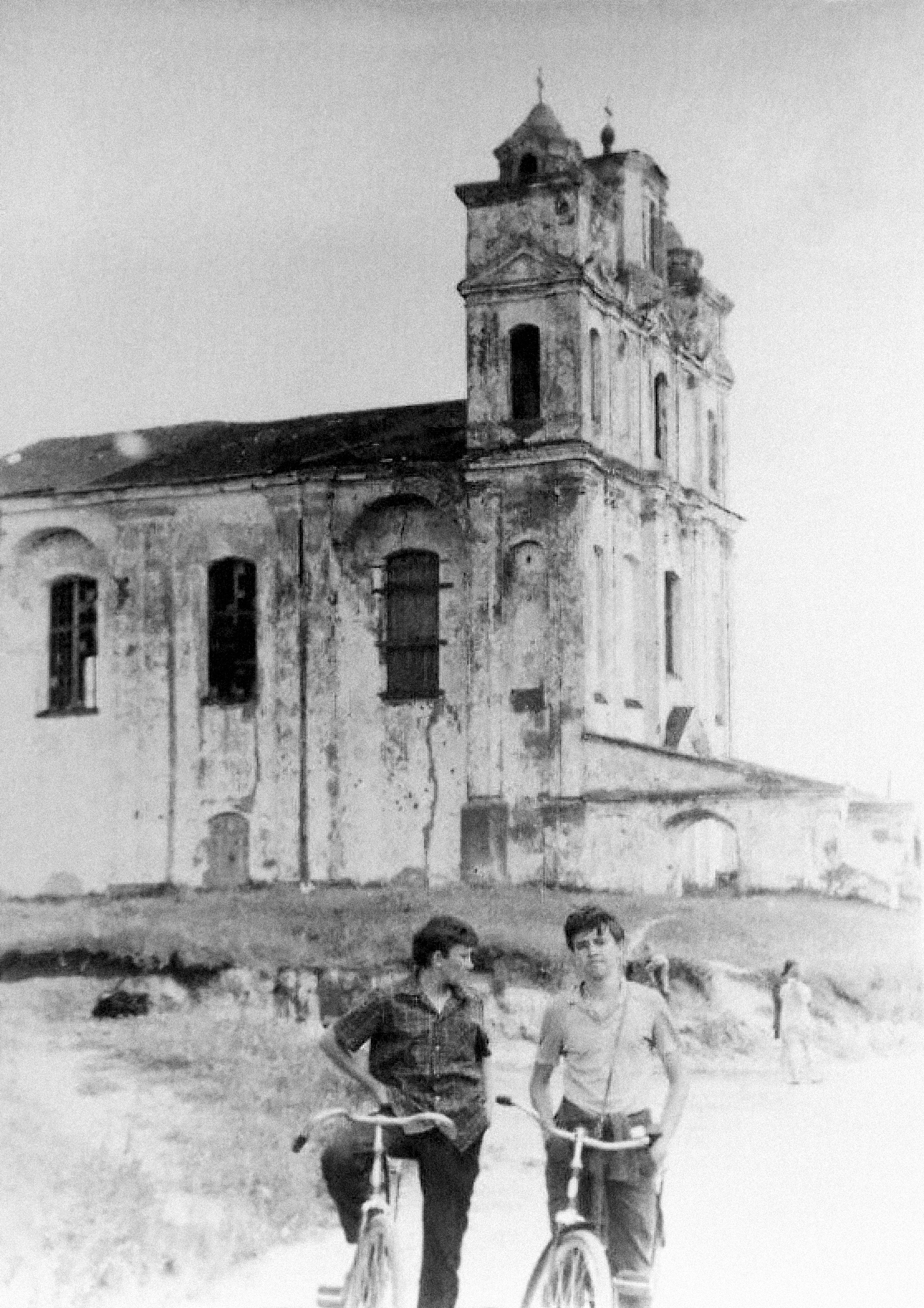
RB-05-090-25-00749
1971 г., Княжыцы, Магілёўскі р-н, Магілёўская вобл. Маладзёны на роварах на тле св. Мікалая (перасвечаны як праваслаўны пасля паўстання 1863 г., канчаткова зачынены ў 1965 г., знаходзіцца ў занядбаным стане). Прадаставіў Расціслаў Пілічоўскі. Архіў VEHA, калекцыя 'Руіны Беларусі'.
1971, Kniažycy, Mahilioŭ district, Mahilioŭ Region. Young people on bicycles against the background of St. Nicholas Church (reconsecrated as Orthodox after the 1863 uprising, finally closed in 1965, is in a neglected state). Provided by Rascislaŭ Piličoŭski. From the VEHA archive, ״Ruins of Belarus״ collection.
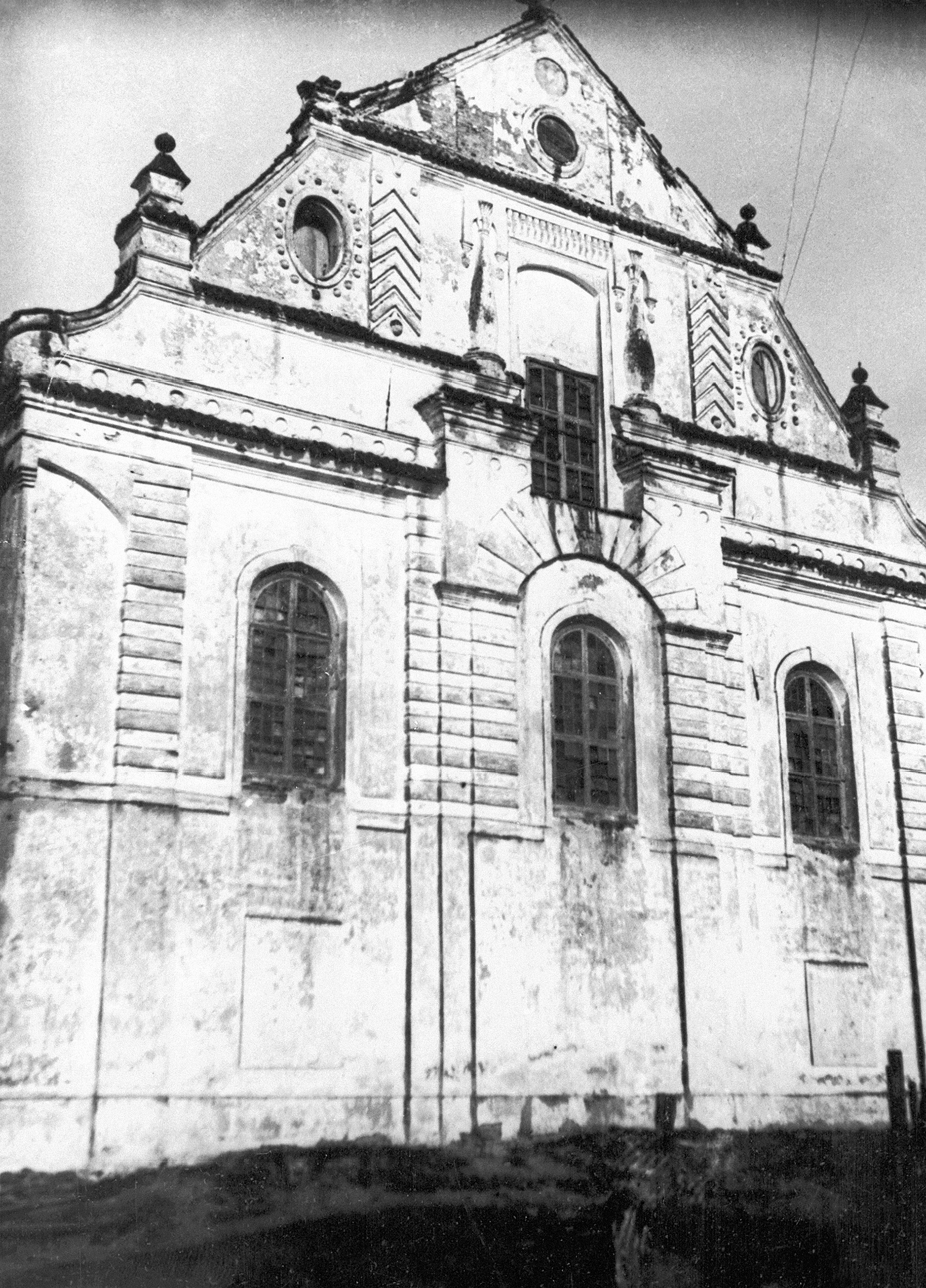
RB-05-096-24-00174
1938 г., Шклоў, Магілёўская вобл. Вялікая сінагога (страчаная). Фатограф Аляксей Вінэр. Прадаставіў Уладзімір Садоўскі; з архіва Міхаіла Кацара, Інстутут гісторыі Нацыянальнай акадэміі навук Беларусі. Архіў VEHA, калекцыя 'Руіны Беларусі'.
1938, Škłoŭ, Mahilioŭ Region. Great Synagogue (lost). Photographer Aliaksiej Viner. Provided by Uladzimir Sadoŭski; from the archive of Mikhail Kacar, Institute of History of the National Academy of Sciences of Belarus. From the VEHA archive, ״Ruins of Belarus״ collection.
Mahilioŭ
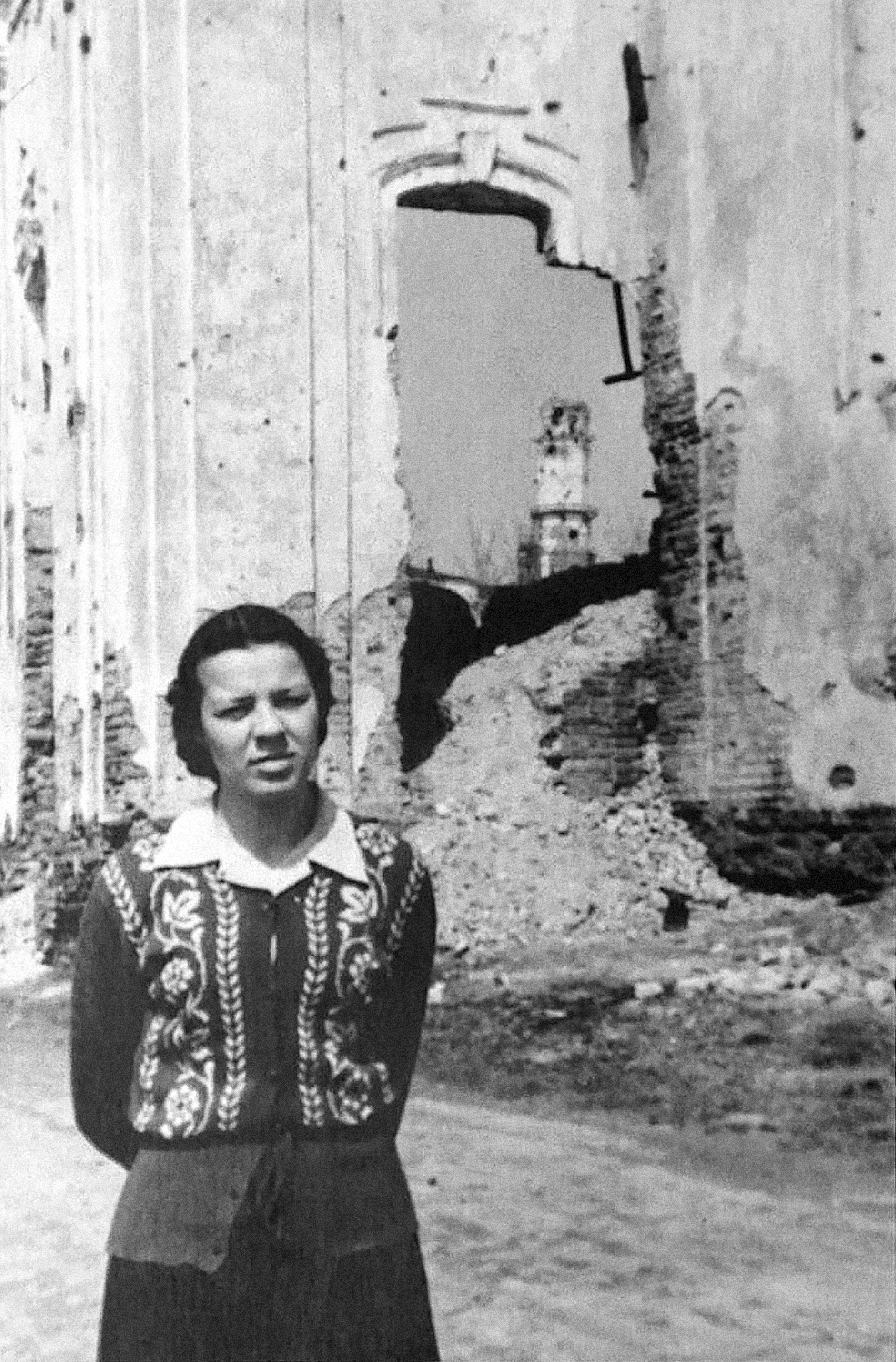
RB-05-090-25-00784
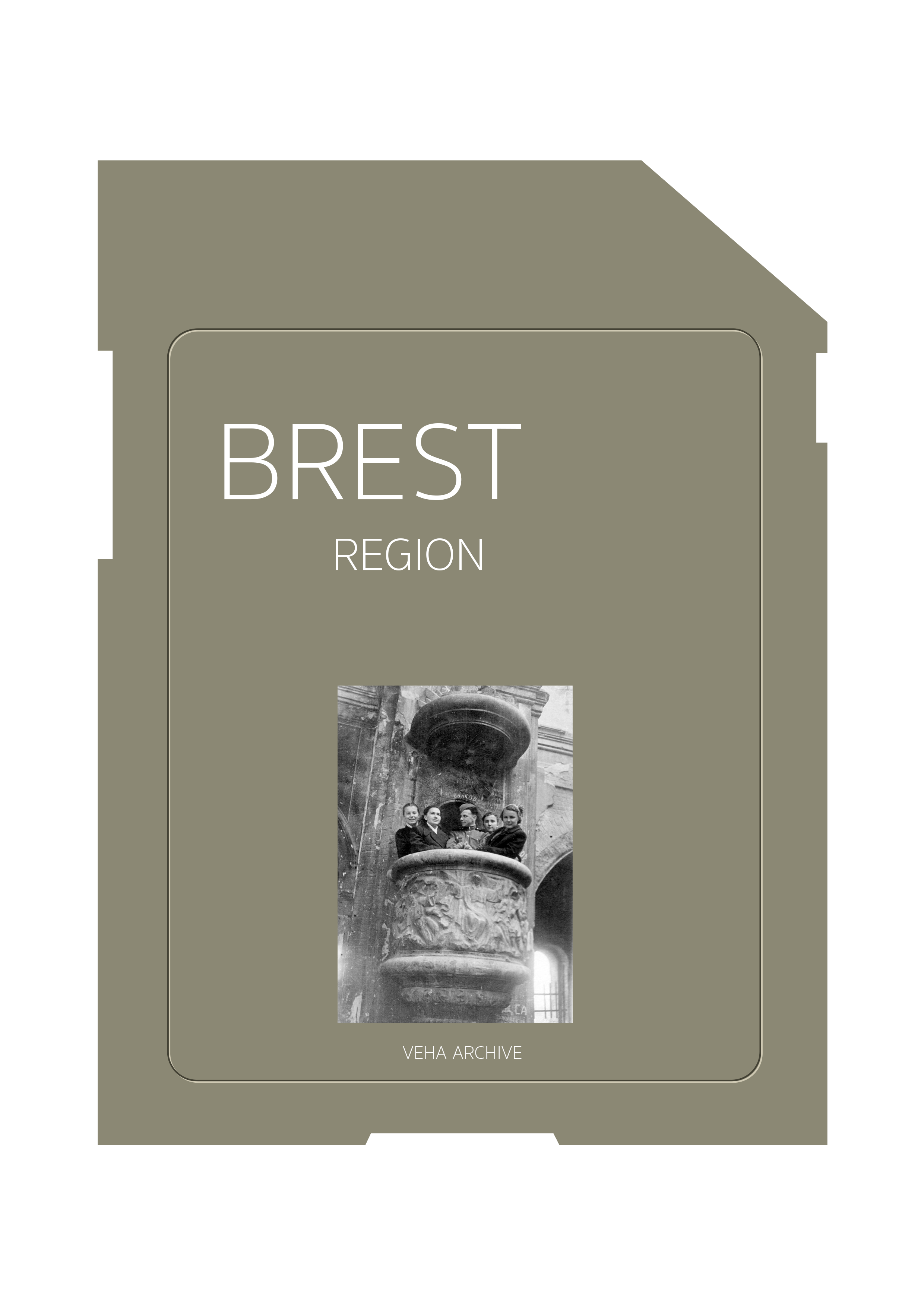
2 траўня 1956 г., Магілёў. Міла Якубоўская на тле руін касцёла св. Антонія, у адтуліне бачная вежа ратушы (касцёл зачынены пасля паўстання 1863 г., пертвораны на архіў судовых прысутных месцаў, потым на царкоўна-археалягічны музэй, пацярпеў падчас Другой сусветнай вайны, руіны знесеныя савецкімі ўладамі ў канцы 1950-х гадоў; ратуша узарваная ў 1957 г., адбудаваная ў 2008 г.). Прадаставіла Людміла Грышанава; з сямейнага альбома Л.І. Якубоўскай, фонды царкоўна-архіялагічнага кабінета ДАЦ Магілёўскай епархіі. Архіў VEHA, калекцыя 'Руіны Беларусі'.
May 2, 1956, Mahilioŭ. Mila Jakuboŭskaja against the background of the ruins of the Catholic Church of St. Anthony, the town hall tower is visible in the opening (church was closed after the uprising of 1863, converted into an archive of court records, then into a church and archaeological museum, damaged during World War II, the ruins were demolished by the Soviet authorities in the late 1950s; the town hall was blown up in 1957, rebuilt in 2008. Provided by Liudmila Hryšanava; from the family album of L.I. Jakuboŭskaja, from the funds of the church-archaeological office of the Spiritual and Еducational Сenter of the Mahilioŭ Diocese.From the VEHA archive, ״Ruins of Belarus״ collection.

RB-05-090-25-00786
1954 г., Магілёў. Чатыры дзяўчыны і выгляд на горад, у далечыні бачны касцёл св. Антонія (зачынены пасля паўстання 1863 г., пертвораны на архіў судовых прысутных месцаў, потым на царкоўна-археалягічны музэй, пацярпеў падчас Другой сусветнай вайны, руіны знесеныя савецкімі ўладамі ў канцы 1950-х гадоў). Прадаставіла Людміла Грышанава; з сямейнага альбома Л.І. Якубоўскай, фонды царкоўна-архіялагічнага кабінета ДАЦ Магілёўскай епархіі. Архіў VEHA, калекцыя 'Руіны Беларусі'.
1954, Mahilioŭ. Four girls and a view of the city, with the Catholic Church of St. Anthony visible in the distance ((church was closed after the uprising of 1863, converted into an archive of court records, then into a church and archaeological museum, damaged during World War II, the ruins were demolished by the Soviet authorities in the late 1950s). Provided by Liudmila Hryšanava; from the family album of L.I. Jakuboŭskaja, from the funds of the church-archaeological office of the Spiritual and Еducational Сenter of the Mahilioŭ Diocese. From the VEHA archive, ״Ruins of Belarus״ collection.
RB-05-090-25-00785
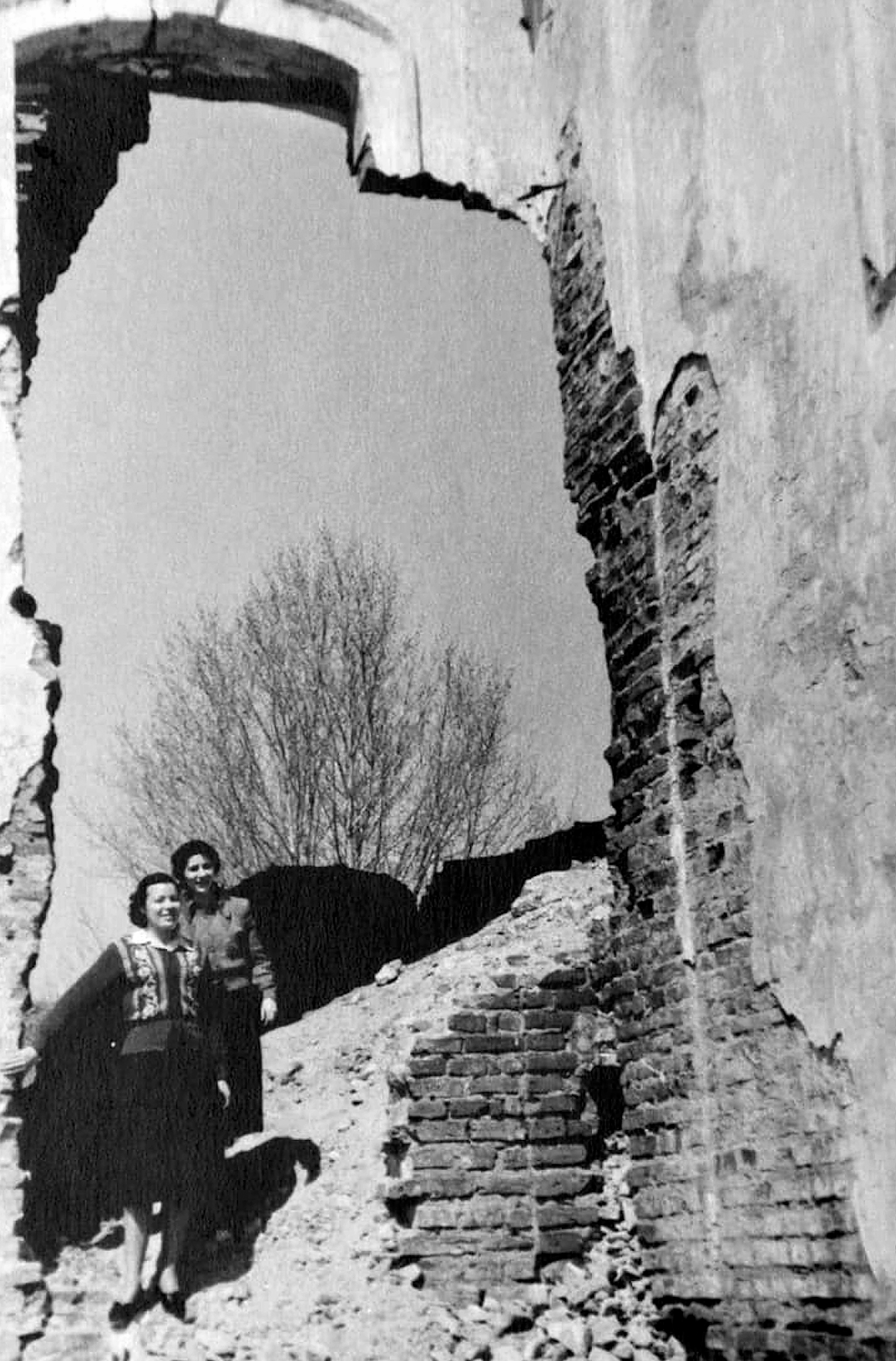
2 траўня 1956 г., Магілёў. Міла Якубоўская з сяброўкай на руінах касцёла св. Антонія (зачынены пасля паўстання 1863 г., пертвораны на архіў судовых прысутных месцаў, потым на царкоўна-археалягічны музэй, пацярпеў падчас Другой сусветнай вайны, руіны знесеныя савецкімі ўладамі ў канцы 1950-х гадоў). Прадаставіла Людміла Грышанава; з сямейнага альбома Л.І. Якубоўскай, фонды царкоўна-архіялагічнага кабінета ДАЦ Магілёўскай епархіі. Архіў VEHA, калекцыя 'Руіны Беларусі'.
May 2, 1956, Mahilioŭ. Mila Jakuboŭskaja with a friend at the ruins of the Catholic Church of St. Anthony ((church was closed after the uprising of 1863, converted into an archive of court records, then into a church and archaeological museum, damaged during World War II, the ruins were demolished by the Soviet authorities in the late 1950s). Provided by Liudmila Hryšanava; from the family album of L.I. Jakuboŭskaja, from the funds of the church-archaeological office of the Spiritual and Еducational Сenter of the Mahilioŭ Diocese. From the VEHA archive, ״Ruins of Belarus״ collection.
RB-05-090-25-00534
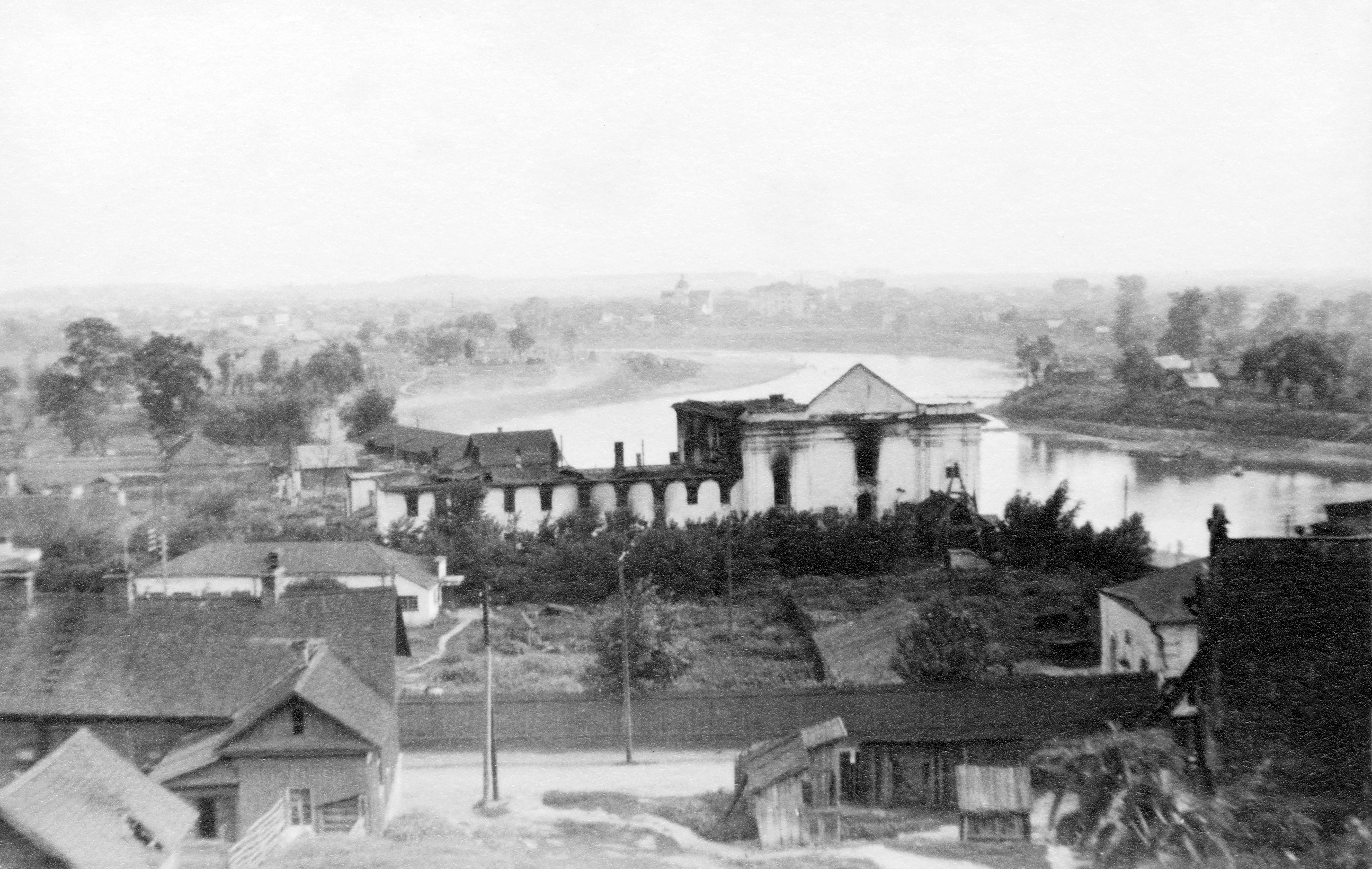
1941 г., Магілёў. Касцёл св. Антонія Падуанскага і кляштар бернардзінцаў (зачыненыя пасля паўстання 1863 г., касцёл пертвораны на архіў судовых прысутных месцаў, потым на царкоўна-археалягічны музэй, у кляштары месцілася духоўная сэмінарыя праваслаўнай царквы, пацярплі падчас Другой сусветнай вайны, руіны знесеныя савецкімі ўладамі ў канцы 1950-х гадоў). Крыніца: Алег (Давід) Лісоўскі, "Архіў гісторыі Магілёва". Архіў VEHA, калекцыя 'Руіны Беларусі'.
1941, Mahilioŭ. Church of St. Anthony of Padua and the Bernardine Monastery (closed after the uprising of 1863, the church was converted into a court archive, then into a church and archaeological museum, the monastery housed the theological seminary of the Orthodox Church, damaged during the Second World War, the ruins were demolished by the Soviet authorities in the late 1950s). Source: Alieh (David) Lisoŭski, "Mahilioŭ History Archive". From the VEHA archive, ״Ruins of Belarus״ collection.
RB-05-090-25-00700
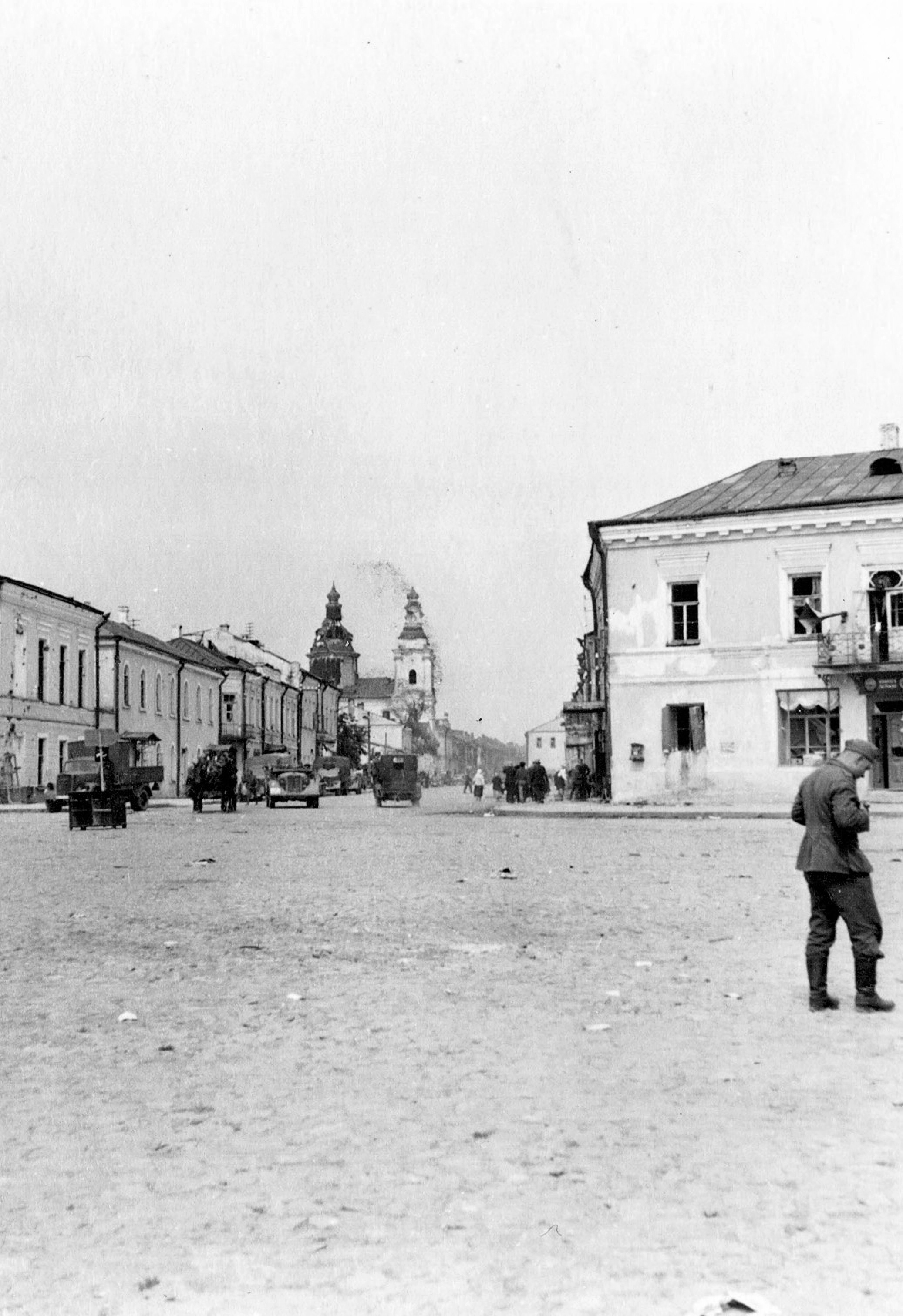
1941 г., Магілёў. Выгляд ад рынку (сучасная плошча Славы) на Першамайскую вуліцу, далей бачны касцёл св. Ксаверыя (вулічная забудова не захавалася; касцёл быў перахрэшчаэны ў Уваскрасенскую царкву, зачыненую ў 1920-я гады, зруйнаваны пасля Другой сусьветнай вайны). Крыніца: Алег (Давід) Лісоўскі, "Архіў гісторыі Магілёва". Архіў VEHA, калекцыя 'Руіны Беларусі'.
1941, Mahilioŭ. View from the market (modern Slavy Square) to Pieršamajskuja Street, further on the church of St. Xavier (the street buildings have been destroyed; the church was renamed the Resurrection Church, closed in the 1920s, destroyed after World War II). Source: Alieh (David) Lisoŭski, "Mahilioŭ History Archive". From the VEHA archive, ״Ruins of Belarus״ collection.

RB-05-090-25-00812
1944 г., Магілёў. Ратуша (узарваная ў 1957 г., адбудаваная ў 2008 г.). Прадаставіў Яўген Мшар. Архіў VEHA, калекцыя 'Руіны Беларусі'.
1944, Mahilioŭ. Town Hall (blown up in 1957, rebuilt in 2008). Provided by Jaŭhien Mšar. From the VEHA archive, ״Ruins of Belarus״ collection.
RB-05-090-25-00747
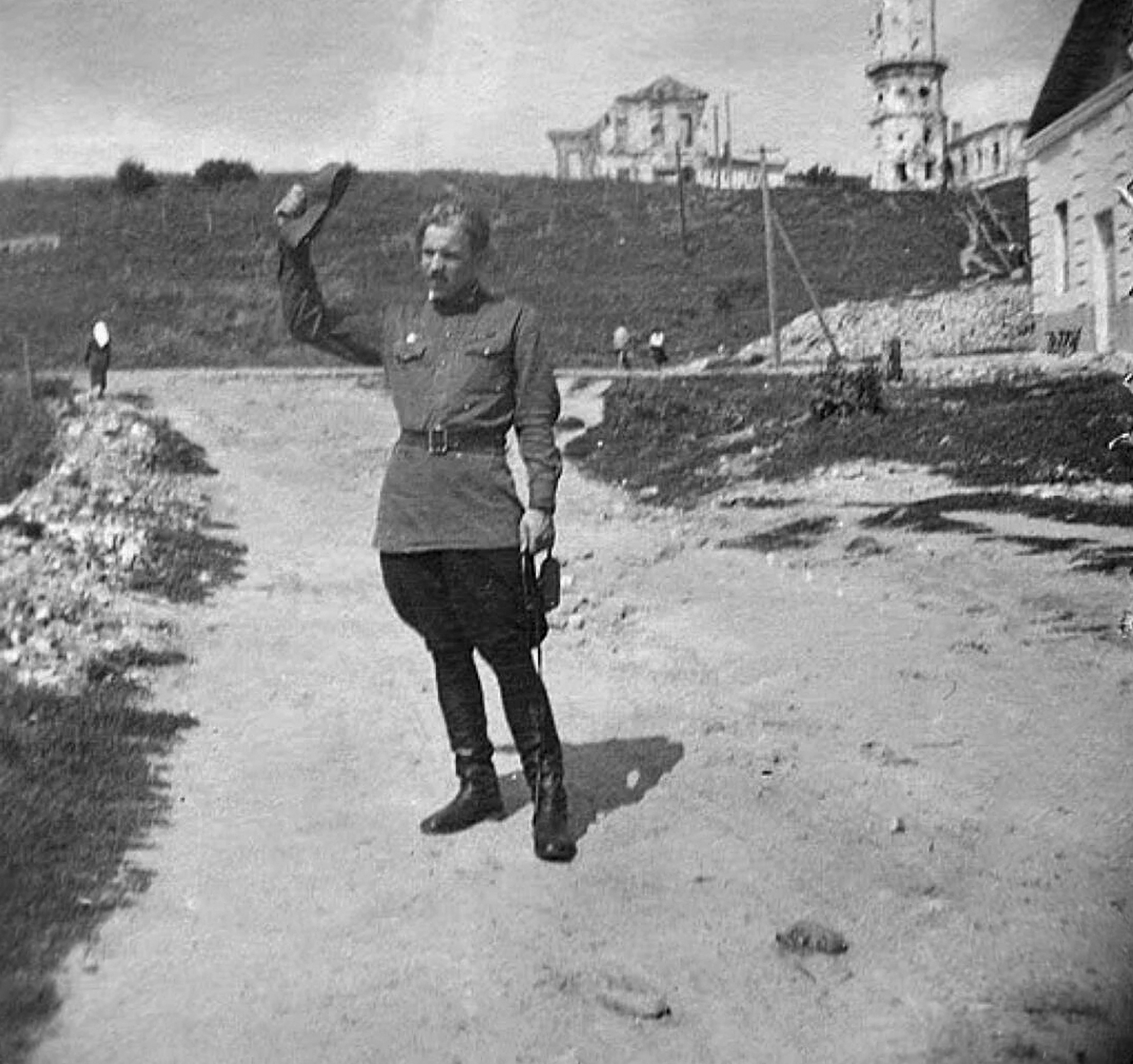
1948 г., Магілёў. Чырвонаармеец на тле руін горада: у далечыні бачная башня ратушы, справа - сінагога на Школішчы (ратуша узарваная ў 1957 г., адбудаваная ў 2008 г., сінагога доўгі час знаходзілася ў занядбаным стане, але пасля 2010-га г. была адрэстаўраваная). Крыніца: Алег (Давід) Лісоўскі, "Архіў гісторыі Магілёва". Архіў VEHA, калекцыя 'Руіны Беларусі'.
1948, Mahilioŭ. Red Army soldier against the background of the ruins of the city: in the distance the tower of the town hall is visible, on the right is the synagogue on Školišča (the town hall was blown up in 1957, rebuilt in 2008, the synagogue was in a neglected state for a long time, but was restored after 2010). Source: Alieh (David) Lisoŭski, "Mahilioŭ History Archive". From the VEHA archive, ״Ruins of Belarus״ collection.
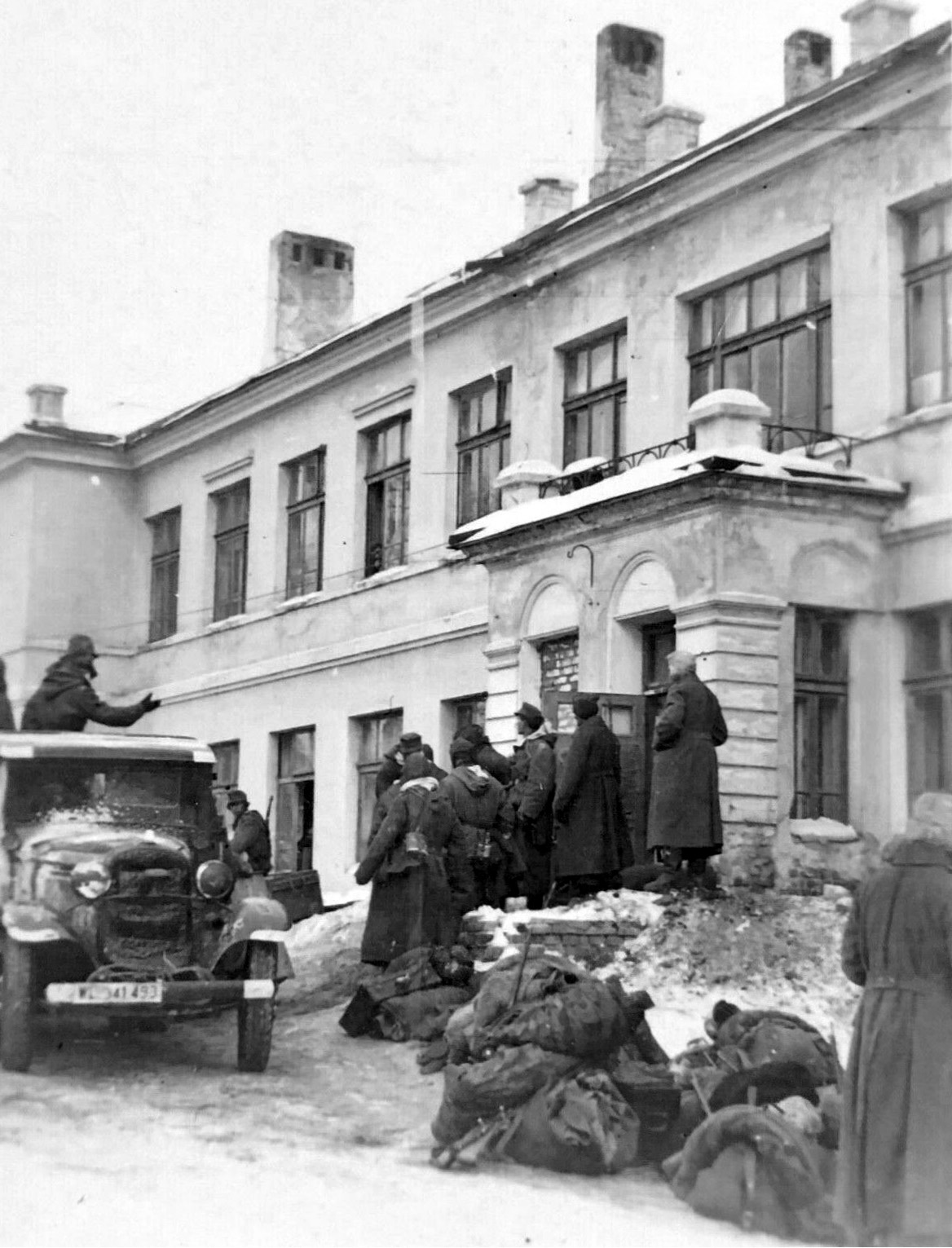
RB-05-090-25-00704
1942 г., Магілёў. Купа ваенных з рэчамі на тле дыспансэра на вуліцы К. Маркса (стан невядомы). Крыніца: Алег (Давід) Лісоўскі, "Архіў гісторыі Магілёва". Архіў VEHA, калекцыя 'Руіны Беларусі'.
1942, Mahilioŭ. A group of soldiers with things in the background of the dispensary on K. Marx Street (condition unknown). Source: Alieh (David) Lisoŭski, "Mahilioŭ History Archive". From the VEHA archive, ״Ruins of Belarus״ collection.
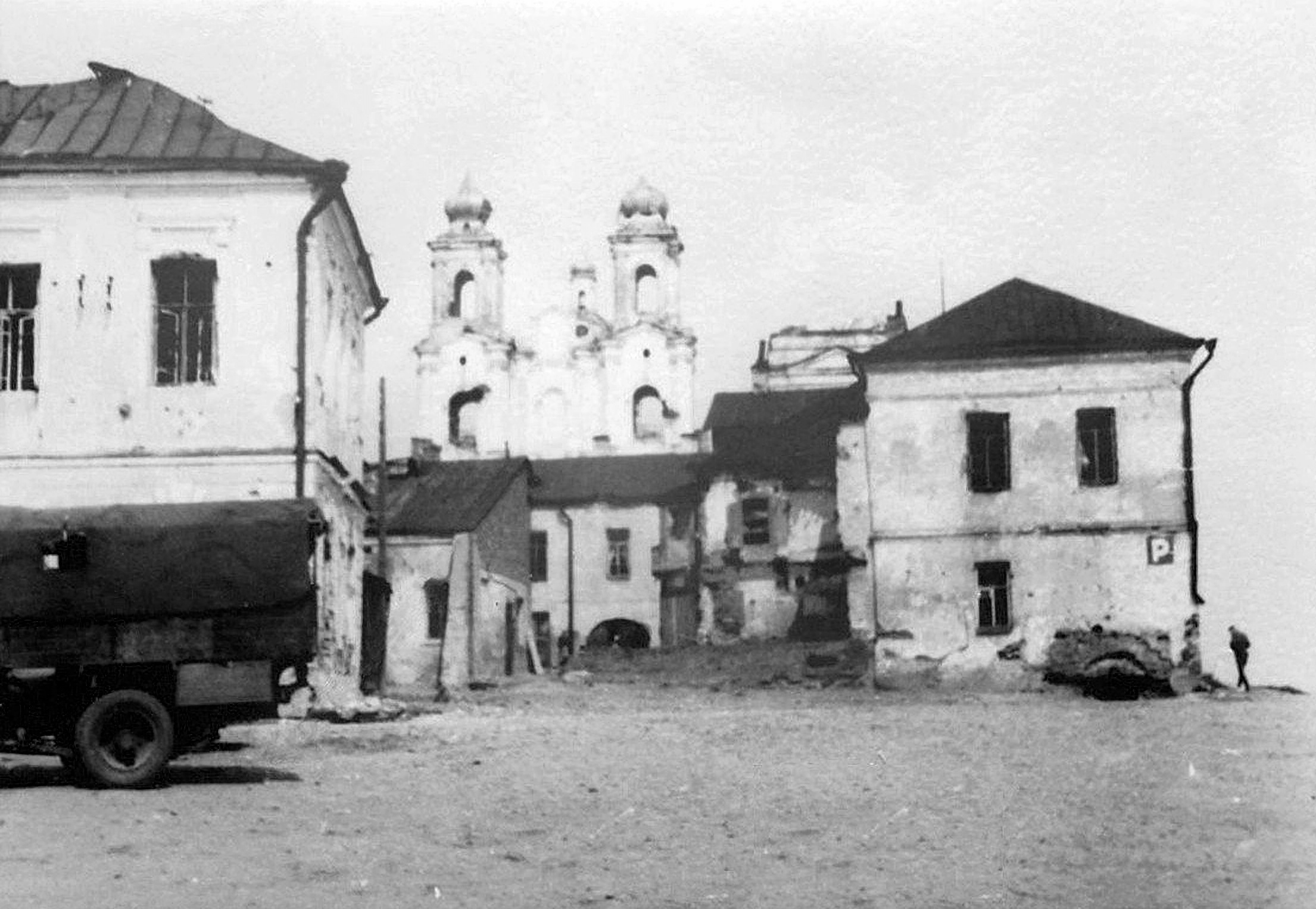
RB-05-090-25-00703
1941 г., Магілёў. Спаская царква і манастыр (царква зачыненая з 1918 года і разбураная падчас савецкага авіаналёта на пачатку 1944 г., манастыр зачынены ў 1918 г., два будынкі комплекса захаваліся). Крыніца: Алег (Давід) Лісоўскі, "Архіў гісторыі Магілёва". Архіў VEHA, калекцыя 'Руіны Беларусі'.
1941, Mahilioŭ. Spasskaya Church and Monastery (the church has been closed since 1918 and destroyed during a Soviet air raid in early 1944, the monastery was closed in 1918, two buildings of the complex have survived). Source: Alieh (David) Lisoŭski, "Mahilioŭ History Archive". From the VEHA archive, ״Ruins of Belarus״ collection.

RB-05-090-25-00815
1944 г., Магілёў. Вайскоўцы перад руінамі Богаяўленскай царквы (з 1920-х гадоў месціла цэнтральны архіў БССР, канчаткова знесеная пасля Другой сусветнай вайны). Прадаставіў Яўген Мшар. Архіў VEHA, калекцыя 'Руіны Беларусі'.
1944, Mahilioŭ. Soldiers in front of ruins of the Epiphany Church (since the 1920s housed the central archive of the BSSR, finally demolished after World War II). Provided by Jaŭhien Mšar. From the VEHA archive, ״Ruins of Belarus״ collection.
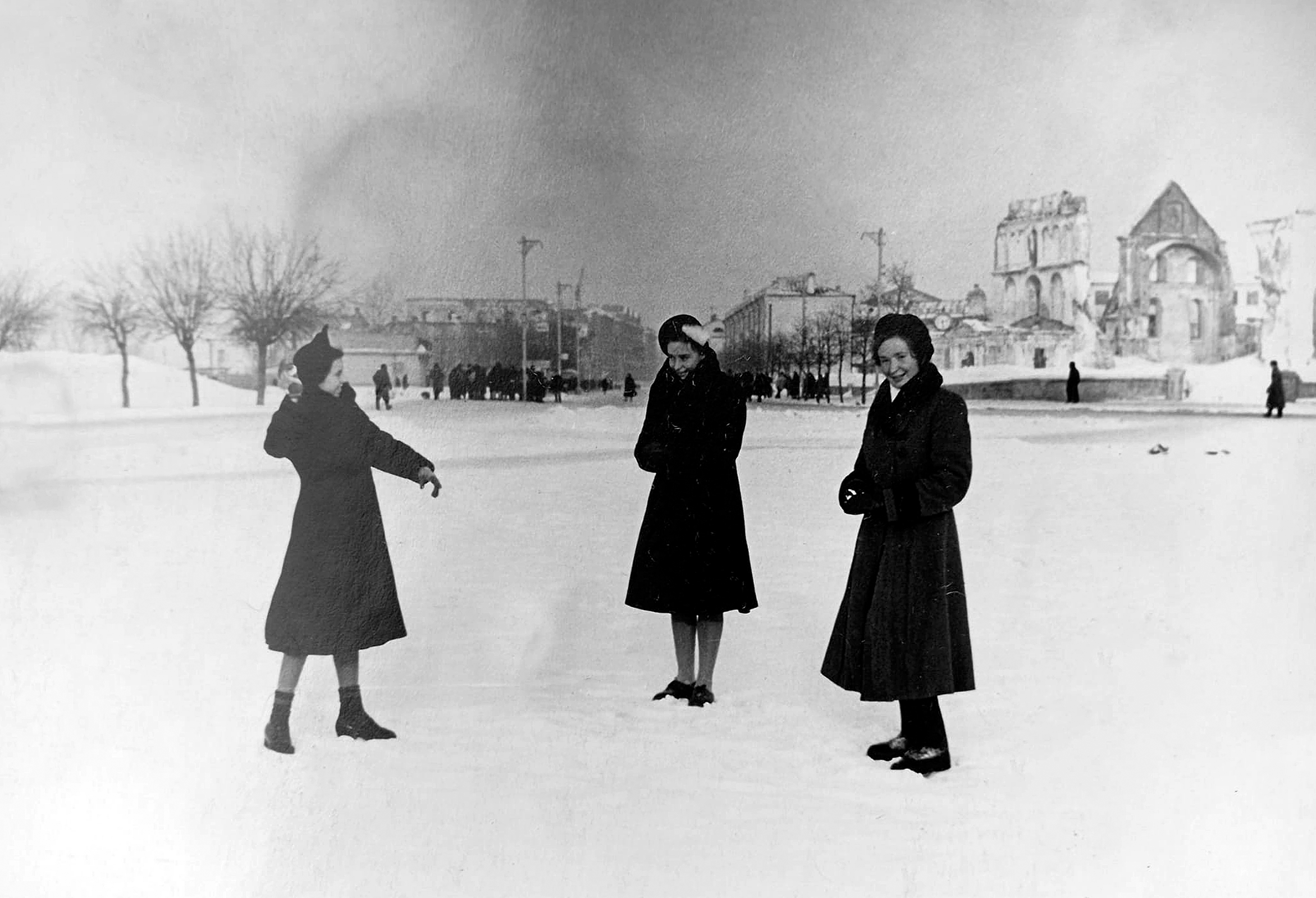
RB-05-090-25-00782
Канец 1940-ых - пачатак 1950-ых гг., Магілёў. Дзяўчыны на тле руіны Богаяўленскай царквы (з 1920-х гадоў у будынку месціўся цэнтральны архіў БССР, канчаткова знесеная пасля Другой сусветнай вайны). Прадаставіла Людміла Грышанава; з сямейнага альбома Л.І. Якубоўскай, фонды царкоўна-архіялагічнага кабінета ДАЦ Магілёўскай епархіі. Архіў VEHA, калекцыя 'Руіны Беларусі'.
Late1940s - early 1950s, Mahilioŭ. Girls against the background of the Epiphany Orthodox Church (since the 1920s the building housed the central archive of the BSSR, finally demolished after World War II). Provided by Liudmila Hryšanava; from the family album of L.I. Jakuboŭskaja, rom the funds of the church-archaeological office of the Spiritual and Еducational Сenter of the Mahilioŭ Diocese.From the VEHA archive, ״Ruins of Belarus״ collection.

RB-05-090-25-00661
1967 г., Магілёў. Сабор св. Мікалая (зачынены ў 1934 г., выкарыстоўваўся як перасыльная турма, потым як кніжная база, зноў дзее пасля 1991 г.). Прадаставіў Яфім Чарнаглаз. Архіў VEHA, калекцыя 'Руіны Беларусі'.
1967, Mahilioŭ. St. Nicholas Cathedral (closed in 1934, used as a transit prison, then as a book base, reopened after 1991). Provided by Jafim Čarnahlaz. From the VEHA archive, ״Ruins of Belarus״ collection.
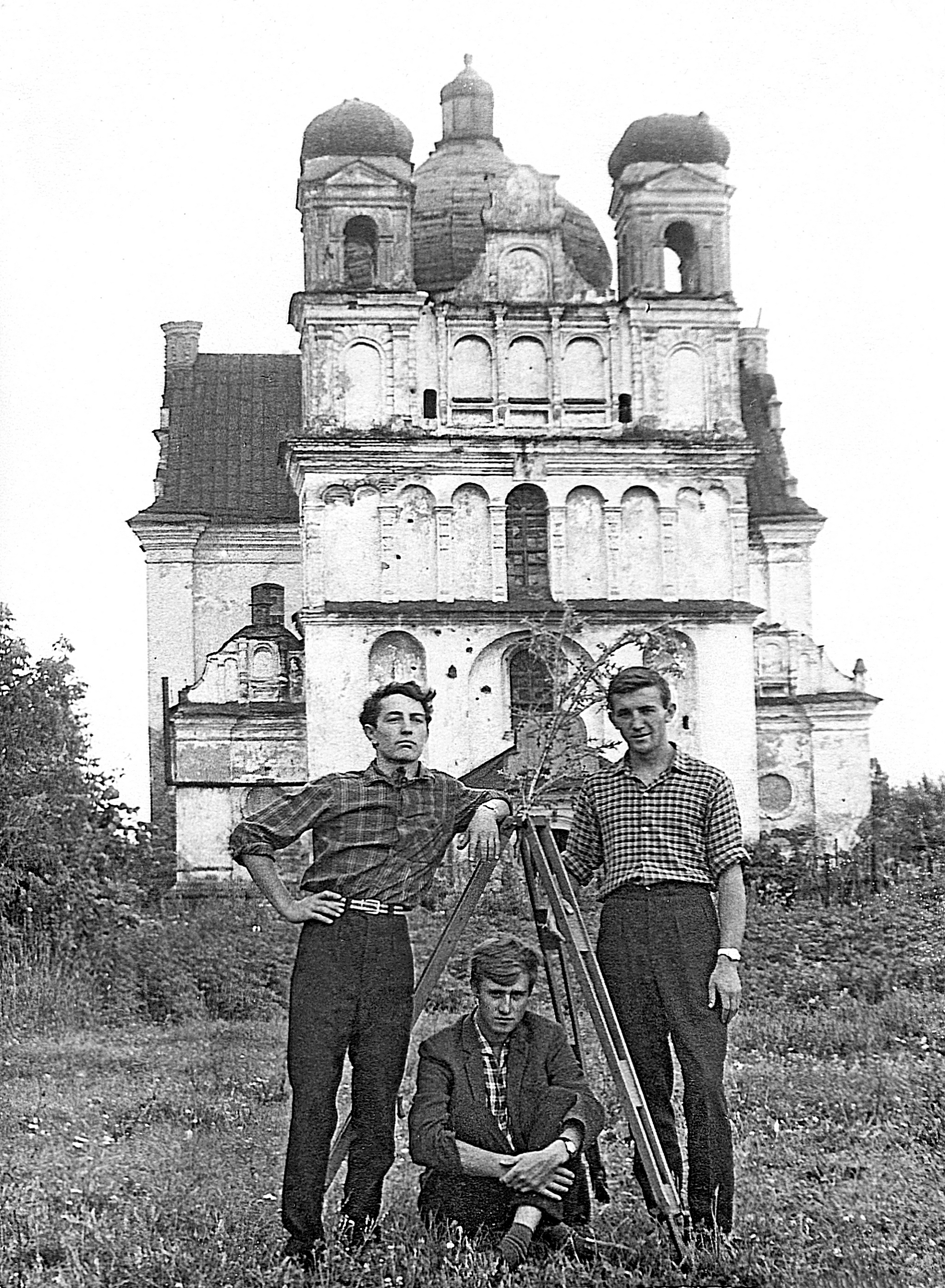
RB-05-090-25-00658
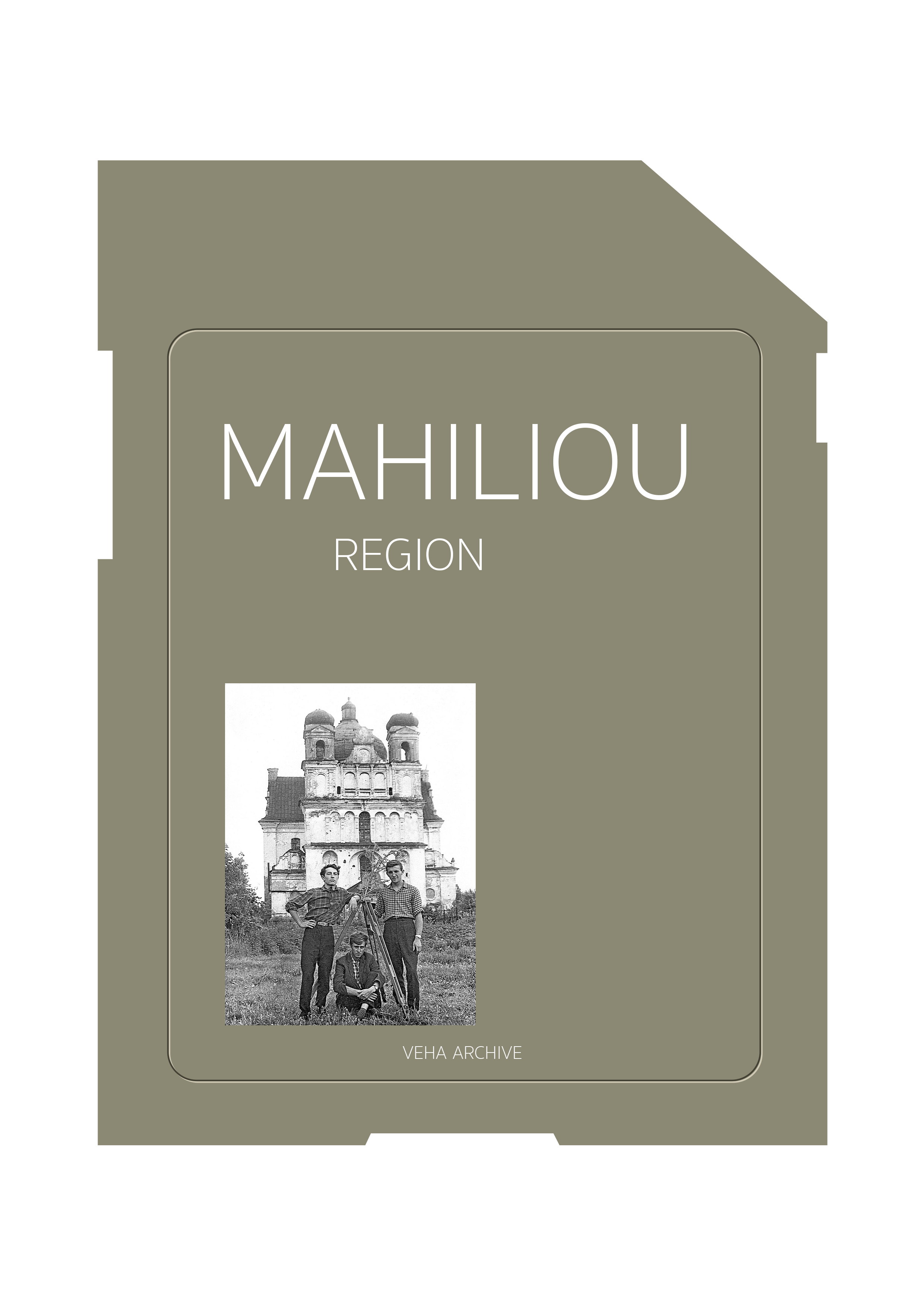
1966 г., Магілёў. Студэнты геадэзічнага тэхнікума падчас практыкі на тле сабора св. Мікалая (зачынены ў 1934 г., выкарыстоўваўся як перасыльная турма, потым як кніжная база, зноў дзее пасля 1991 г.). Прадаставіў Яфім Чарнаглаз. Архіў VEHA, калекцыя 'Руіны Беларусі'.
1966, Mahilioŭ. Students of the geodetic technical school during their internship in the background of St. Nicholas Cathedral (closed in 1934, used as a transit prison, then as a book base, reopened after 1991). Provided by Jafim Čarnahlaz. From the VEHA archive, ״Ruins of Belarus״ collection.

RB-05-090-25-00659
Магілёў. Сабор св. Мікалая (зачынены ў 1934 г., выкарыстоўваўся як перасыльная турма, потым як кніжная база, зноў дзее пасля 1991 г.). Прадаставіў Яфім Чарнаглаз. Архіў VEHA, калекцыя 'Руіны Беларусі'.
Mahilioŭ. St. Nicholas Cathedral (closed in 1934, used as a transit prison, then as a book base, reopened after 1991). Provided by Jafim Čarnahlaz. From the VEHA archive, ״Ruins of Belarus״ collection.
RB-05-090-25-00660
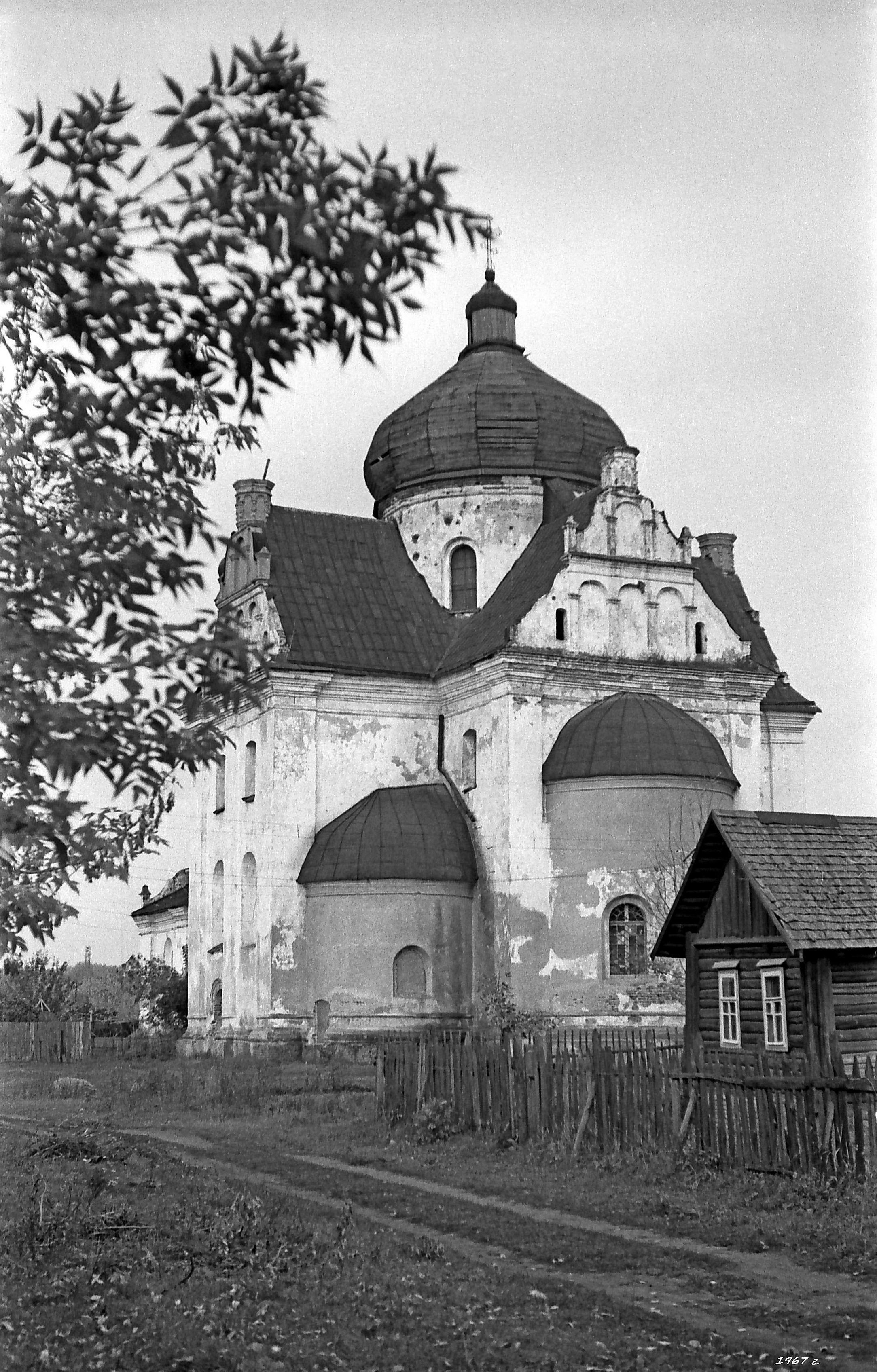
1967 г., Магілёў. Сабор св. Мікалая (зачынены ў 1934 г., выкарыстоўваўся як перасыльная турма, потым як кніжная база, зноў дзее пасля 1991 г.). Прадаставіў Яфім Чарнаглаз. Архіў VEHA, калекцыя 'Руіны Беларусі'.
1967, Mahilioŭ. St. Nicholas Cathedral (closed in 1934, used as a transit prison, then as a book base, reopened after 1991). Provided by Jafim Čarnahlaz. From the VEHA archive, ״Ruins of Belarus״ collection.
RB-05-090-25-00783
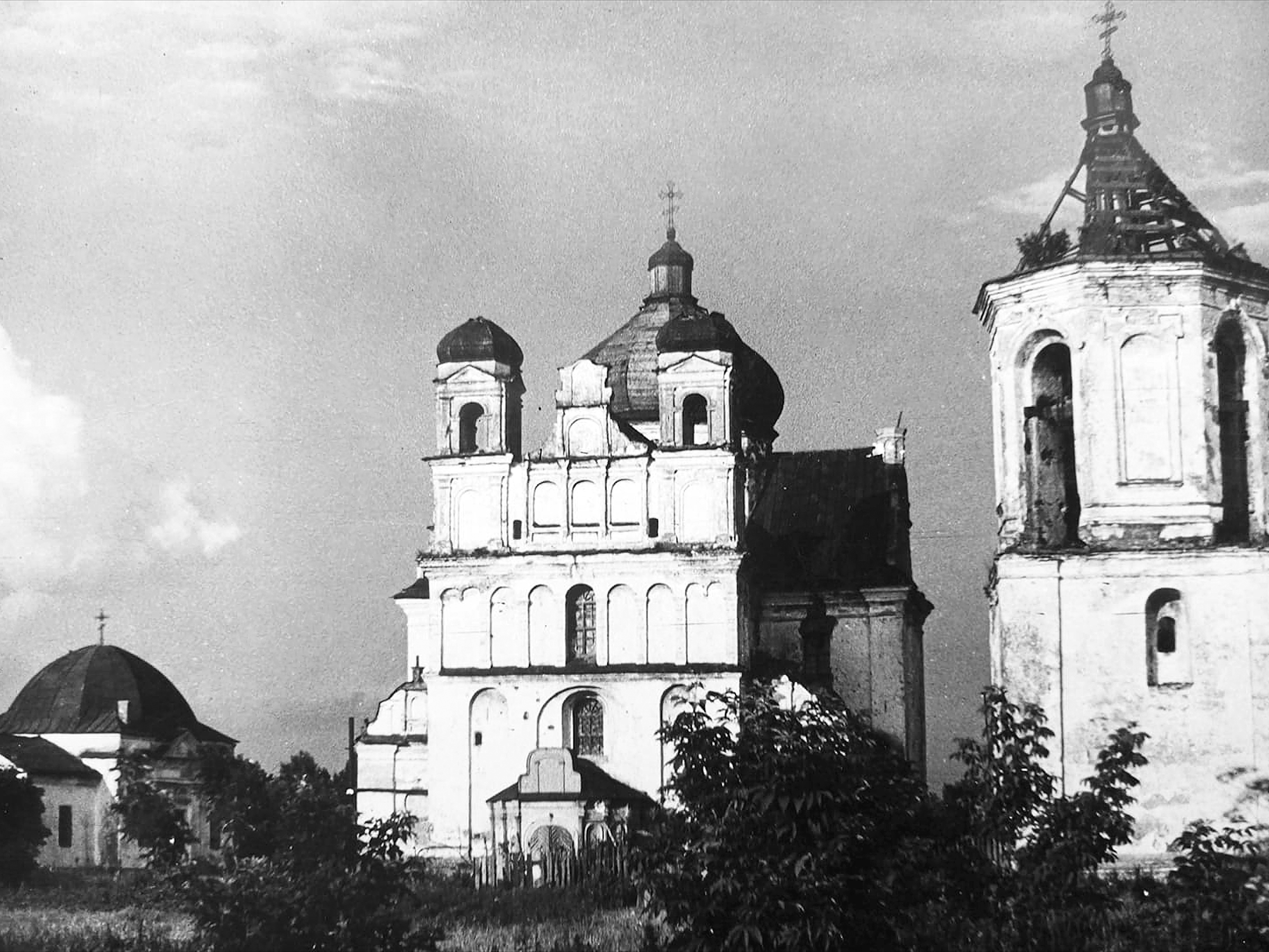
Магілёў. Сабор св. Мікалая (зачынены ў 1934 г., выкарыстоўваўся як перасыльная турма, потым як кніжная база, зноў дзее пасля 1991 г.). Прадаставіла Людміла Грышанава; з сямейнага альбома Л.І. Якубоўскай, фонды царкоўна-архіялагічнага кабінета ДАЦ Магілёўскай епархіі. Архіў VEHA, калекцыя 'Руіны Беларусі'.
Mahilioŭ. St. Nicholas Cathedral (closed in 1934, used as a transit prison, then as a book base, reopened after 1991). Provided by Liudmila Hryšanava; from the family album of L.I. Jakuboŭskaja, from the funds of the church-archaeological office of the Spiritual and Еducational Сenter of the Mahilioŭ Diocese.From the VEHA archive, ״Ruins of Belarus״ collection.

RB-05-090-25-00898
1959 г., Магілёў. Сабор св. Мікалая (зачынены ў 1934 г., выкарыстоўваўся як перасыльная турма, потым як кніжная база, зноў дзее пасля 1991 г.). Прадаставіў Яўген Мшар. Архіў VEHA, калекцыя 'Руіны Беларусі'.
1959, Mahilioŭ. St. Nicholas Cathedral (closed in 1934, used as a transit prison, then as a book base, reopened after 1991). Provided by Jaŭhien Mšar. From the VEHA archive, ״Ruins of Belarus״ collection.
RB-05-090-25-00358
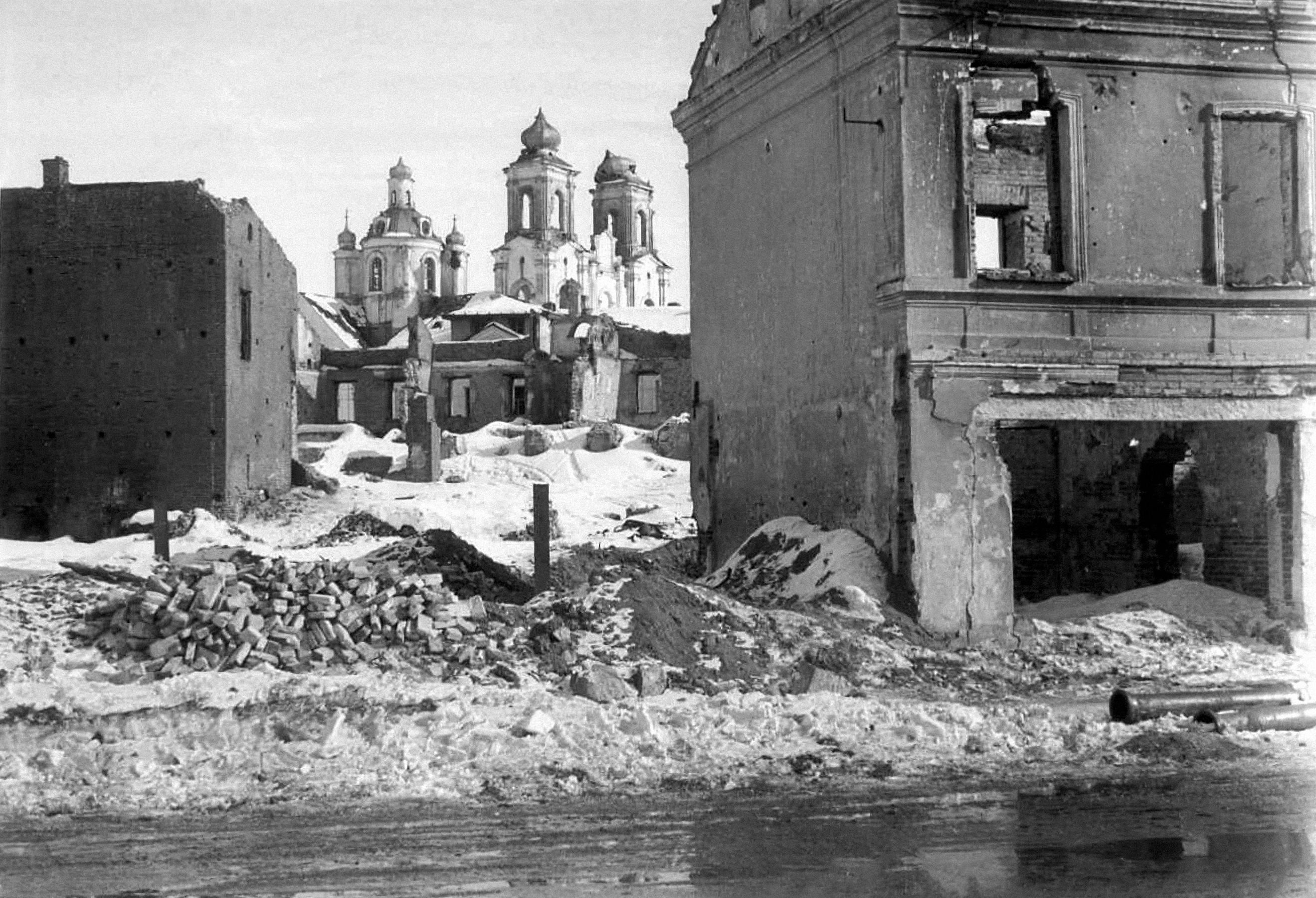
Зіма 1943-га г., г. Магілёў. Выгляд ад Першамайскай вуліцы на будынкі па Ленінскай вуліцы (захаваўся дом №5) і Спаскую царкву (зачыненая з 1918 года і разбураная падчас савецкага авіаналёта на пачатку 1944 г.). Крыніца: Алег (Давід) Лісоўскі, "Архіў гісторыі Магілёва". Архіў VEHA, калекцыя 'Руіны Беларусі'.
Winter 1943, Mahilioŭ. View from Pieršamajskaja Street to the buildings on Lieninskaja Street (house number 5 is preserved) and the Church of The Savior (closed since 1918 and destroyed by a Soviet air raid in early 1944). Source: Alieh (David) Lisoŭski, "Mahilioŭ History Archive". From the VEHA archive, ״Ruins of Belarus״ collection.
RB-05-090-25-00444
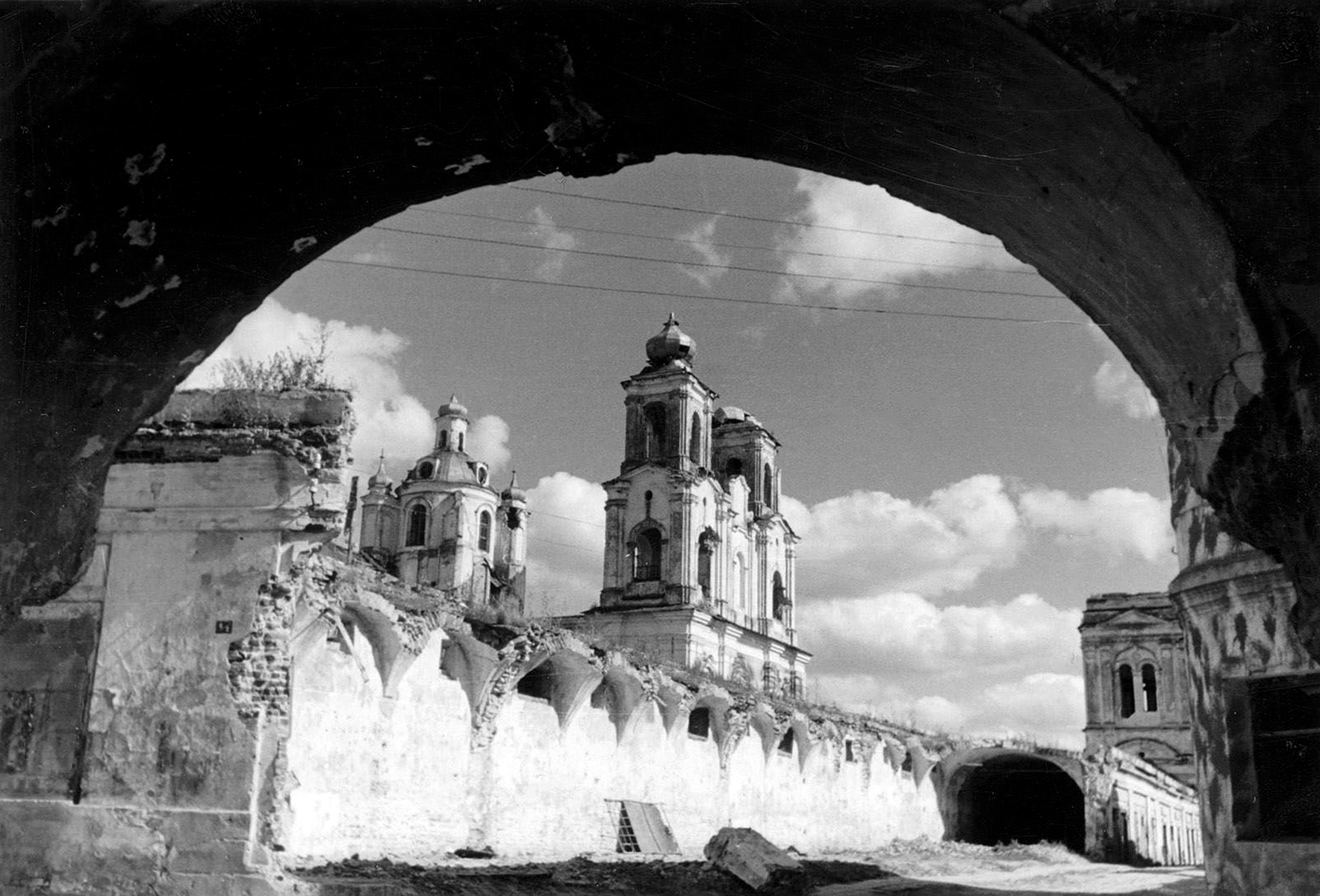
Лета 1943-га г., Магілёў. Спаская царква (зачыненая з 1918 года і разбураная падчас савецкага авіарэйда ў 1944 г.). Крыніца: Алег (Давід) Лісоўскі, "Архіў гісторыі Магілёва". Архіў VEHA, калекцыя 'Руіны Беларусі'.
Summer 1943, Mahilioŭ. Church of The Savior (closed since 1918 and demolished by a Soviet air raid in early 1944). Source: Alieh (David) Lisoŭski, "Mahilioŭ History Archive". From the VEHA archive, ״Ruins of Belarus״ collection.
RB-05-090-25-00702
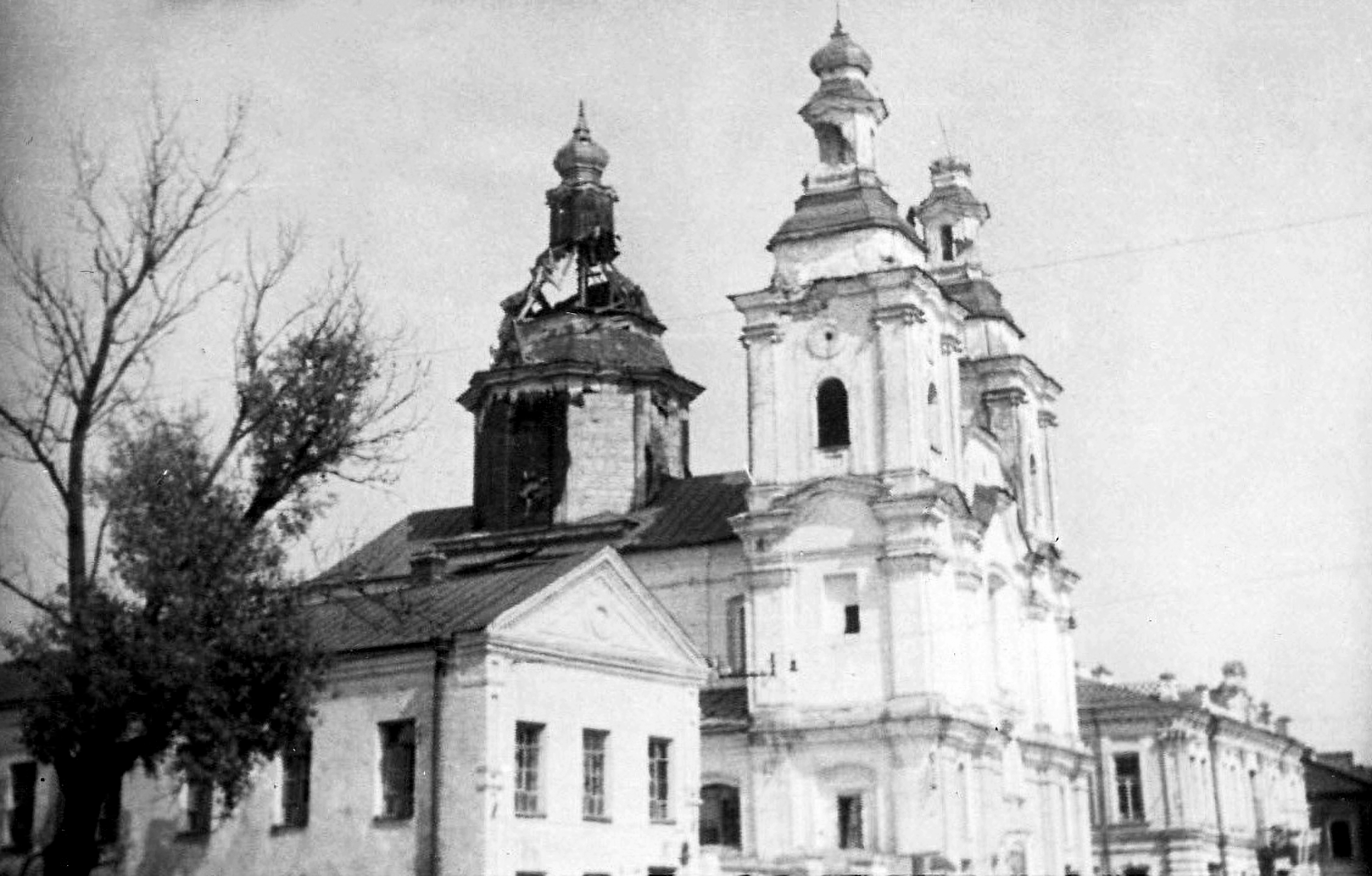
Ліпень 1941 г., Магілёў. Былыя іезуіцкій калегіум і касцёл св. Ксаверыя (езуіцкі калегіюм пераданы ваенныму ведамству пасля выгнання іезуіцкага ордэна з Расійскай імперыі ў 1820 г., за савецкім часам тут месцілася абувная фабрыка, у паваенны час будынак часткова зруйнаваны, на яго фундаменце з захаваннем адной сцяны пабудаваны Этнаграфічны музей; касцёл быў перахрэшчаэны ў Уваскрасенскую царкву, зачыненую ў 1920-я гады, зруйнаваны пасля Другой сусьветнай вайны). Крыніца: Алег (Давід) Лісоўскі, "Архіў гісторыі Магілёва". Архіў VEHA, калекцыя 'Руіны Беларусі'.
July 1941, Mahilioŭ. The former Jesuit College and the church of St. Xavier (the Jesuit college was transferred to the military department after the expulsion of the Jesuit order from the Russian Empire in 1820, during the Soviet era it housed a shoe factory, in the post-war period the building was partially destroyed, on its foundation with the preservation of one wall the Ethnographic Museum was built; the church was rechristened the Resurrection Church, closed in the 1920s, destroyed after World War II). Source: Alieh (David) Lisoŭski, "Mahilioŭ History Archive". From the VEHA archive, ״Ruins of Belarus״ collection.
RB-05-090-25-00813
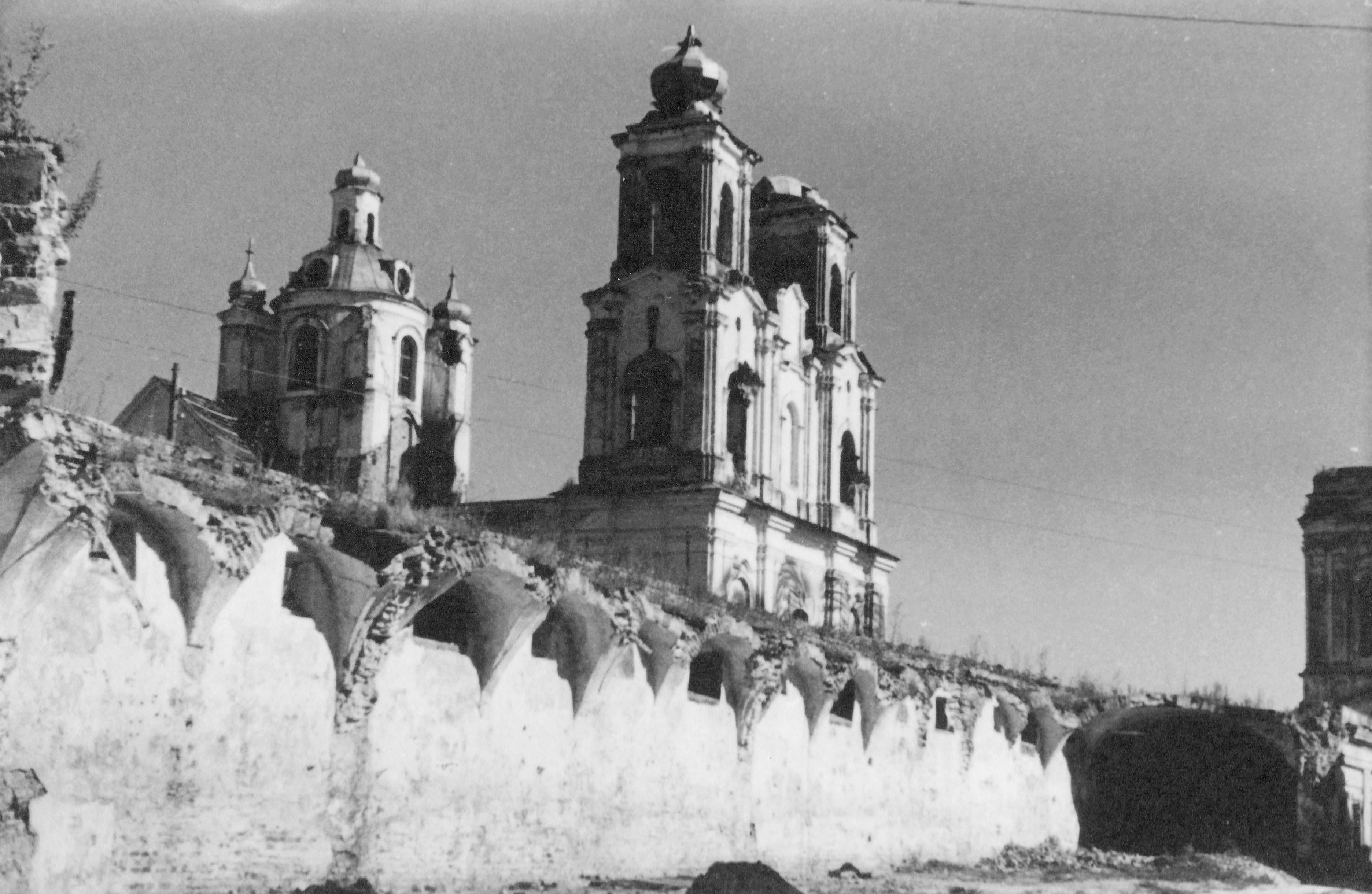
1944 г., Магілёў. Спасская царква (зачыненая з 1918 года і разбураная падчас савецкага авіаналёта на пачатку 1944 г.). Прадаставіў Яўген Мшар. Архіў VEHA, калекцыя 'Руіны Беларусі'.
1944, Mahilioŭ. The Church of the Savior (closed since 1918 and destroyed during a Soviet air raid in early 1944). Provided by Jaŭhien Mšar. From the VEHA archive, ״Ruins of Belarus״ collection.
RB-05-090-25-00368
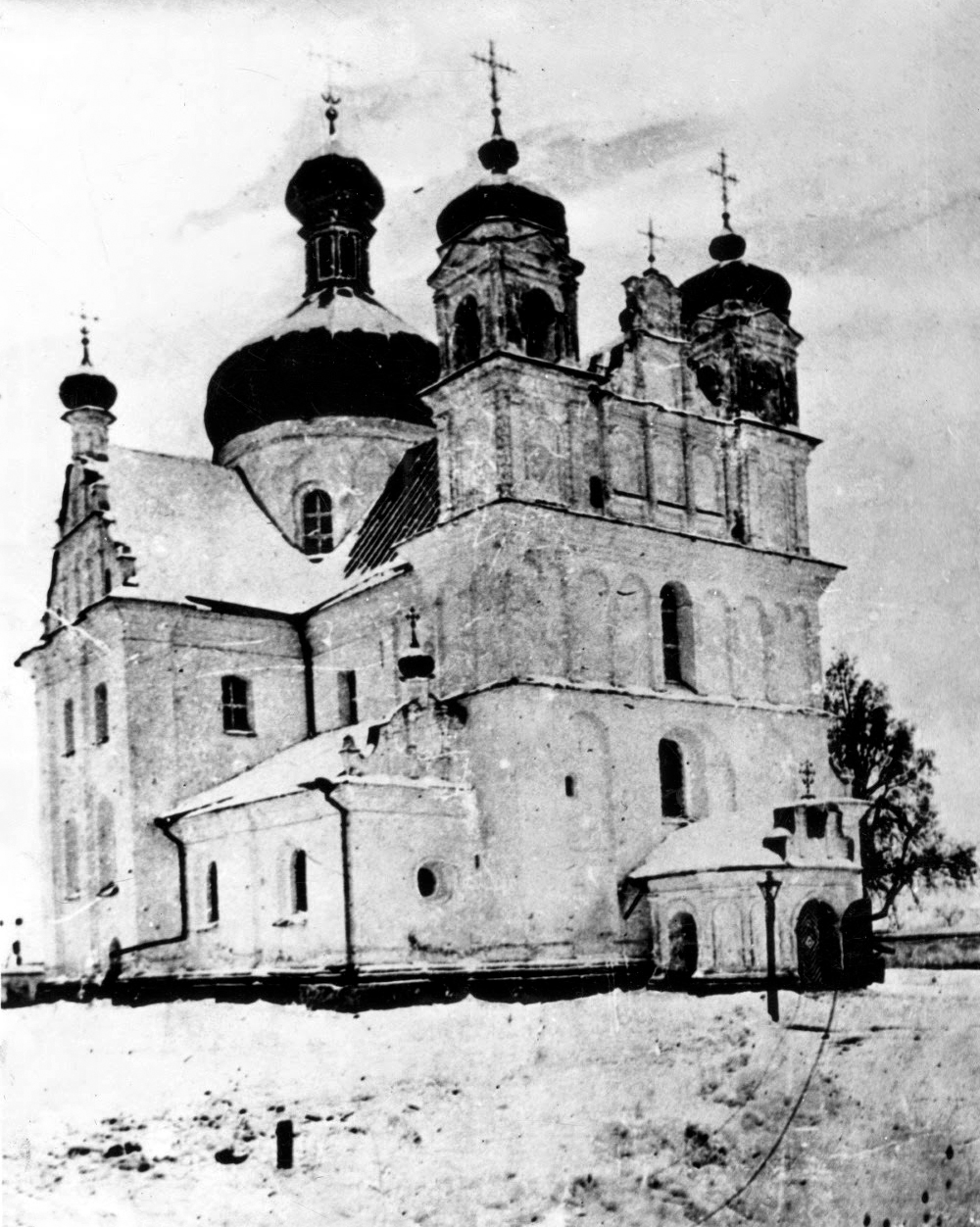
Да 1930-га г., Магілёў. Сабор св. Мікалая (зачынены ў 1934 г., выкарыстоўваўся як перасыльная турма, потым як кніжная база, зноў дзее пасля 1991 г.). Крыніца: Алег (Давід) Лісоўскі, "Архіў гісторыі Магілёва". Архіў VEHA, калекцыя 'Руіны Беларусі'.
Before 1930, Mahilioŭ. St. Nicholas Cathedral (closed in 1934, used as a transit prison, then as a book base, reopened after 1991). Source: Alieh (David) Lisoŭski, "Mahilioŭ History Archive". From the VEHA archive, ״Ruins of Belarus״ collection.
RB-05-090-25-00816
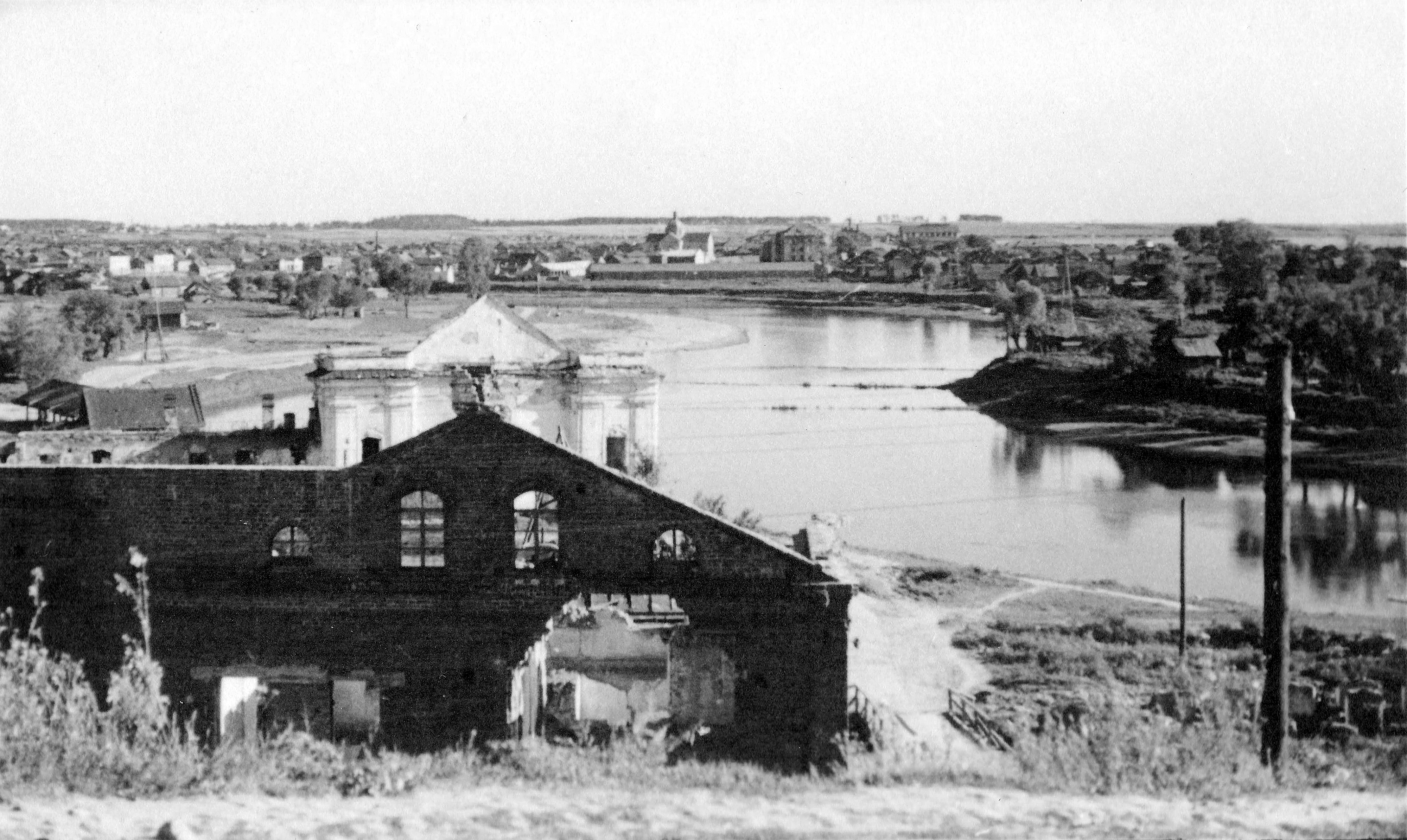
1944 г., Магілёў. Касцёл св. Антонія Падуанскага і кляштар бернардзінцаў (зачыненыя пасля паўстання 1863 г., касцёл пертвораны на архіў судовых прысутных месцаў, потым на царкоўна-археалягічны музэй, у кляштары месцілася духоўная сэмінарыя праваслаўнай царквы, пацярплі падчас Другой сусветнай вайны, руіны знесеныя савецкімі ўладамі ў канцы 1950-х гадоў). Прадаставіў Яўген Мшар. Архіў VEHA, калекцыя 'Руіны Беларусі'.
1944, Mahilioŭ. Church of St. Anthony of Padua and the Bernardine Monastery (closed after the uprising of 1863, the church was converted into a court archive, then into a church and archaeological museum, the monastery housed the theological seminary of the Orthodox Church, damaged during the Second World War, the ruins were demolished by the Soviet authorities in the late 1950s). Provided by Jaŭhien Mšar. From the VEHA archive, ״Ruins of Belarus״ collection.

RB-05-090-25-00817
1941 г., Магілёў. Выгляд на Першамайскую вуліцу, у далечыні бачны былы касцёл св. Францішка Ксаверыя (перахрэшчаэны ў Уваскрасенскую царкву, зачыненую ў 1920-я гады, зруйнаваны пасля Другой сусьветнай вайны). Крыніца: Алег (Давід) Лісоўскі, праект "Архіў гісторыі Магілёва". Архіў VEHA, калекцыя 'Руіны Беларусі'.
1941, Mahilioŭ. View of Pieršamajskaja Street, with a former catholic church of St. Francis Xavier (rechristened the Resurrection Church, closed in the 1920s, destroyed after World War II). Source: Alieh (David) Lisoŭski, project "Mahilioŭ History Archive". From the VEHA archive, ״Ruins of Belarus״ collection.

RB-05-090-25-00694
Ліпень 1941 г., Магілёў. Руіны Богаяўленскай царквы (з 1920-х гадоў у будынку месціўся цэнтральны архіў БССР, канчаткова знесеная пасля Другой сусветнай вайны). Крыніца: Алег (Давід) Лісоўскі, "Архіў гісторыі Магілёва". Архіў VEHA, калекцыя 'Руіны Беларусі'.
July 1941, Mahilioŭ. Ruins of the Epiphany Church (from the 1920s the building housed the central archive of the BSSR, finally demolished after World War II). Source: Alieh (David) Lisoŭski, "Mahilioŭ History Archive". From the VEHA archive, ״Ruins of Belarus״ collection.

RB-05-090-25-00367
Ліпень 1941 г., Магілёў. Руіны Богаяўленскай царквы (з 1920-х гадоў у будынку месціўся цэнтральны архіў БССР, канчаткова знесеная пасля Другой сусветнай вайны). Крыніца: Алег (Давід) Лісоўскі, "Архіў гісторыі Магілёва". Архіў VEHA, калекцыя 'Руіны Беларусі'.
July 1941, Mahilioŭ. Ruins of the Epiphany Church (since the 1920s the building housed the central archive of the BSSR, finally demolished after World War II). Source: Alieh (David) Lisoŭski, "Mahilioŭ History Archive". From the VEHA archive, ״Ruins of Belarus״ collection.
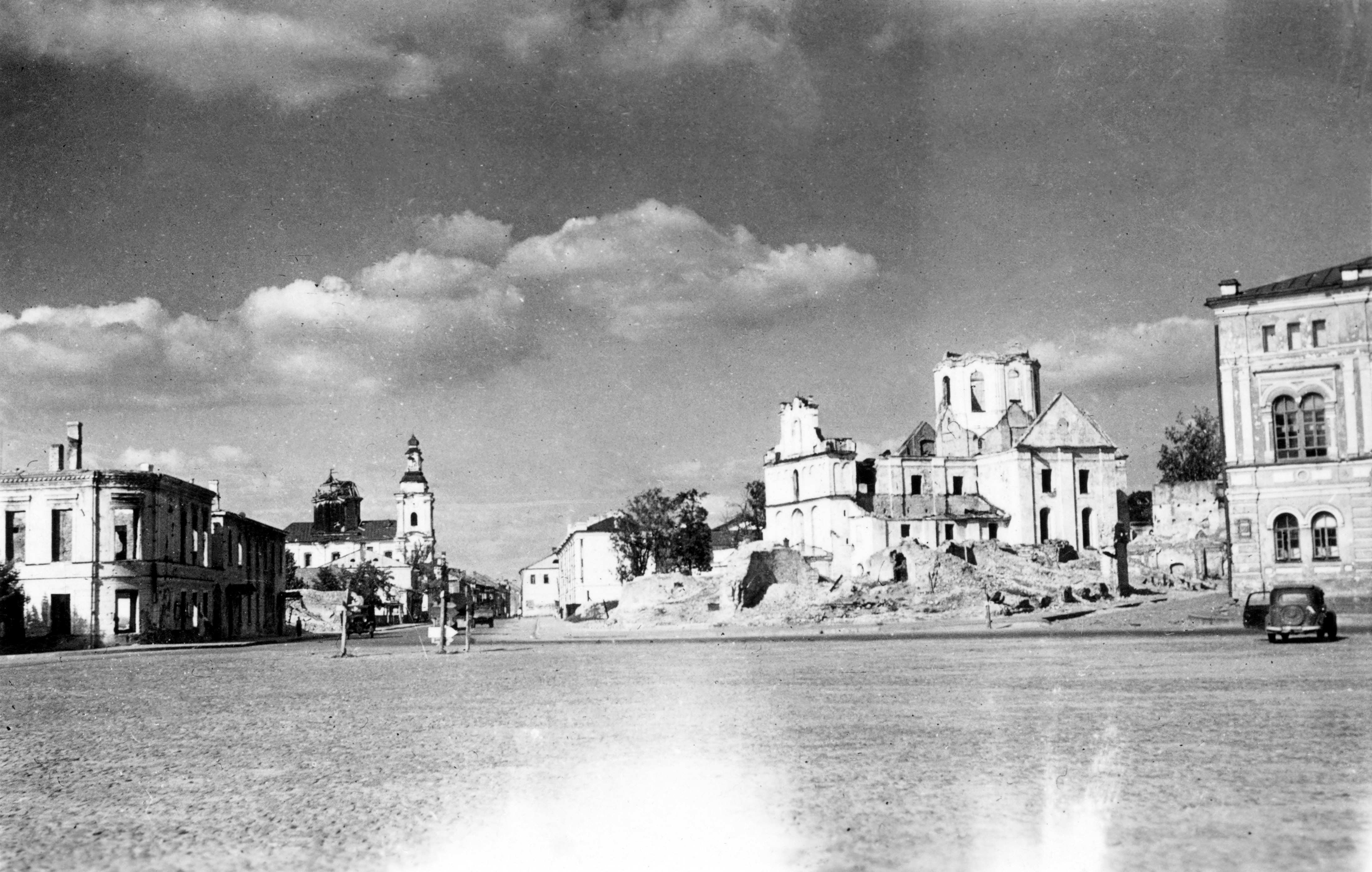
RB-05-090-25-00342
Лета 1942-га г., Магілёў. Руіны Богаяўленскай царквы (з 1920-х гадоў у будынку месціўся цэнтральны архіў БССР, канчаткова знесеная пасля Другой сусветнай вайны), далей па вуліцы бачны касцёл св. Францішка Ксаверыя (перахрэшчаэны ў Уваскрасенскую царкву, зачыненую ў 1920-я гады, зруйнаваны пасля Другой сусьветнай вайны). Крыніца: Алег (Давід) Лісоўскі, "Архіў гісторыі Магілёва". Архіў VEHA, калекцыя 'Руіны Беларусі'.
Summer 1942, Mahilioŭ. Ruins of the Epiphany Church (since the 1920s, the building housed the central archive of the BSSR, finally demolished after World War II), further down the street you can see the Cathedral of St. Francis Xavier (rechristened the Resurrection Church, closed in the 1920s, destroyed after World War II). Source: Alieh (David) Lisoŭski, "Mahilioŭ History Archive". From the VEHA archive, ״Ruins of Belarus״ collection.
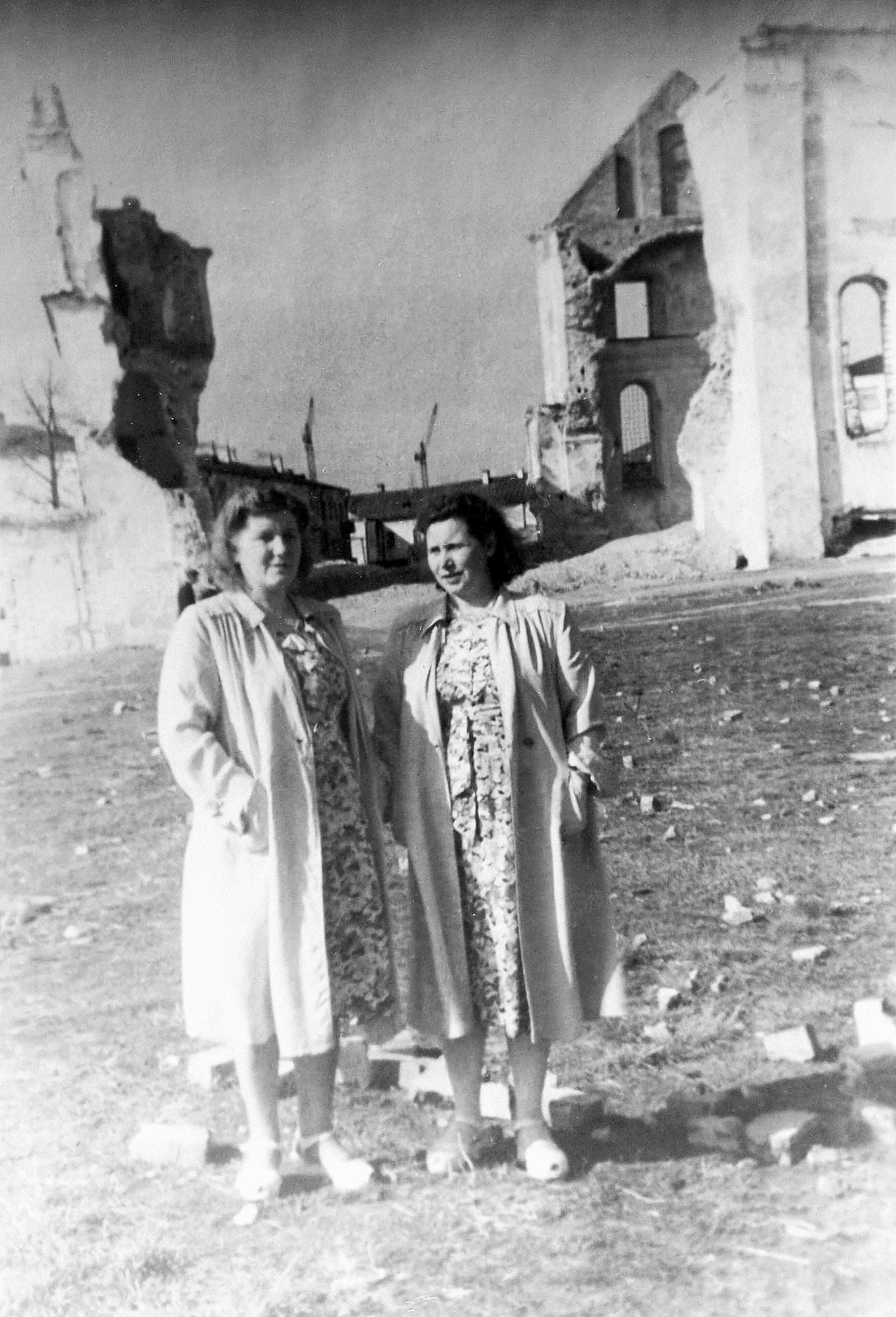
RB-05-090-25-00748
Каля 1951-га г., Магілёў. Дзве жанчыны на тле руін Богаяўленскай царквы (з 1920-х гадоў у будынку месціўся цэнтральны архіў БССР, канчаткова знесеная пасля Другой сусветнай вайны),
Прадаставіла Людміла Грышанава; з фондаў Духоўна-асветніцкага цэнтра Магілёўскай епархіі. Архіў VEHA, калекцыя 'Руіны Беларусі'.
About 1951, Mahilioŭ. Two women against the background of the ruins of the Epiphany Church (since the 1920s the building housed the central archive of the BSSR, finally demolished after World War II), Provided by Liudmila Hryšanava; from the funds of the church-archaeological office of the Spiritual and Еducational Сenter of the Mahilioŭ Diocese.From the VEHA archive, ״Ruins of Belarus״ collection.

RB-05-090-25-00533
1941 г., Магілёў. Руіны Богаяўленскай царквы (з 1920-х гадоў у будынку месціўся цэнтральны архіў БССР, канчаткова знесеная савецкімі ўладамі пасля Другой сусветнай вайны). Крыніца: Алег (Давід) Лісоўскі, "Архіў гісторыі Магілёва". Архіў VEHA, калекцыя 'Руіны Беларусі'.
1941, Mahilioŭ. Ruins of the Epiphany Church (since the 1920s the building housed the central archive of the BSSR, finally demolished by the Soviet authorities after the Second World War). Source: Alieh (David) Lisoŭski, "Mahilioŭ History Archive". From the VEHA archive, ״Ruins of Belarus״ collection.
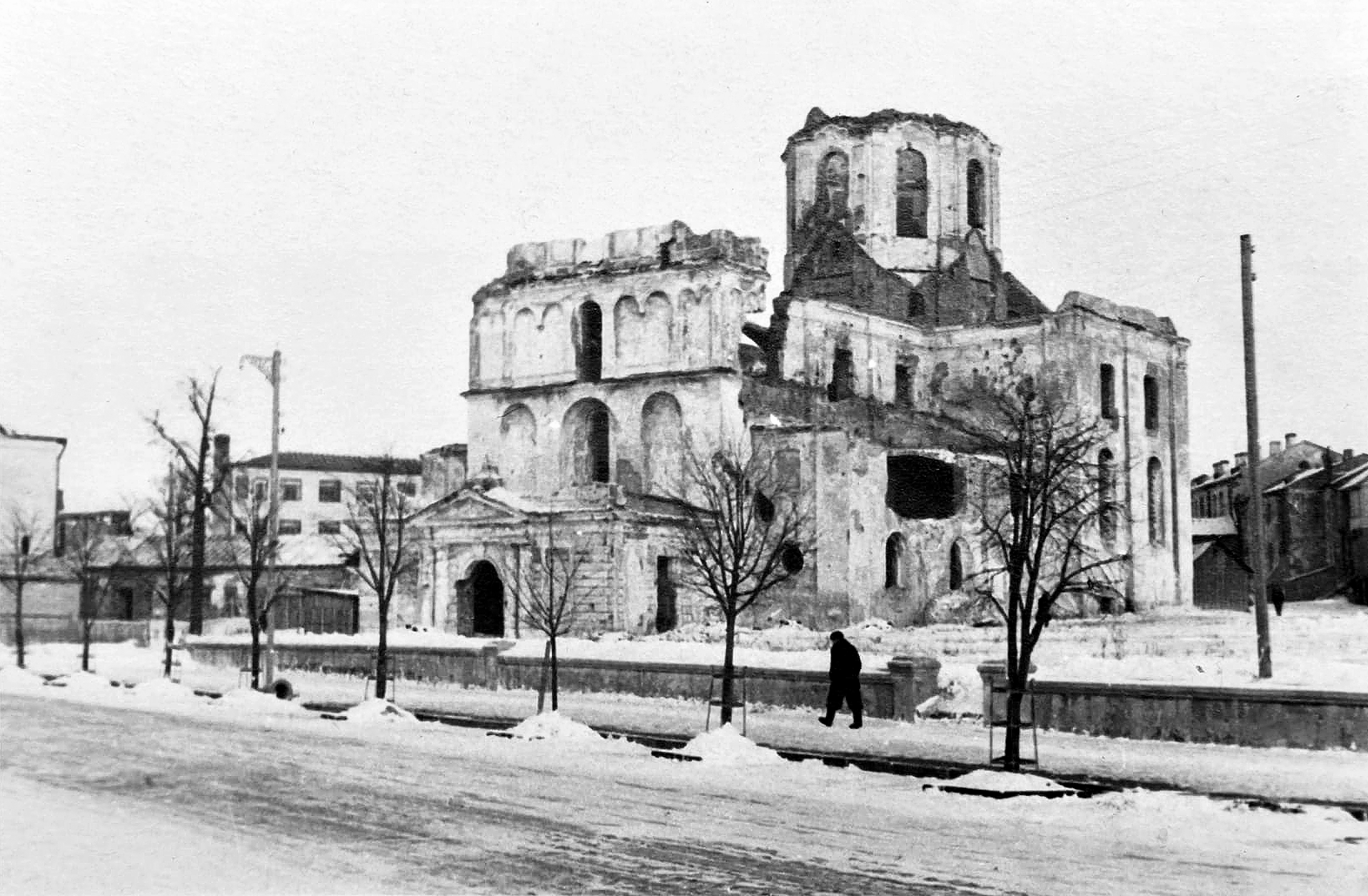
RB-05-090-25-00781
Магілёў. Руіны Богаяўленскай царквы (з 1920-х гадоў у будынку месціўся цэнтральны архіў БССР, канчаткова знесеная пасля Другой сусветнай вайны). Прадаставіла Людміла Грышанава; з сямейнага альбома Л.І. Якубоўскай, фонды царкоўна-архіялагічнага кабінета ДАЦ Магілёўскай епархіі. Архіў VEHA, калекцыя 'Руіны Беларусі'.
Mahilioŭ. Ruins of the Epiphany Orthodox Church (since the 1920s the building housed the central archive of the BSSR, finally demolished after World War II). Provided by Liudmila Hryšanava; from the family album of L.I. Jakuboŭskaja, the funds of the church-archaeological office of the Spiritual and Еducational Сenter of the Mahilioŭ Diocese. From the VEHA archive, ״Ruins of Belarus״ collection.
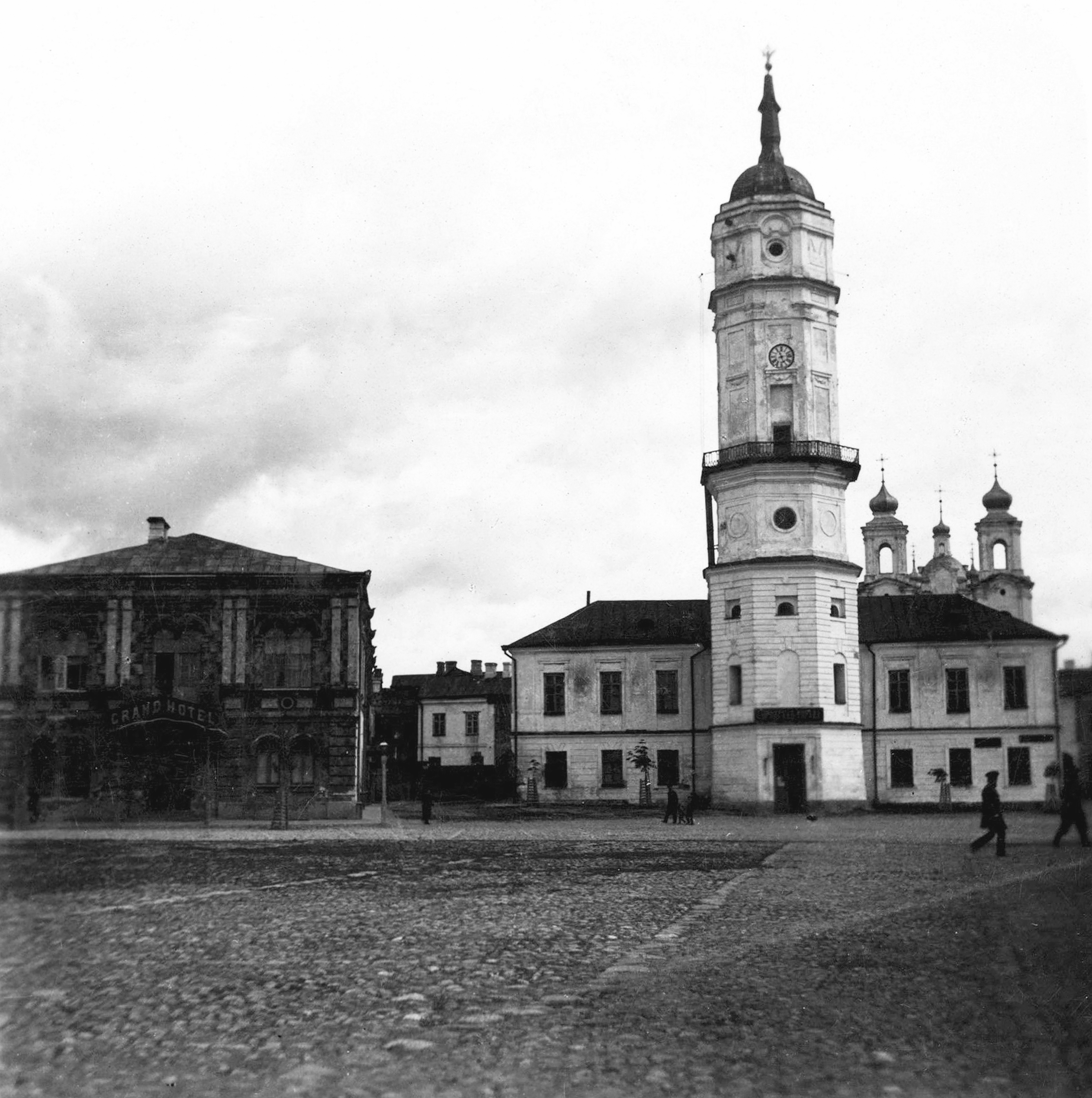
RB-05-090-25-00546
1890-я гг., Магілёў. Фотаздымак са стэрэапары: былая управа і ратуша (управа захавалася, ратуша узарваная ў 1957 г., адбудаваная ў 2008 г.). Крыніца: Алег (Давід) Лісоўскі, "Архіў гісторыі Магілёва". Архіў VEHA, калекцыя 'Руіны Беларусі'.
1890s, Mahilioŭ. Photo from a stereo pair: former administration and town hall (the administration survived, the town hall was blown up in 1957, rebuilt in 2008). Source: Alieh (David) Lisoŭski, "Mahilioŭ History Archive". From the VEHA archive, ״Ruins of Belarus״ collection.
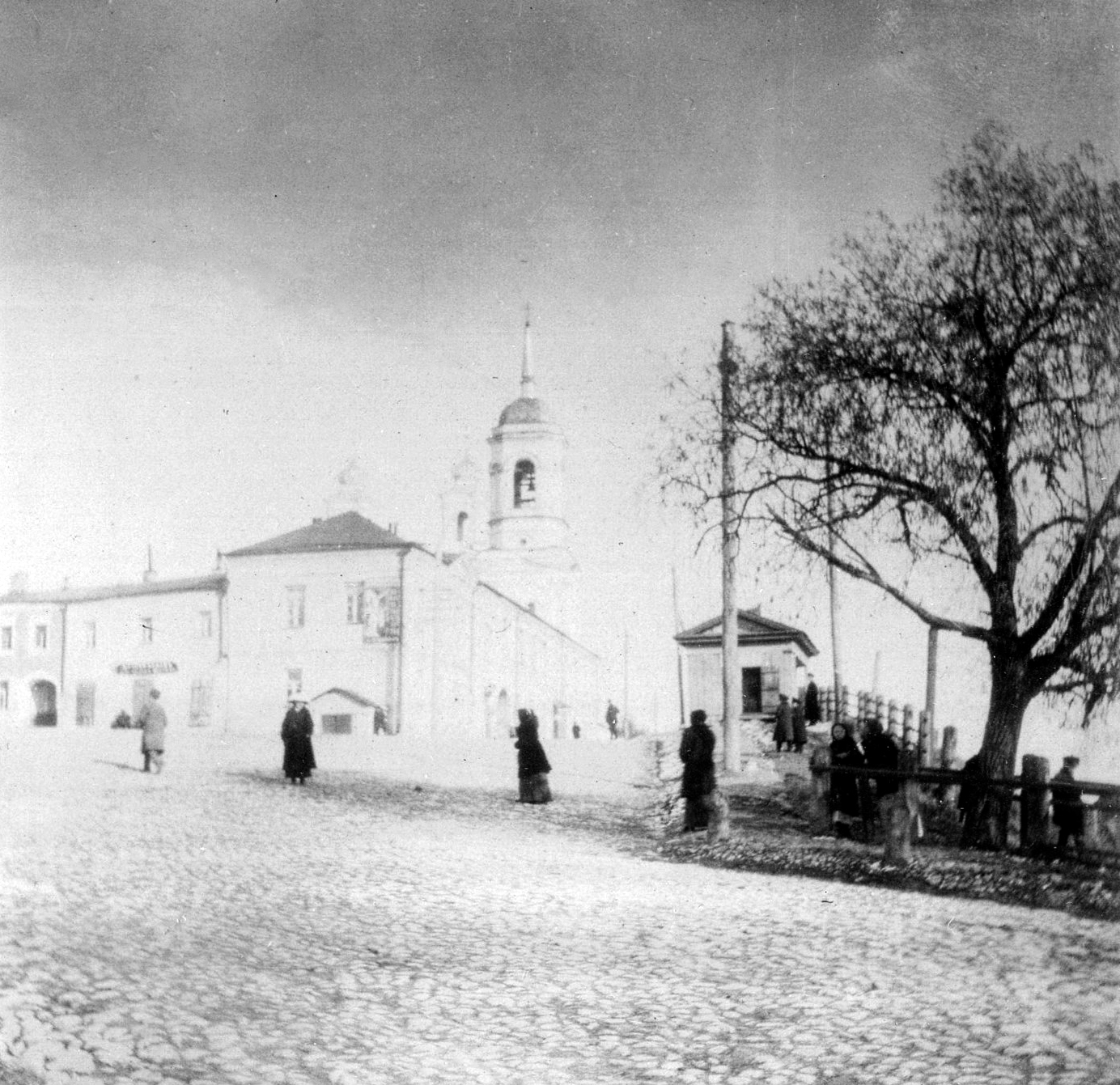
RB-05-090-25-00693
1916 г., Магілёў. Выгляд на Архіерэйскі вал, бачная званіца Спаскага манастыра (разбураная падчас савецкага авіарэйда ў 1944 г.). Крыніца: Алег (Давід) Лісоўскі, "Архіў гісторыі Магілёва". Архіў VEHA, калекцыя 'Руіны Беларусі'.
1916, Mahilioŭ. View of the Archijerejski val, the bell tower of the Spassky Monastery is visible (destroyed during a Soviet air raid in 1944). Source: Alieh (David) Lisoŭski, "Mahilioŭ History Archive". From the VEHA archive, ״Ruins of Belarus״ collection.
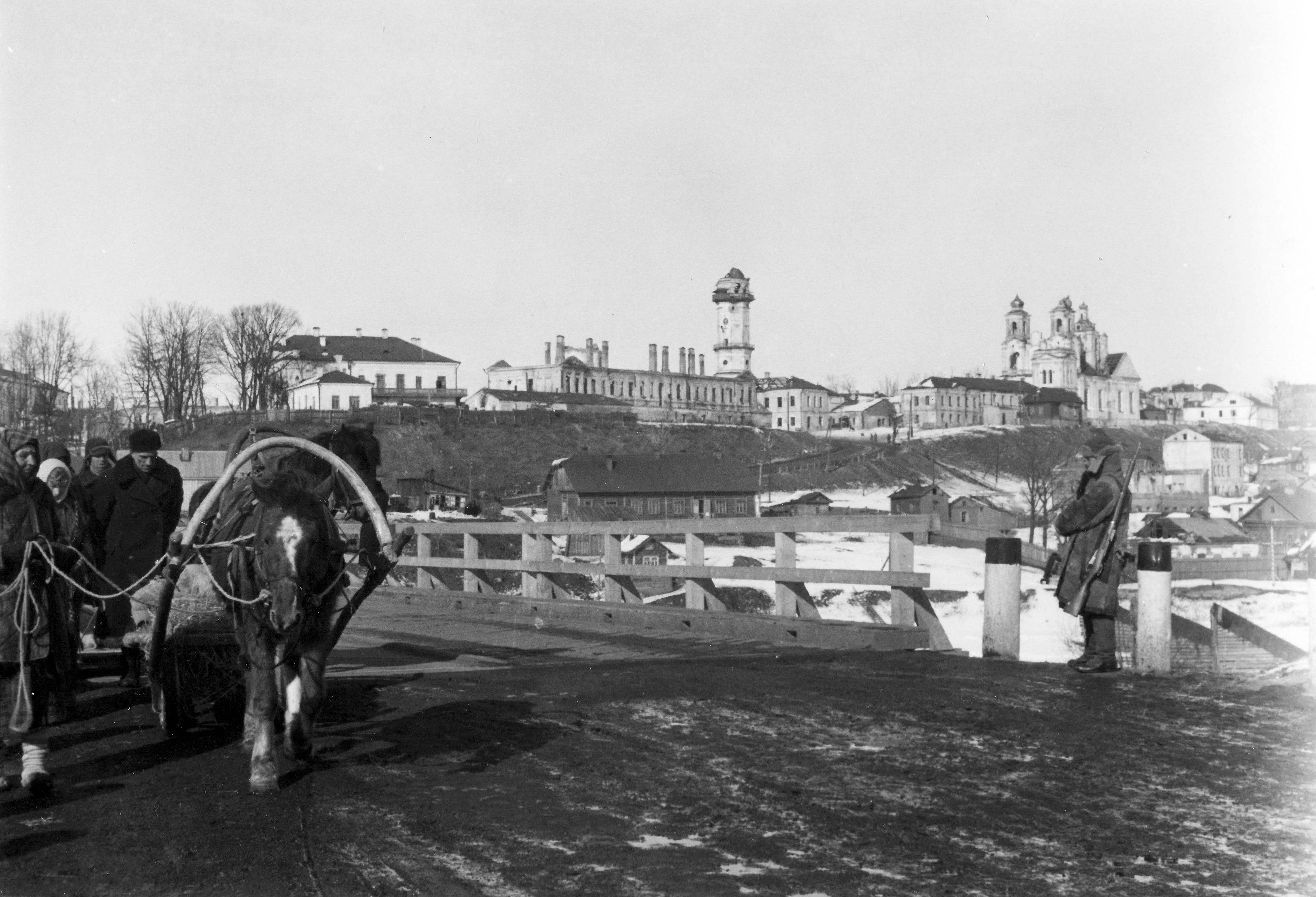
RB-05-090-25-00359
Зіма 1943-га г., Магілёў. Мінакі і вартавы на масту Днепр на фоне гістарычнага цэнтра горада. Злева да права: былы дом губернатара (за савецкім часам дом піянераў), далей былая губернская ўправа (за савецкім часам тыпаграфія, абое будынкі зруйнаваныя авіаналётам савецкай авіацыі ў 1943 г.), у цэнтры вежа ратушы (пацярпела падчас Другой сусветнай вайны, узарваная ў 1957 г., адбудаваная ў 2008 г.), справа Спаская царква (зачыненая з 1918 года і разбураная падчас савецкага авіаналёта ў 1944 г.). Прадаставіў Яўген Мшар. Архіў VEHA, калекцыя 'Руіны Беларусі'.
Winter 1943, Mahilioŭ. Passers-by and a guard on the Dniepr Bridge against the backdrop of the historic city center. From left to right: the former governor's house (in Soviet times, the Pioneer House), then the former provincial administration (in Soviet times, a printing house, both buildings were destroyed by a Soviet air raid in 1943), in the center is the town hall tower (damaged during World War II, blown up in 1957, rebuilt in 2008), on the right is the Church of the Savior (closed since 1918 and destroyed during a Soviet air raid in 1944). Provided by Jaŭhien Mšar. From the VEHA archive, ״Ruins of Belarus״ collection.
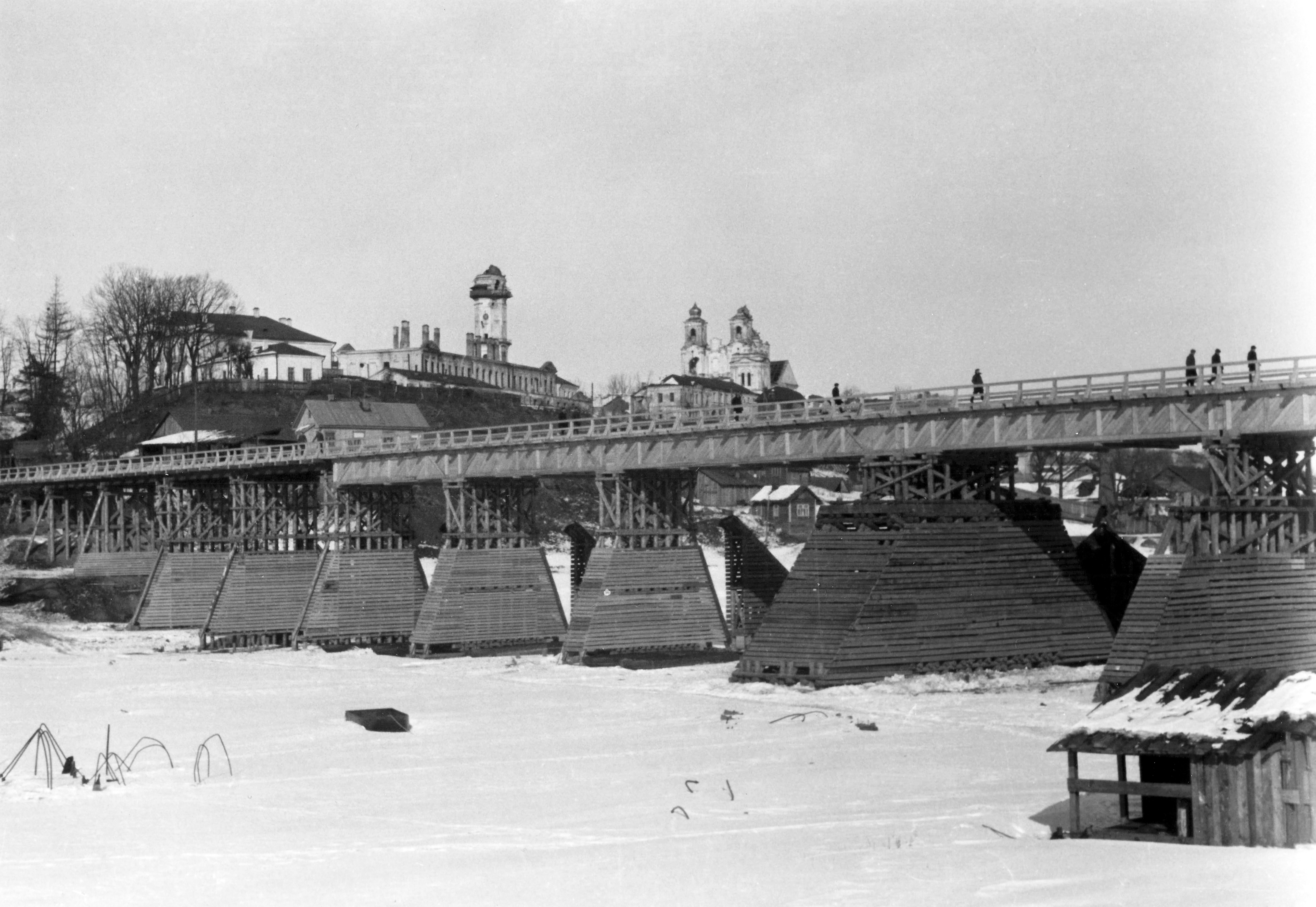
RB-05-090-25-00811
1940-я гг., Магілёў. Мост праз Дняпро, за ім Ратуша і Спасская царква (ратуша узарваная ў 1957 г., адбудаваная ў 2008 г., царква зачыненая з 1918 года і разбураная падчас савецкага авіаналёта на пачатку 1944 г.). Прадаставіў Яўген Мшар. Архіў VEHA, калекцыя 'Руіны Беларусі'.
1940s, Mahilioŭ. The bridge over the Dniapro, behind it the Town Hall and the Church of the Savior (the town hall was blown up in 1957, rebuilt in 2008, the church was closed since 1918 and destroyed during a Soviet air raid in early 1944). Provided by Jaŭhien Mšar. From the VEHA archive, ״Ruins of Belarus״ collection.
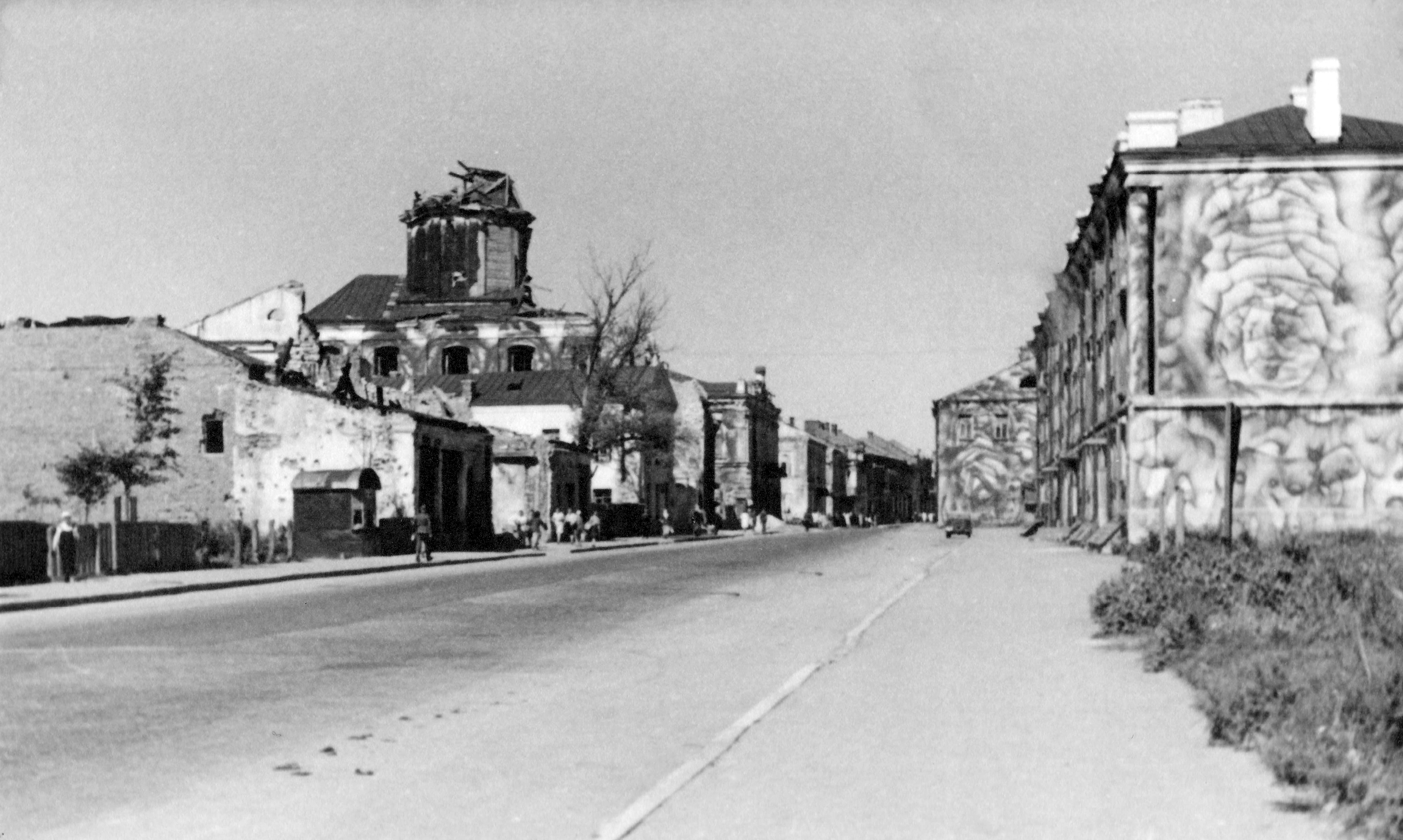
RB-05-090-25-00814
1944 г., Магілёў. Руіны вуліцы, далей бачны рэшткі касцёла св. Ксаверыя (перахрэшчаэны ў Уваскрасенскую царкву, зачыненую ў 1920-я гады, зруйнаваны пасля Другой сусьветнай вайны). Прадаставіў Яўген Мшар. Архіў VEHA, калекцыя 'Руіны Беларусі'.
1944, Mahilioŭ. Ruins of the street, the remains of the Catholic Church of St. Xavier are visible further on (rechristened the Resurrection Church, closed in the 1920s, destroyed after World War II). Provided by Jaŭhien Mšar. From the VEHA archive, ״Ruins of Belarus״ collection.
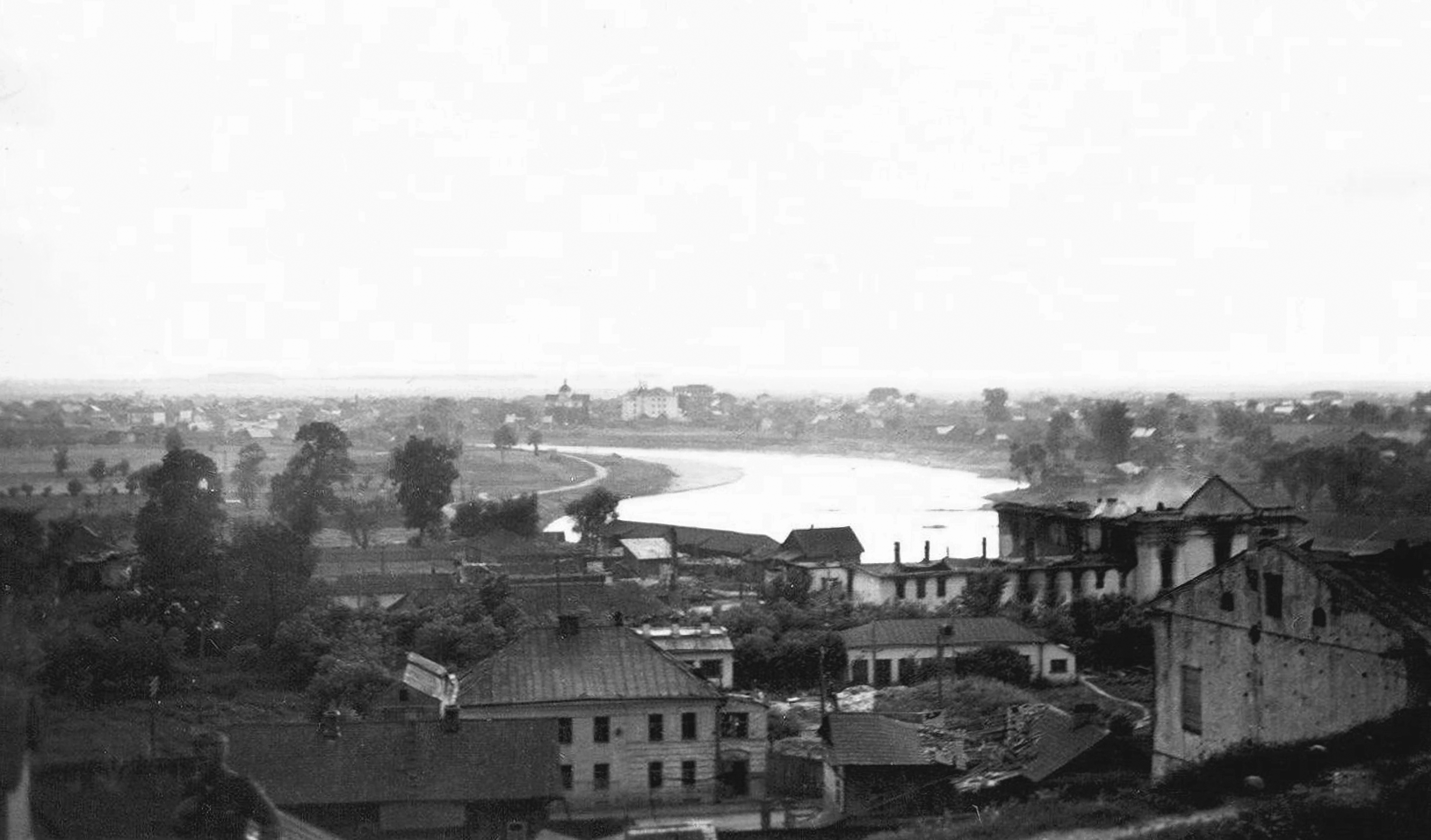
RB-05-090-25-00954
1941 г., Магілёў. Выгляд на Школішча, справа руіны былога касцёла св. Антонія Падуанскага і былога кляштара бернардзінцаў (зачыненыя пасля паўстання 1863 г., касцёл пертвораны на архіў судовых прысутных месцаў, потым на царкоўна-археалягічны музэй, у кляштары месцілася духоўная сэмінарыя праваслаўнай царквы, пацярплі падчас Другой сусветнай вайны, руіны знесеныя савецкімі ўладамі ў канцы 1950-х гадоў). Крыніца: Алег (Давід) Лісоўскі, праект "Архіў гісторыі Магілёва". Архіў VEHA, калекцыя 'Руіны Беларусі'.
1941, Mahilioŭ. Church of St. Anthony of Padua and the Bernardine Monastery (closed after the uprising of 1863, the church was converted into a court archive, then into a church and archaeological museum, the monastery housed the theological seminary of the Orthodox Church, damaged during the Second World War, the ruins were demolished by the Soviet authorities in the late 1950s). Source: Alieh (David) Lisoŭski, project "Mahilioŭ History Archive". From the VEHA archive, ״Ruins of Belarus״ collection.